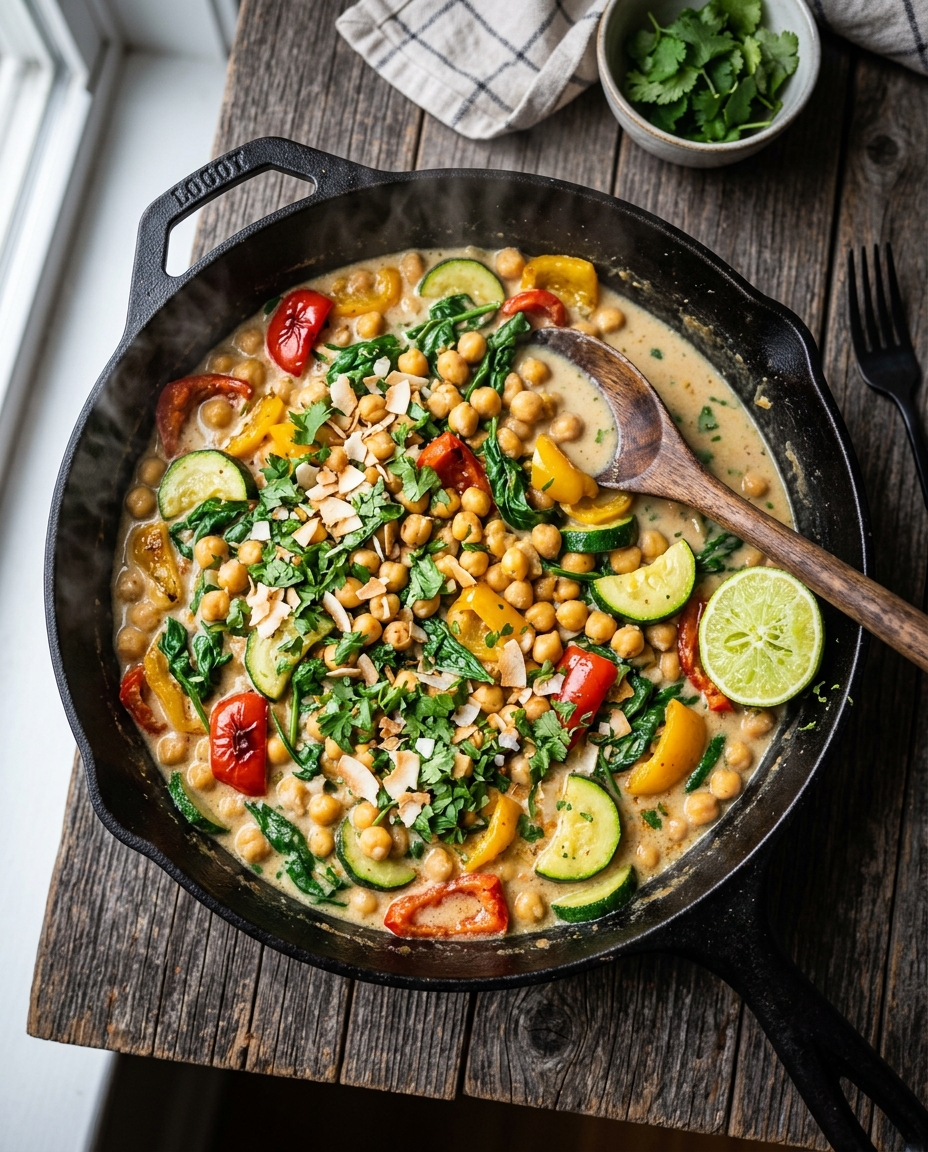
There’s something magical about a one-pan dinner that tastes like you’ve been cooking all day, but comes together in under 30 minutes. This coconut lime chickpea skillet is exactly that kind of recipe—the kind that makes weeknight cooking feel effortless and genuinely exciting. With creamy coconut milk, bright lime juice, and hearty chickpeas, it’s a tropical-inspired dish that feels restaurant-quality but requires nothing more than a simple skillet and pantry staples.
I first developed this coconut lime chickpea skillet recipe while experimenting with ways to make vegetarian dinners feel more satisfying and flavorful. What started as a quick lunch became my go-to meal when I want something that’s both nourishing and indulgent without any animal products. The combination of tender vegetables, protein-packed chickpeas, and that signature lime-coconut sauce is genuinely addictive.
Whether you’re eating plant-based, looking to reduce meat consumption, or simply craving something different from your usual dinner rotation, this easy chickpea skillet recipe delivers on every level. It’s gluten-free, naturally vegan, and so versatile that you can adapt it with whatever vegetables you have on hand.
Why You’ll Love This Coconut Lime Chickpea Skillet Recipe
- Ready in 30 Minutes: This is a genuine 30-minute chickpea meal from start to finish, making it perfect for busy weeknights when you need dinner on the table fast without sacrificing flavor or nutrition.
- One-Pan Simplicity: Everything cooks in a single skillet, which means minimal prep, cooking, and cleanup—a true lifesaver on those hectic evenings when you want the least amount of dishes possible.
- Tropical Flavor Profile: The coconut lime combination creates an unexpectedly sophisticated flavor that feels indulgent and special, transporting you somewhere warm and beachy with every bite.
- Naturally Vegan and Gluten-Free: Without any modifications needed, this coconut lime chickpea skillet suits multiple dietary preferences, making it perfect for feeding mixed groups or accommodating various eating styles.
- Meal Prep Friendly: It stores beautifully in the fridge and tastes even better the next day as the flavors meld together, making it ideal for preparing ahead and enjoying throughout the week.
- Budget-Conscious: Built on affordable pantry staples like canned chickpeas and coconut milk, this easy chickpea skillet recipe won’t strain your grocery budget while delivering maximum nutrition and satisfaction.
Ingredients You’ll Need
The beauty of this coconut lime chickpea skillet lies in its simplicity. Most ingredients are items you probably already have in your pantry or can pick up for just a few dollars. Canned chickpeas are the protein backbone—I always keep several cans on hand because they’re convenient, economical, and incredibly versatile. Coconut milk creates that luxurious, creamy sauce without requiring any cream or butter, while fresh lime juice and zest provide brightness that prevents the dish from feeling heavy.
Choose fresh vegetables that are in season and appealing to you; the recipe is flexible enough to accommodate your preferences. I typically use bell peppers, zucchini, and spinach, but cherry tomatoes, snap peas, mushrooms, or leafy greens like kale work beautifully too. The key is maintaining some textural variety and choosing vegetables that cook at similar rates so everything finishes together.
Base and Sauce
- 2 tablespoons coconut oil or olive oil (for cooking)
- 1 medium onion (diced)
- 3 cloves garlic (minced)
- 1 tablespoon fresh ginger (minced or grated)
- 1 can (14 oz) coconut milk (full-fat, unsweetened)
- 2 cans (15 oz each) chickpeas (drained and rinsed)
- 1 cup vegetable broth (or chicken broth for non-vegan)
- 2 limes lime (1 zested, both juiced)
- 1 teaspoon cumin (ground)
- 1/2 teaspoon red pepper flakes (adjust to taste)
- 1 teaspoon sea salt (or to taste)
- 1/4 teaspoon black pepper (freshly ground)
Vegetables
- 1 medium red bell pepper (diced)
- 1 medium yellow bell pepper (diced)
- 1 large zucchini (halved lengthwise and sliced)
- 3 cups fresh spinach (roughly chopped)
- 1/2 cup cherry tomatoes (halved, optional)
Garnish
- 1/4 cup fresh cilantro (chopped)
- 2 tablespoons unsweetened coconut flakes (toasted, optional)
Optional Add-ins:
- Thai red curry paste
- diced pineapple
- coconut aminos
- sesame seeds
How to Make Coconut Lime Chickpea Skillet Recipe (Step-by-Step)
1. Prepare Your Ingredients
Drain and rinse your canned chickpeas thoroughly under cool running water. This removes excess sodium and starch, ensuring better texture. Pat them dry with a clean kitchen towel.
Pro tip: Drying the chickpeas helps them sear slightly in the pan and absorb the flavors better rather than becoming mushy.
Dice your onion, mince your garlic and ginger, and zest both limes before juicing them. Measure out your coconut milk and vegetable broth. Having everything prepped and ready (mise en place) ensures smooth cooking.
Pro tip: If you’re short on time, use pre-minced garlic and ginger from jars, though fresh is always superior for flavor.
2. Build the Flavor Base
Heat 2 tablespoons of coconut oil or olive oil in a large skillet over medium-high heat. Once shimmering, add the diced onion and cook for 3-4 minutes, stirring occasionally, until it softens and becomes translucent.
Pro tip: Don’t skip this step—cooking the onion releases natural sugars and creates a sweet, savory foundation for your entire coconut lime chickpea skillet.
Add minced garlic and ginger to the skillet, stirring constantly for about 30 seconds until fragrant. You’ll immediately smell the aromatics blooming, which is your signal that the garlic isn’t burning.
Pro tip: The 30-second window is crucial—garlic burns quickly and becomes bitter, so stay engaged with your pan during this step.
Stir in the cumin and red pepper flakes, cooking for another 15 seconds. This ‘blooming’ technique releases the spices’ essential oils and distributes their flavor throughout the oil.
Pro tip: If you prefer less heat, reduce the red pepper flakes to 1/4 teaspoon, or omit entirely and let guests add hot sauce individually.
3. Add Vegetables and Chickpeas
Add the diced bell peppers and sliced zucchini to the skillet, stirring well to coat everything with the aromatic oil. Cook for 3-4 minutes, allowing the vegetables to begin softening slightly.
Pro tip: These heartier vegetables need a head start before adding the liquid so they’ll have time to cook through while the chickpeas warm.
Pour in the drained and rinsed chickpeas, stirring to combine with the vegetables and aromatics. Let them cook for 1 minute, allowing them to absorb some of the oil and flavors.
Pro tip: Chickpeas have a mild flavor on their own, so this toasting step in the oil helps them become more flavorful and integrated into the dish.
4. Create the Creamy Sauce
Pour the coconut milk and vegetable broth into the skillet, scraping the bottom gently with your spoon to release any flavorful browned bits (called the fond). Stir everything together until well combined.
Pro tip: Don’t skip deglazing the pan—those browned bits are concentrated flavor that will make your coconut lime chickpea skillet significantly more delicious.
Add the lime juice and lime zest, along with salt and black pepper to taste. The acidity from the lime is essential—it brightens the coconut and prevents the dish from tasting flat or one-dimensional.
Pro tip: Start with the juice of 1.5 limes and taste before adding the second lime’s juice. Lime intensity varies, and you can always add more but can’t remove it.
5. Simmer and Finish
Bring the mixture to a gentle simmer over medium heat. Once bubbling, reduce heat to medium-low and let it simmer for 8-10 minutes, stirring occasionally. The sauce will thicken slightly as it cooks.
Pro tip: This simmering time allows the flavors to meld beautifully and is why your coconut lime chickpea skillet tastes homemade and developed, not rushed.
Add the chopped spinach to the skillet, stirring until it wilts completely into the sauce, about 2-3 minutes. If using cherry tomatoes, add them now so they warm through.
Pro tip: Adding spinach at the end preserves its nutrients and color. It will wilt quickly into the warm sauce without overcooking.
Taste your coconut lime chickpea skillet and adjust seasonings as needed. You might want more lime juice for brightness, more salt for depth, or more red pepper flakes for heat.
Pro tip: Season gradually and taste between additions. It’s easier to add more seasoning than to fix an over-salted or over-spiced dish.
6. Garnish and Serve
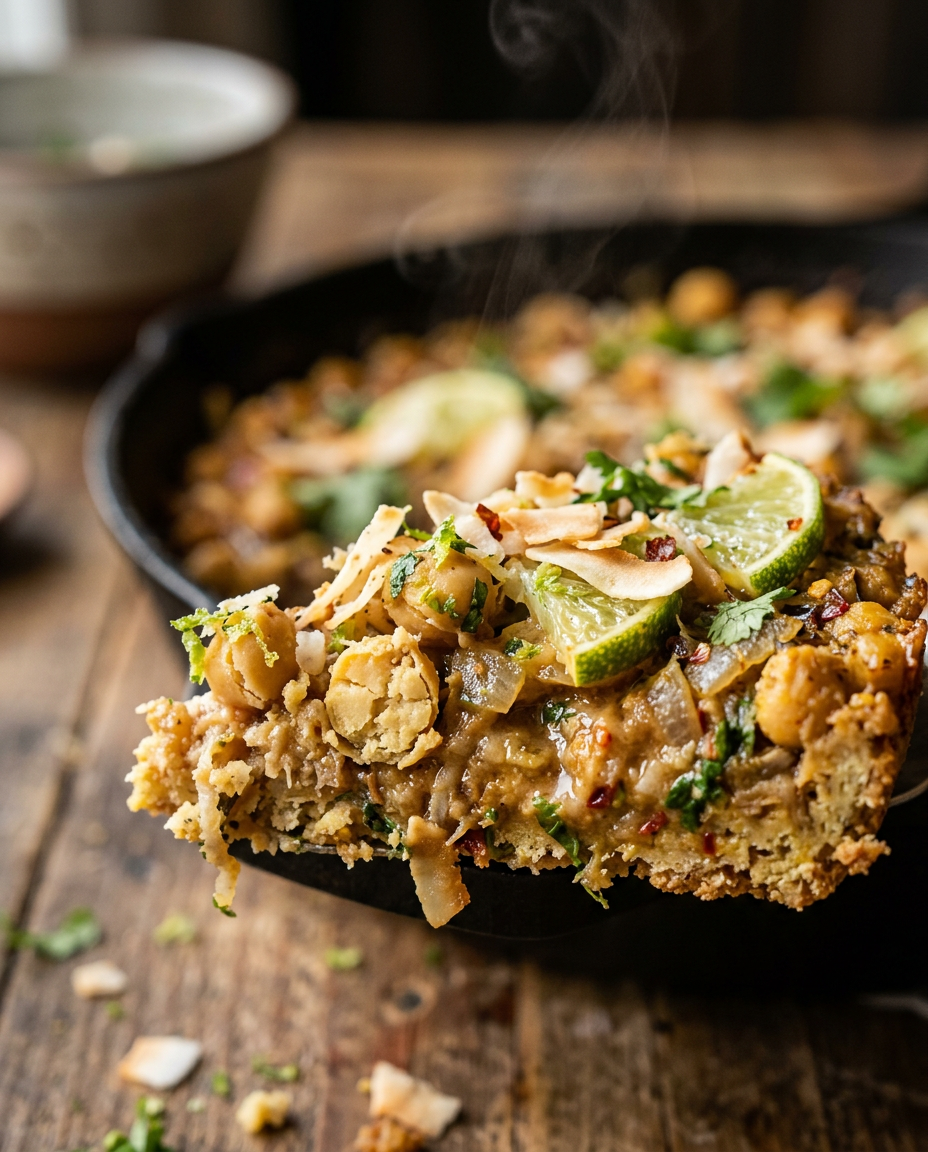
Remove from heat and garnish generously with fresh cilantro and toasted coconut flakes if using. A squeeze of fresh lime juice just before serving adds a final brightness.
Pro tip: Fresh cilantro is almost essential here—it complements the lime and coconut beautifully. If you’re cilantro-averse, use fresh basil or parsley instead.
Coconut Lime Chickpea Skillet Recipe – Full Recipe
Coconut Lime Chickpea Skillet Recipe
Ingredients
Equipment
Method
- Drain and rinse your canned chickpeas thoroughly under cool running water. This removes excess sodium and starch, ensuring better texture. Pat them dry with a clean kitchen towel. Pro tip: Drying the chickpeas helps them sear slightly in the pan and absorb the flavors better rather than becoming mushy.
- Dice your onion, mince your garlic and ginger, and zest both limes before juicing them. Measure out your coconut milk and vegetable broth. Having everything prepped and ready (mise en place) ensures smooth cooking. Pro tip: If you're short on time, use pre-minced garlic and ginger from jars, though fresh is always superior for flavor.
- Heat 2 tablespoons of coconut oil or olive oil in a large skillet over medium-high heat. Once shimmering, add the diced onion and cook for 3-4 minutes, stirring occasionally, until it softens and becomes translucent. Pro tip: Don't skip this step—cooking the onion releases natural sugars and creates a sweet, savory foundation for your entire coconut lime chickpea skillet.
- Add minced garlic and ginger to the skillet, stirring constantly for about 30 seconds until fragrant. You'll immediately smell the aromatics blooming, which is your signal that the garlic isn't burning. Pro tip: The 30-second window is crucial—garlic burns quickly and becomes bitter, so stay engaged with your pan during this step.
- Stir in the cumin and red pepper flakes, cooking for another 15 seconds. This 'blooming' technique releases the spices' essential oils and distributes their flavor throughout the oil. Pro tip: If you prefer less heat, reduce the red pepper flakes to 1/4 teaspoon, or omit entirely and let guests add hot sauce individually.
- Add the diced bell peppers and sliced zucchini to the skillet, stirring well to coat everything with the aromatic oil. Cook for 3-4 minutes, allowing the vegetables to begin softening slightly. Pro tip: These heartier vegetables need a head start before adding the liquid so they'll have time to cook through while the chickpeas warm.
- Pour in the drained and rinsed chickpeas, stirring to combine with the vegetables and aromatics. Let them cook for 1 minute, allowing them to absorb some of the oil and flavors. Pro tip: Chickpeas have a mild flavor on their own, so this toasting step in the oil helps them become more flavorful and integrated into the dish.
- Pour the coconut milk and vegetable broth into the skillet, scraping the bottom gently with your spoon to release any flavorful browned bits (called the fond). Stir everything together until well combined. Pro tip: Don't skip deglazing the pan—those browned bits are concentrated flavor that will make your coconut lime chickpea skillet significantly more delicious.
- Add the lime juice and lime zest, along with salt and black pepper to taste. The acidity from the lime is essential—it brightens the coconut and prevents the dish from tasting flat or one-dimensional. Pro tip: Start with the juice of 1.5 limes and taste before adding the second lime's juice. Lime intensity varies, and you can always add more but can't remove it.
- Bring the mixture to a gentle simmer over medium heat. Once bubbling, reduce heat to medium-low and let it simmer for 8-10 minutes, stirring occasionally. The sauce will thicken slightly as it cooks. Pro tip: This simmering time allows the flavors to meld beautifully and is why your coconut lime chickpea skillet tastes homemade and developed, not rushed.
- Add the chopped spinach to the skillet, stirring until it wilts completely into the sauce, about 2-3 minutes. If using cherry tomatoes, add them now so they warm through. Pro tip: Adding spinach at the end preserves its nutrients and color. It will wilt quickly into the warm sauce without overcooking.
- Taste your coconut lime chickpea skillet and adjust seasonings as needed. You might want more lime juice for brightness, more salt for depth, or more red pepper flakes for heat. Pro tip: Season gradually and taste between additions. It's easier to add more seasoning than to fix an over-salted or over-spiced dish.
- Remove from heat and garnish generously with fresh cilantro and toasted coconut flakes if using. A squeeze of fresh lime juice just before serving adds a final brightness. Pro tip: Fresh cilantro is almost essential here—it complements the lime and coconut beautifully. If you're cilantro-averse, use fresh basil or parsley instead.
Notes
- Full-fat unsweetened coconut milk is essential for the rich, creamy texture that makes this dish special—don't substitute light coconut milk
- Fresh lime juice and zest are crucial for brightness; bottled lime juice won't provide the same complex flavor
- This recipe doubles beautifully for meal prep and improves over time as flavors meld, making it perfect for weekly batch cooking
Tips for the Best Coconut Lime Chickpea Skillet Recipe
- Don’t Overcook the Vegetables: Vegetables continue cooking as the sauce simmers. Stop cooking once they’re tender-crisp rather than soft. This preserves nutrients, color, and texture in your easy chickpea skillet recipe.
- Coconut Milk Matters: Use full-fat, unsweetened coconut milk, not the lighter versions. The fat creates that luxurious mouthfeel that makes this tropical chickpea recipe feel indulgent rather than thin or watery.
- Fresh Lime is Non-Negotiable: Bottled lime juice won’t deliver the same brightness and complexity. Fresh lime juice is essential for making your coconut lime chickpea skillet taste restaurant-quality.
- Customize Heat Levels: Start with 1/2 teaspoon red pepper flakes, then adjust upward if you prefer more spice. You can always add heat, but you can’t remove it after the fact.
- Make It Ahead: This vegan skillet recipe actually improves with time as flavors meld. Prepare it completely and refrigerate, then reheat gently on the stovetop with a splash of broth to refresh the sauce consistency.
- Batch Cook for Success: This recipe doubles beautifully for meal prep. Make a double batch, portion into containers, and enjoy convenient healthy lunches all week long from this one-pan chickpea dinner.
Variations to Try
- Spicy Thai Version: Add 1-2 tablespoons red curry paste when cooking the aromatics. This transforms your coconut lime chickpea skillet into something with deeper, more complex heat and authentic Thai flavors.
- Protein-Boosted Version: Add diced extra-firm tofu or tempeh along with the chickpeas, or stir in cooked quinoa or brown rice at the end. This healthy chickpea dish becomes even more substantial and satisfying.
- Creamy Coconut Lime Pasta: Toss this coconut lime chickpea skillet mixture with cooked pasta—penne or linguine work great. Add a splash of pasta water to adjust sauce consistency for this one-pan chickpea dinner variation.
- Tropical Pineapple Version: Add 1/2 cup diced fresh or frozen pineapple along with the coconut milk. The natural sweetness and tartness complement the lime beautifully in this tropical chickpea recipe.
- Cauliflower Rice Bowl: Serve your coconut lime chickpea skillet over cauliflower rice instead of traditional grains. Top with avocado, extra cilantro, and lime wedges for a low-carb, veggie-forward presentation of this easy chickpea skillet recipe.
Storage and Meal Prep Tips
- Refrigerator Storage: Store in an airtight container for up to 4 days. The flavors actually deepen overnight, making this one-pan chickpea dinner even better the next day. Reheat gently over medium-low heat, adding a splash of vegetable broth if the sauce thickens too much.
- Freezer Storage: This coconut lime chickpea skillet freezes beautifully for up to 3 months. Cool completely before transferring to freezer-safe containers or bags. Thaw overnight in the refrigerator before reheating.
- Reheating Tips: Reheat on the stovetop over medium-low heat rather than microwave to maintain texture. Add 2-3 tablespoons vegetable broth per serving to restore the sauce’s creamy consistency, as it thickens during storage.
- Meal Prep Strategy: This vegan skillet recipe is ideal for weekly meal prep. Prepare a large batch on Sunday, portion into glass containers, and enjoy grab-and-go lunches throughout the week. Pair with different grains or bases for variety.
- Partial Prep Method: Prepare the aromatics and vegetables the night before, storing them in the refrigerator. The next day, simply add them to your skillet with the remaining ingredients for a fresh, quick dinner that tastes like you cooked all day.
Nutritional Benefits
This coconut lime chickpea skillet is nutritionally dense, combining plant-based protein, fiber, healthy fats, and an array of vitamins and minerals. Chickpeas provide substantial plant-based protein and fiber that keep you satisfied long after eating, making this an ideal one-pan chickpea dinner for anyone following vegetarian or vegan diets. The coconut milk delivers medium-chain triglycerides (MCTs) that some research suggests may support sustained energy, while the combination of vegetables provides antioxidants, vitamins, and minerals essential for overall wellness.
- Plant-Based Protein: Two cans of chickpeas provide approximately 24 grams of complete protein per serving, making this easy chickpea skillet recipe satisfying and muscle-supporting without meat.
- High in Fiber: At around 12 grams of fiber per serving, this coconut lime chickpea skillet supports digestive health and provides sustained energy release throughout your day.
- Healthy Fats: Coconut milk and olive oil provide both saturated and unsaturated fats that support nutrient absorption and provide satiety without trans fats.
- Vitamin C Rich: Bell peppers and lime juice deliver approximately 65% of your daily vitamin C needs, supporting immune function and collagen production.
- Iron Content: Chickpeas provide iron, with added vitamin C from citrus enhancing absorption, making this tropical chickpea recipe excellent for plant-based eaters.
- Naturally Whole Food: This healthy chickpea dish relies on whole, recognizable ingredients with no added sugars, refined grains, or artificial additives.
What to Serve With Coconut Lime Chickpea Skillet Recipe
- Fluffy White or Brown Rice: Serve your coconut lime chickpea skillet over warm rice to create a complete meal. The neutral rice soaks up the creamy coconut sauce perfectly, making this one-pan chickpea dinner feel balanced and satisfying.
- Jasmine Rice with Herbs: Cook jasmine rice with fresh cilantro and lime zest in the cooking liquid for an aromatic base that complements the tropical flavors of your coconut lime chickpea skillet.
- Cauliflower Rice or Riced Vegetables: For a lower-carb option, serve this easy chickpea skillet over cauliflower rice, jicama rice, or a combination of riced vegetables. Top with avocado slices for creaminess.
- Flatbread or Naan: Warm store-bought naan, pita, or flatbread provides a fun, interactive way to enjoy this vegan skillet recipe. Use bread to scoop up sauce and vegetables for a casual, enjoyable meal.
- Quinoa or Farro: These hearty whole grains work beautifully as bases for your coconut lime chickpea skillet, adding nutty flavor and extra protein. They hold up well to the creamy sauce and create a complete, balanced meal.
Frequently Asked Questions
Can I make the Coconut Lime Chickpea Skillet ahead of time?
Absolutely! This recipe is perfect for meal prep. You can prepare the entire coconut lime chickpea skillet up to 4 days in advance and store it in airtight containers in the refrigerator. The flavors actually deepen and improve overnight as they meld together. When ready to eat, simply reheat gently on the stovetop over medium-low heat, adding a splash of vegetable broth if the sauce has thickened. You can also freeze the complete dish for up to 3 months—thaw overnight in the refrigerator before reheating.
Is the Coconut Lime Chickpea Skillet really vegan and gluten-free?
Yes! This recipe is naturally both vegan and gluten-free without requiring any substitutions. It contains no animal products, dairy, eggs, or gluten-containing grains. The protein comes entirely from chickpeas, making it perfect for plant-based eaters. Just confirm your vegetable broth is certified gluten-free if you have celiac disease or gluten sensitivity, as some broths can be processed on shared equipment.
What vegetables can I substitute in this Coconut Lime Chickpea Skillet?
This easy chickpea skillet is incredibly flexible with vegetables. Good substitutes include snap peas, cherry tomatoes, mushrooms, broccoli, cauliflower, green beans, carrots, or any leafy greens. Just ensure your vegetables have similar cooking times—heartier vegetables like broccoli need to start cooking when the onions do, while delicate greens like spinach should be added near the end. The beauty of this one-pan chickpea dinner is adapting it to what you have on hand or what’s on sale.
Can I make this Coconut Lime Chickpea Skillet without coconut milk?
While coconut milk is essential to the recipe’s signature flavor, you can substitute if necessary. Use full-fat Greek yogurt (not vegan, but dairy-free works similarly), cashew cream made by blending soaked cashews with water, or even a combination of plant-based milk with a tablespoon of peanut butter for richness. These alternatives won’t taste identical to the true tropical chickpea recipe, but they’ll create a satisfying creamy sauce. For the closest result, look harder for coconut milk—most regular grocery stores carry it.
How can I make the Coconut Lime Chickpea Skillet spicier?
This vegan skillet recipe has several heat-boosting options. Increase the red pepper flakes from 1/2 teaspoon to 1 full teaspoon, or add 1-2 tablespoons of red curry paste or green curry paste when cooking the aromatics for authentic Thai-inspired depth. You can also add fresh jalapeño or serrano pepper diced into the vegetables, or include a dash of hot sauce when serving. Start conservatively and taste as you go, since adding heat is easier than removing it from this healthy chickpea dish.
Final Thoughts
This coconut lime chickpea skillet has become a staple in my kitchen rotation because it delivers restaurant-quality flavor while respecting my busy schedule and dietary preferences. Every time I make it, I’m amazed that something so delicious and satisfying comes together in just 30 minutes with minimal effort. The combination of creamy coconut, bright lime, and hearty chickpeas creates something that feels luxurious while remaining grounded in whole, accessible ingredients.
I hope this recipe becomes one of your go-to weeknight solutions as well. It’s the kind of dish that proves you don’t need complicated techniques, expensive ingredients, or hours in the kitchen to create genuinely delicious food that nourishes your body and delights your taste buds. Whether you’re cooking for yourself, feeding a family, or preparing meals for the week ahead, this easy chickpea skillet recipe adapts beautifully to any situation.
Ready to Try It?
Ready to bring tropical flavors to your weeknight table? Try this coconut lime chickpea skillet this week and discover how simple, ingredient-forward cooking can be absolutely delicious. I’d absolutely love to hear about your experience—share your photos, variations, or flavor tweaks in the comments below. Don’t forget to subscribe to AppetizingIdeas.com for more quick, healthy recipes that prove nutritious food doesn’t require complicated cooking or endless prep time. Happy cooking!