Ingredients
Equipment
Method
Prepare Your Ingredients
- Drain and rinse your canned chickpeas thoroughly under cool running water. This removes excess sodium and starch, ensuring better texture. Pat them dry with a clean kitchen towel. Pro tip: Drying the chickpeas helps them sear slightly in the pan and absorb the flavors better rather than becoming mushy.
- Dice your onion, mince your garlic and ginger, and zest both limes before juicing them. Measure out your coconut milk and vegetable broth. Having everything prepped and ready (mise en place) ensures smooth cooking. Pro tip: If you're short on time, use pre-minced garlic and ginger from jars, though fresh is always superior for flavor.
Build the Flavor Base
- Heat 2 tablespoons of coconut oil or olive oil in a large skillet over medium-high heat. Once shimmering, add the diced onion and cook for 3-4 minutes, stirring occasionally, until it softens and becomes translucent. Pro tip: Don't skip this step—cooking the onion releases natural sugars and creates a sweet, savory foundation for your entire coconut lime chickpea skillet.
- Add minced garlic and ginger to the skillet, stirring constantly for about 30 seconds until fragrant. You'll immediately smell the aromatics blooming, which is your signal that the garlic isn't burning. Pro tip: The 30-second window is crucial—garlic burns quickly and becomes bitter, so stay engaged with your pan during this step.
- Stir in the cumin and red pepper flakes, cooking for another 15 seconds. This 'blooming' technique releases the spices' essential oils and distributes their flavor throughout the oil. Pro tip: If you prefer less heat, reduce the red pepper flakes to 1/4 teaspoon, or omit entirely and let guests add hot sauce individually.
Add Vegetables and Chickpeas
- Add the diced bell peppers and sliced zucchini to the skillet, stirring well to coat everything with the aromatic oil. Cook for 3-4 minutes, allowing the vegetables to begin softening slightly. Pro tip: These heartier vegetables need a head start before adding the liquid so they'll have time to cook through while the chickpeas warm.
- Pour in the drained and rinsed chickpeas, stirring to combine with the vegetables and aromatics. Let them cook for 1 minute, allowing them to absorb some of the oil and flavors. Pro tip: Chickpeas have a mild flavor on their own, so this toasting step in the oil helps them become more flavorful and integrated into the dish.
Create the Creamy Sauce
- Pour the coconut milk and vegetable broth into the skillet, scraping the bottom gently with your spoon to release any flavorful browned bits (called the fond). Stir everything together until well combined. Pro tip: Don't skip deglazing the pan—those browned bits are concentrated flavor that will make your coconut lime chickpea skillet significantly more delicious.
- Add the lime juice and lime zest, along with salt and black pepper to taste. The acidity from the lime is essential—it brightens the coconut and prevents the dish from tasting flat or one-dimensional. Pro tip: Start with the juice of 1.5 limes and taste before adding the second lime's juice. Lime intensity varies, and you can always add more but can't remove it.
Simmer and Finish
- Bring the mixture to a gentle simmer over medium heat. Once bubbling, reduce heat to medium-low and let it simmer for 8-10 minutes, stirring occasionally. The sauce will thicken slightly as it cooks. Pro tip: This simmering time allows the flavors to meld beautifully and is why your coconut lime chickpea skillet tastes homemade and developed, not rushed.
- Add the chopped spinach to the skillet, stirring until it wilts completely into the sauce, about 2-3 minutes. If using cherry tomatoes, add them now so they warm through. Pro tip: Adding spinach at the end preserves its nutrients and color. It will wilt quickly into the warm sauce without overcooking.
- Taste your coconut lime chickpea skillet and adjust seasonings as needed. You might want more lime juice for brightness, more salt for depth, or more red pepper flakes for heat. Pro tip: Season gradually and taste between additions. It's easier to add more seasoning than to fix an over-salted or over-spiced dish.
Garnish and Serve
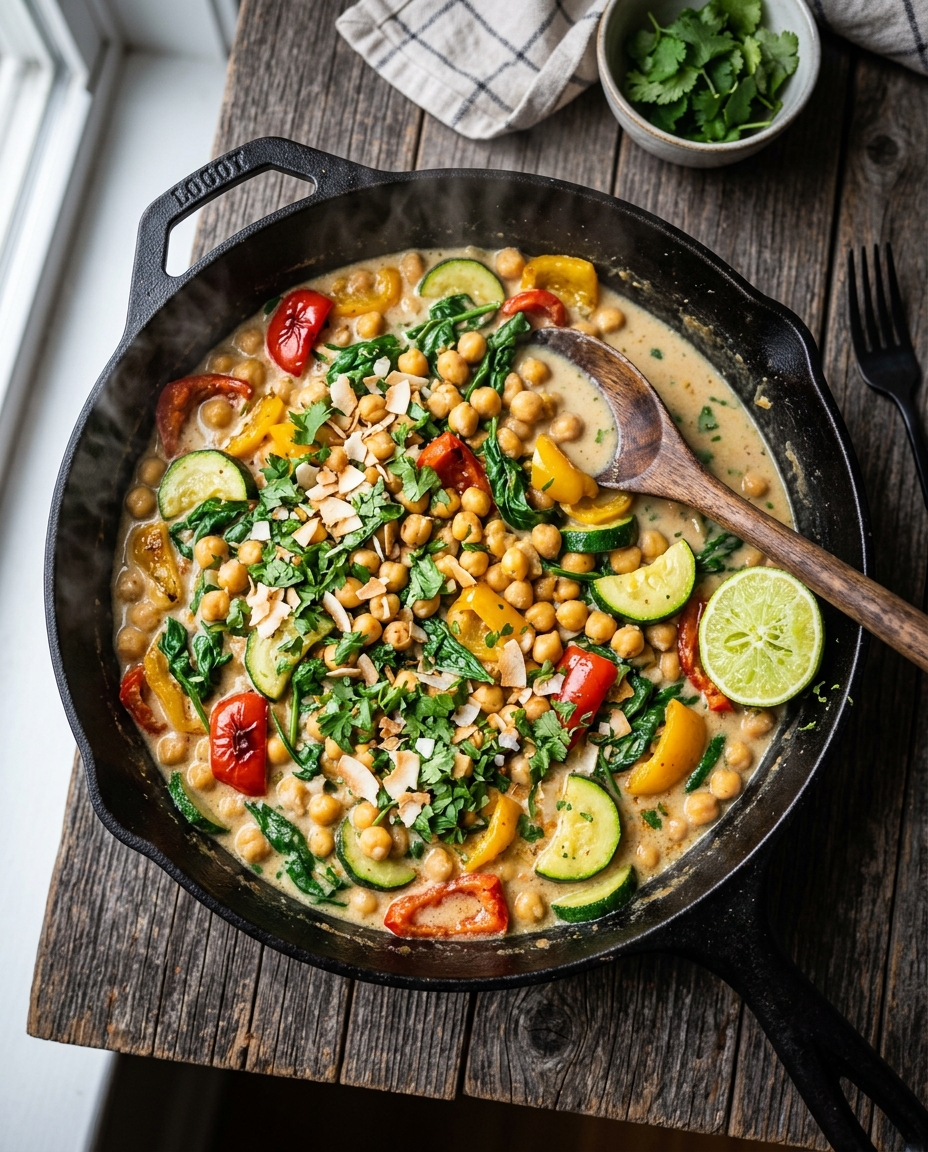
- Remove from heat and garnish generously with fresh cilantro and toasted coconut flakes if using. A squeeze of fresh lime juice just before serving adds a final brightness. Pro tip: Fresh cilantro is almost essential here—it complements the lime and coconut beautifully. If you're cilantro-averse, use fresh basil or parsley instead.
Notes
- Full-fat unsweetened coconut milk is essential for the rich, creamy texture that makes this dish special—don't substitute light coconut milk
- Fresh lime juice and zest are crucial for brightness; bottled lime juice won't provide the same complex flavor
- This recipe doubles beautifully for meal prep and improves over time as flavors meld, making it perfect for weekly batch cooking