Ingredients
Equipment
Method
Prepare the Sauce and Ingredients
- In a small bowl, whisk together gochujang, soy sauce, sesame oil, and sugar until smooth. Set aside. Pro tip: Mix the sauce thoroughly to avoid lumps of gochujang in your rice.
- Chop the kimchi into bite-sized pieces and reserve 1/4 cup of the kimchi juice. Mince the garlic and slice the green onions. Pro tip: Don't discard that precious kimchi juice – it's packed with fermented flavor!
Heat the Pan and Sauté Aromatics
- Heat vegetable oil in a large wok or skillet over medium-high heat until shimmering. Pro tip: The pan should be hot enough that a grain of rice sizzles immediately when added.
- Add minced garlic and stir-fry for 30 seconds until fragrant. Add chopped kimchi and cook for 2-3 minutes, stirring frequently. Pro tip: Cooking the kimchi first develops deeper flavors and reduces excess moisture.
Add Rice and Seasonings
- Add the cold, day-old rice to the pan, breaking up any clumps with your spoon or spatula. Pro tip: Cold rice separates easier and won't turn mushy during stir-frying.
- Pour the prepared sauce and kimchi juice over the rice. Stir-fry for 3-4 minutes, allowing some rice to get crispy on the bottom. Pro tip: Don't stir constantly – let the rice sit for 30-second intervals to develop those coveted crispy bits.
Cook the Eggs
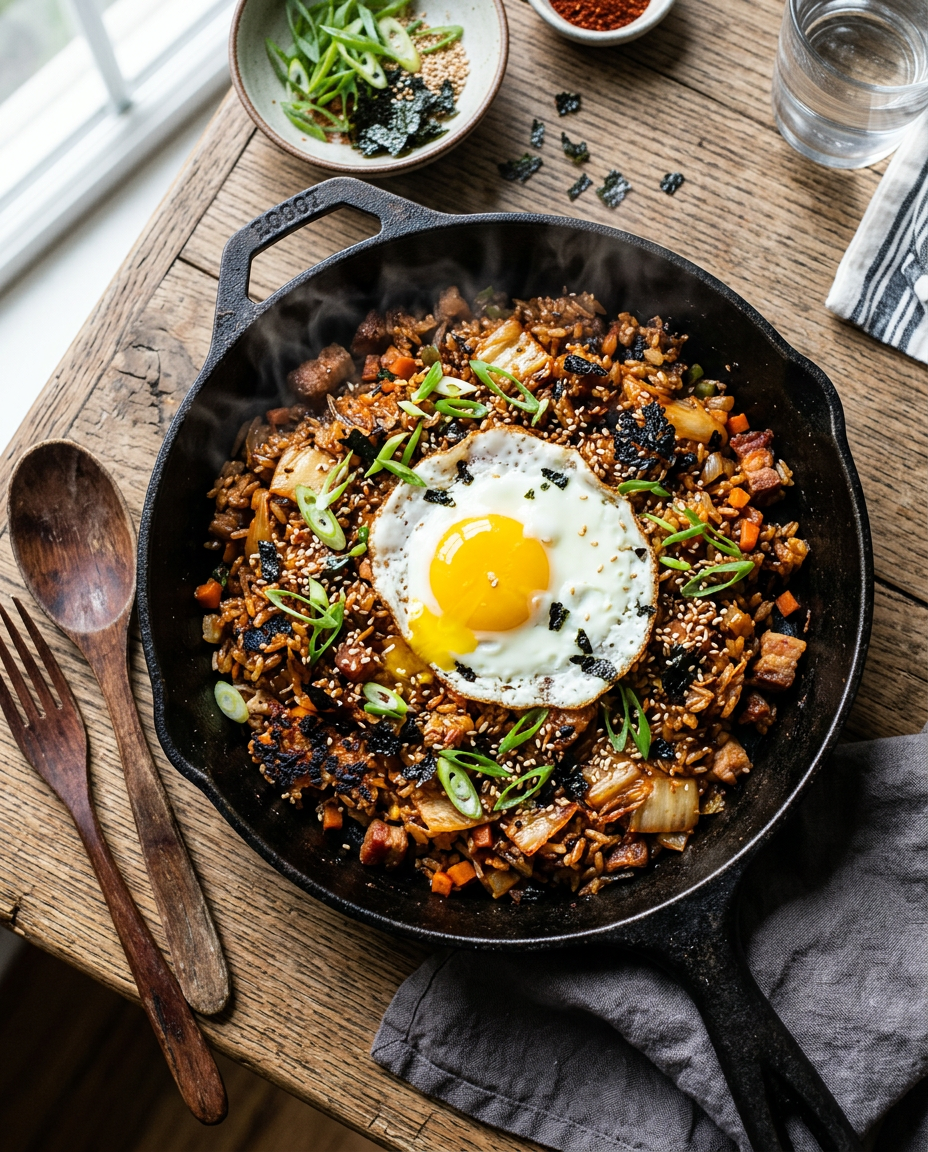
- In a separate small pan, fry the eggs sunny-side up with crispy edges, keeping the yolks runny. Pro tip: The runny yolk acts as an additional creamy sauce when mixed into the rice.
Final Assembly and Serving
- Transfer the kimchi fried rice to serving bowls. Top each portion with a fried egg. Pro tip: Serve immediately while the rice is still sizzling hot for the best texture.
- Garnish with sliced green onions, toasted sesame seeds, and torn pieces of roasted seaweed. Pro tip: Add garnishes just before serving to maintain their fresh flavors and textures.
Notes
- Day-old refrigerated rice is essential for the best texture - fresh rice will turn mushy
- Well-fermented kimchi (aged at least 1 week) provides the best sour, tangy flavor
- Adjust gochujang amount to your preferred spice level - start with less and add more as needed