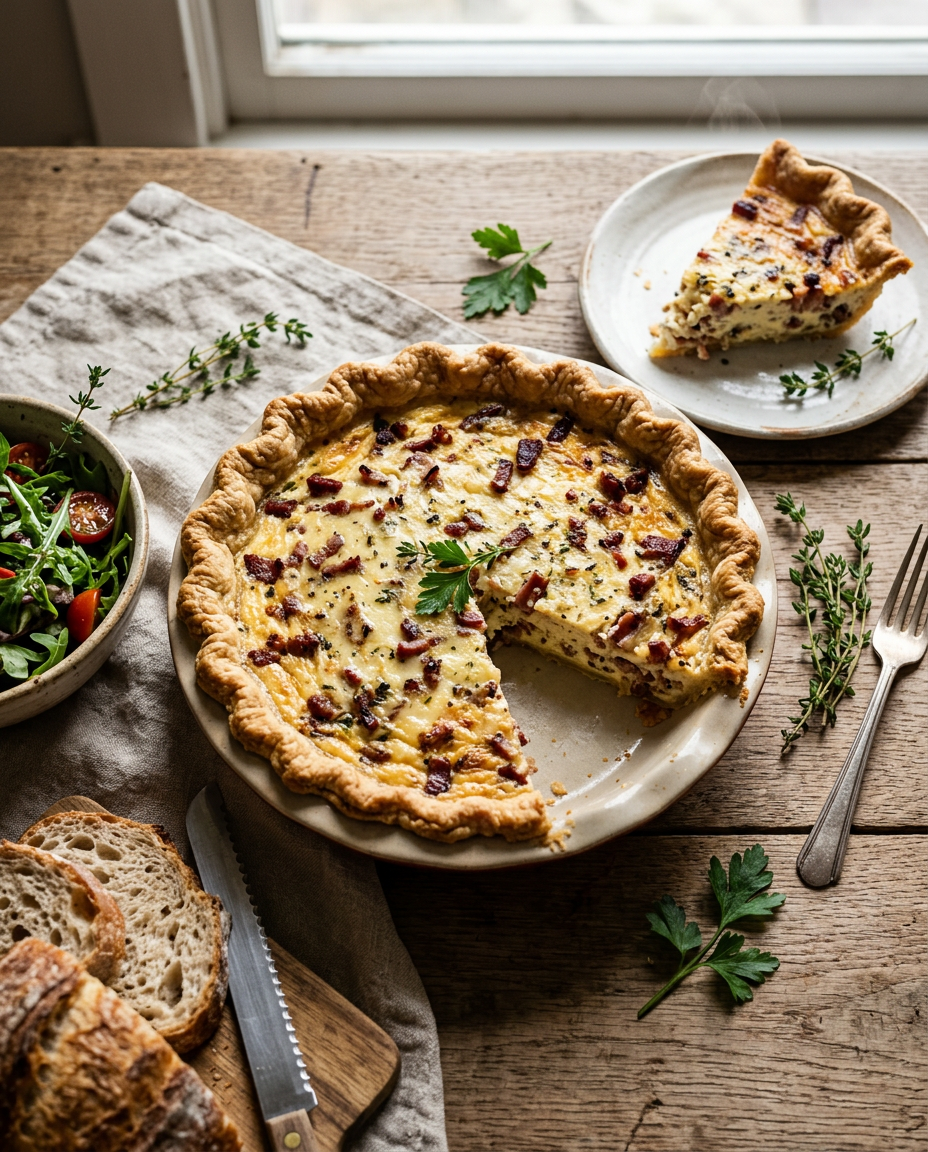
Ingredients
Equipment
Method
Prepare the Pie Crust
- In a medium bowl, whisk together flour, salt, and sugar. Cut the cold butter and shortening into small cubes and add to the flour mixture. Using a pastry cutter, two knives, or your fingertips, work the fat into the flour until the mixture resembles coarse breadcrumbs with some pea-sized pieces remaining. Pro tip: Keep everything cold—this is the secret to a flaky crust. Work quickly to prevent the butter from warming.
- Sprinkle ice water over the mixture, 1 tablespoon at a time, gently tossing with a fork until the dough just begins to come together. You want it barely moistened but not wet. Pro tip: Overworking the dough creates a tough crust, so resist the urge to knead it.
- Form the dough into a disk, wrap in plastic wrap, and refrigerate for at least 30 minutes while you prepare the filling. Pro tip: You can make this dough up to 2 days ahead, or freeze it for up to 3 months.
Cook the Bacon
- Cook the bacon slices in a large skillet over medium heat until crispy, about 8-10 minutes, turning occasionally for even browning. Transfer to a paper towel-lined plate to drain. Pro tip: Thick-cut bacon holds up better to cooking and provides superior texture in your quiche lorraine recipe.
- Once cooled, chop the bacon into bite-sized pieces, roughly 1/2-inch. Set aside. Pro tip: Save 1 tablespoon of the bacon fat—you'll use it to sauté the crust for extra flavor.
Line and Pre-Bake the Crust
- Preheat your oven to 400°F. On a lightly floured surface, roll out the chilled dough to a circle about 11 inches in diameter and 1/8-inch thick. Transfer to a 9-inch pie dish, letting the edges hang over slightly. Pro tip: If the dough cracks, simply patch it with scraps and press gently—small imperfections won't affect your quiche.
- Trim the crust to a 1-inch overhang and crimp the edges decoratively with a fork or your fingers. Prick the bottom all over with a fork to prevent puffing. Pro tip: This crimping also helps seal the crust and prevents it from shrinking too much during baking.
- Line the crust with parchment paper and fill with pie weights or dried beans. Bake for 8-10 minutes until lightly set but not browned. Remove the weights and parchment, brush the crust lightly with the reserved bacon fat, and bake for another 2-3 minutes. Pro tip: This par-baking prevents a soggy bottom crust—crucial for the perfect quiche Lorraine recipe.
Prepare the Custard Filling
- In a large bowl, whisk together the eggs, heavy cream, and milk until well combined and smooth. Add the salt, pepper, and nutmeg, whisking gently to incorporate without creating too many bubbles. Pro tip: Use room-temperature eggs and cream—they combine more smoothly and create a silkier custard.
- Stir in the chopped bacon until evenly distributed throughout the custard. Pro tip: This authentic French quiche lorraine is all about the bacon distribution—try to spread it evenly for every bite.
Assemble and Bake
- Reduce the oven temperature to 375°F. Pour the custard mixture into the pre-baked pie crust, filling it about three-quarters full. The mixture should come to just below the crimped edge. Pro tip: If you have extra custard, you can bake it separately in a small ramekin as a test for doneness.
- Place the quiche on a baking sheet (to catch any drips) and bake for 30-35 minutes. The quiche is done when the edges are set and lightly golden, but the center still jiggles very slightly when you gently shake the pan—about a 2-inch circle in the middle should wobble. Pro tip: This is the most crucial step in making the best quiche recipe. Overbaking results in a rubbery, separated custard; underbaking leaves it too runny.
- Remove from the oven and let cool on a wire rack for at least 15 minutes before slicing. This cooling time allows the custard to set properly. Pro tip: The quiche will continue to cook slightly from residual heat, so don't panic if it jiggles—trust the process.
Cool and Serve
- Allow the quiche to cool to room temperature (about 1 hour) for the best flavor and texture. You can serve it warm, room temperature, or chilled, depending on your preference. Pro tip: Room temperature is the traditional French way to serve quiche Lorraine, which allows all the flavors to shine without being muted by heat.
Notes
- The key to perfect texture is baking until the center jiggles slightly in a 2-inch circle—this ensures a creamy custard rather than rubbery texture
- Always pre-bake the pie crust with weights to prevent a soggy bottom, which is essential for this quiche lorraine recipe
- Room temperature eggs and cream combine more smoothly, creating a silkier custard with fewer lumps and more even cooking