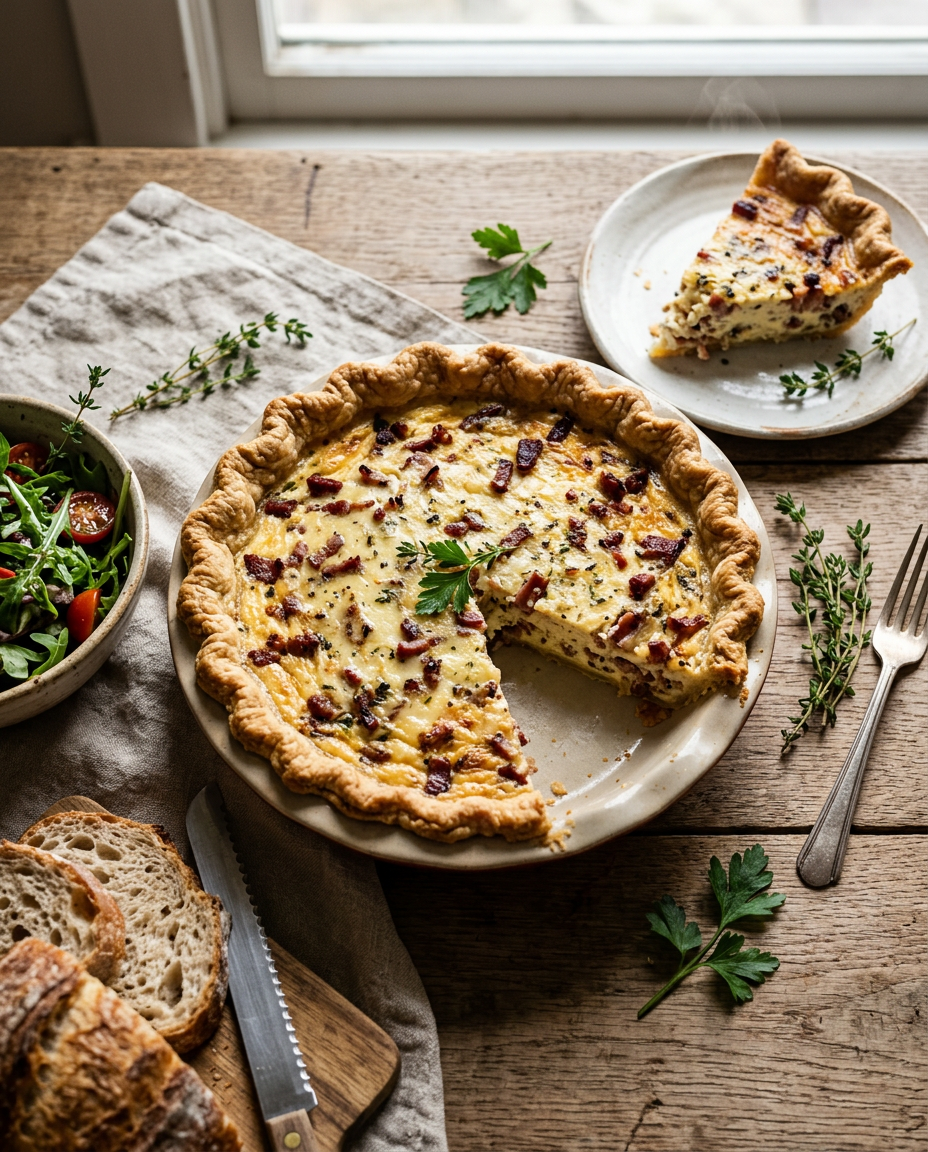
There’s something undeniably magical about a slice of homemade quiche Lorraine recipe—that golden, custardy filling studded with crispy bacon, nestled in a buttery pastry crust. This classic French quiche lorraine recipe has graced dinner tables for generations, and once you master it, you’ll understand why it’s celebrated as one of the most elegant yet simple dishes you can make at home. I’ve tested this recipe dozens of times, tweaking every detail to help you achieve restaurant-quality results in your own kitchen.
What makes this authentic French quiche lorraine recipe truly special is its simplicity and reliance on quality ingredients. Unlike many modern variations that load up on cream and cheese, the traditional quiche Lorraine celebrates the pure flavors of eggs, cream, bacon, and pastry. This is comfort food at its finest—perfect for brunch, lunch, or a light dinner, and it’s surprisingly easy to prepare once you understand the fundamentals.
Whether you’re a seasoned home cook or just beginning your culinary journey, this guide will walk you through every step of creating your own perfect quiche lorraine recipe. I’ll share my personal tips, troubleshooting advice, and creative variations so you can adapt this classic to your taste preferences and dietary needs.
Why You’ll Love This Perfect Quiche Lorraine Recipe
- Elegantly Simple: This quiche Lorraine recipe requires just a handful of quality ingredients, yet delivers sophisticated flavors that impress every time.
- Versatile Meal Option: Serve it warm, at room temperature, or chilled—it’s perfect for breakfast, brunch, lunch, or a light dinner.
- Make-Ahead Friendly: Prepare your homemade quiche recipe ahead of time and reheat when needed, making it ideal for meal prep and entertaining.
- Budget-Conscious: This authentic French quiche lorraine uses affordable pantry staples that come together to create an impressive dish.
- Naturally Gluten-Free Option: Easily adapt this bacon and egg quiche by using a gluten-free crust for dietary preferences.
- Crowd-Pleasing Classic: Few dishes satisfy as many people as a classic French quiche—it works for picky eaters and food lovers alike.
Ingredients You’ll Need
The beauty of this classic French quiche lorraine recipe lies in its ingredient simplicity. You’ll need quality bacon, fresh eggs, heavy cream, and a proper pie crust. I always recommend using thick-cut bacon for better texture and flavor—it’s worth the extra effort to render it properly. The eggs and cream create that signature silky custard that defines the best quiche recipe, and don’t skip the nutmeg; that subtle warmth is what separates a memorable quiche from an ordinary one.
For this easy quiche lorraine recipe, I’ve provided homemade pie crust instructions, but I won’t judge you for using a quality store-bought crust if you’re short on time. The filling is what truly matters, and getting that custard just right—creamy but set, never rubbery—is the key to success with this bacon and egg quiche.
For the Pie Crust
- 1 1/4 cups all-purpose flour (plus extra for dusting)
- 1/2 teaspoon sea salt (fine)
- 1/2 teaspoon sugar (granulated)
- 6 tablespoons cold unsalted butter (cubed)
- 2 tablespoons cold vegetable shortening (or additional butter)
- 3-5 tablespoons ice water (as needed)
For the Quiche Filling
- 8 ounces thick-cut bacon (about 8 slices)
- 4 large eggs (room temperature)
- 1 cup heavy cream (room temperature)
- 1/2 cup whole milk (room temperature)
- 1/2 teaspoon fine sea salt
- 1/4 teaspoon freshly ground black pepper
- 1/4 teaspoon freshly grated nutmeg (essential for authentic flavor)
Optional Add-ins:
- Gruyère cheese
- Fresh thyme
- Caramelized onions
How to Make Perfect Quiche Lorraine Recipe (Step-by-Step)
1. Prepare the Pie Crust
In a medium bowl, whisk together flour, salt, and sugar. Cut the cold butter and shortening into small cubes and add to the flour mixture. Using a pastry cutter, two knives, or your fingertips, work the fat into the flour until the mixture resembles coarse breadcrumbs with some pea-sized pieces remaining.
Pro tip: Keep everything cold—this is the secret to a flaky crust. Work quickly to prevent the butter from warming.
Sprinkle ice water over the mixture, 1 tablespoon at a time, gently tossing with a fork until the dough just begins to come together. You want it barely moistened but not wet.
Pro tip: Overworking the dough creates a tough crust, so resist the urge to knead it.
Form the dough into a disk, wrap in plastic wrap, and refrigerate for at least 30 minutes while you prepare the filling.
Pro tip: You can make this dough up to 2 days ahead, or freeze it for up to 3 months.
2. Cook the Bacon
Cook the bacon slices in a large skillet over medium heat until crispy, about 8-10 minutes, turning occasionally for even browning. Transfer to a paper towel-lined plate to drain.
Pro tip: Thick-cut bacon holds up better to cooking and provides superior texture in your quiche lorraine recipe.
Once cooled, chop the bacon into bite-sized pieces, roughly 1/2-inch. Set aside.
Pro tip: Save 1 tablespoon of the bacon fat—you’ll use it to sauté the crust for extra flavor.
3. Line and Pre-Bake the Crust
Preheat your oven to 400°F. On a lightly floured surface, roll out the chilled dough to a circle about 11 inches in diameter and 1/8-inch thick. Transfer to a 9-inch pie dish, letting the edges hang over slightly.
Pro tip: If the dough cracks, simply patch it with scraps and press gently—small imperfections won’t affect your quiche.
Trim the crust to a 1-inch overhang and crimp the edges decoratively with a fork or your fingers. Prick the bottom all over with a fork to prevent puffing.
Pro tip: This crimping also helps seal the crust and prevents it from shrinking too much during baking.
Line the crust with parchment paper and fill with pie weights or dried beans. Bake for 8-10 minutes until lightly set but not browned. Remove the weights and parchment, brush the crust lightly with the reserved bacon fat, and bake for another 2-3 minutes.
Pro tip: This par-baking prevents a soggy bottom crust—crucial for the perfect quiche Lorraine recipe.
4. Prepare the Custard Filling
In a large bowl, whisk together the eggs, heavy cream, and milk until well combined and smooth. Add the salt, pepper, and nutmeg, whisking gently to incorporate without creating too many bubbles.
Pro tip: Use room-temperature eggs and cream—they combine more smoothly and create a silkier custard.
Stir in the chopped bacon until evenly distributed throughout the custard.
Pro tip: This authentic French quiche lorraine is all about the bacon distribution—try to spread it evenly for every bite.
5. Assemble and Bake
Reduce the oven temperature to 375°F. Pour the custard mixture into the pre-baked pie crust, filling it about three-quarters full. The mixture should come to just below the crimped edge.
Pro tip: If you have extra custard, you can bake it separately in a small ramekin as a test for doneness.
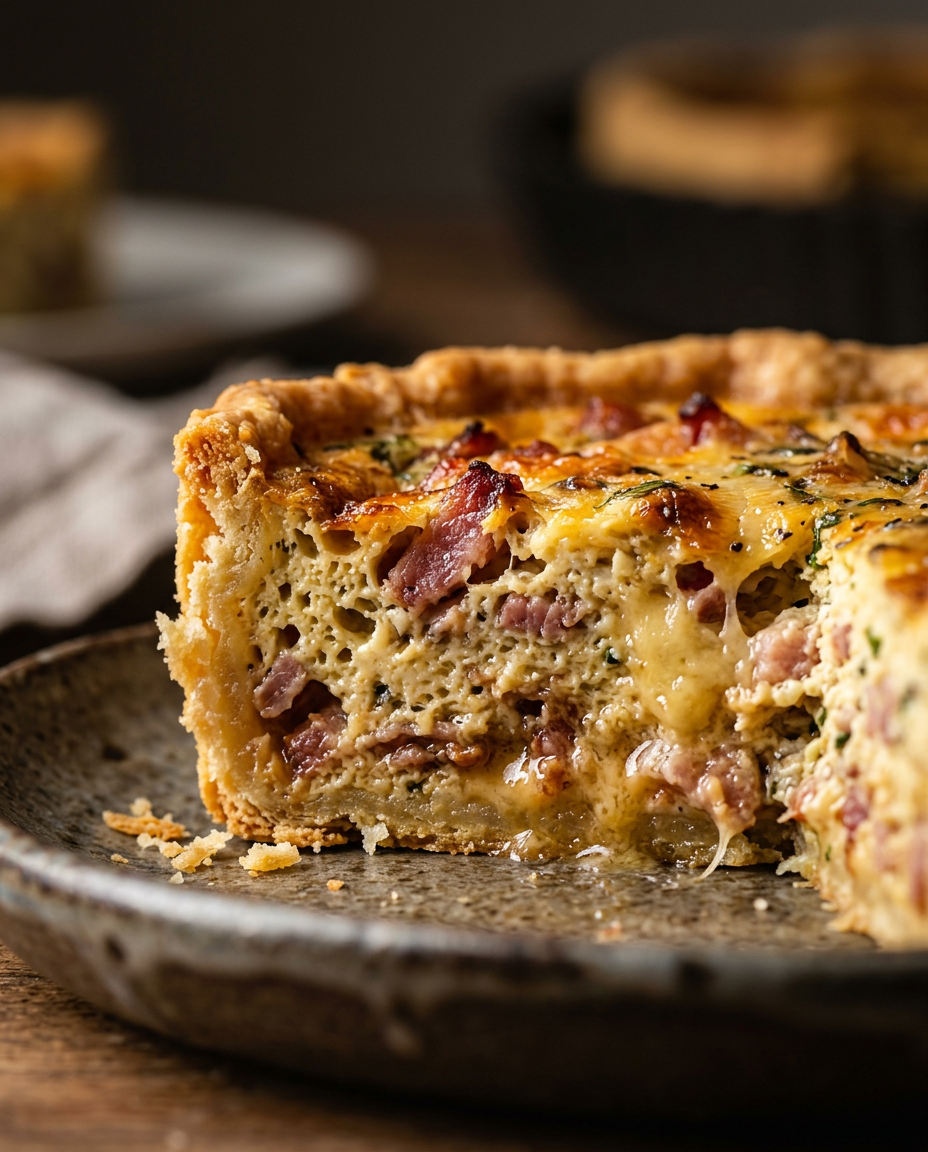
Place the quiche on a baking sheet (to catch any drips) and bake for 30-35 minutes. The quiche is done when the edges are set and lightly golden, but the center still jiggles very slightly when you gently shake the pan—about a 2-inch circle in the middle should wobble.
Pro tip: This is the most crucial step in making the best quiche recipe. Overbaking results in a rubbery, separated custard; underbaking leaves it too runny.
Remove from the oven and let cool on a wire rack for at least 15 minutes before slicing. This cooling time allows the custard to set properly.
Pro tip: The quiche will continue to cook slightly from residual heat, so don’t panic if it jiggles—trust the process.
6. Cool and Serve
Allow the quiche to cool to room temperature (about 1 hour) for the best flavor and texture. You can serve it warm, room temperature, or chilled, depending on your preference.
Pro tip: Room temperature is the traditional French way to serve quiche Lorraine, which allows all the flavors to shine without being muted by heat.
Perfect Quiche Lorraine Recipe – Full Recipe
Perfect Quiche Lorraine Recipe
Ingredients
Equipment
Method
- In a medium bowl, whisk together flour, salt, and sugar. Cut the cold butter and shortening into small cubes and add to the flour mixture. Using a pastry cutter, two knives, or your fingertips, work the fat into the flour until the mixture resembles coarse breadcrumbs with some pea-sized pieces remaining. Pro tip: Keep everything cold—this is the secret to a flaky crust. Work quickly to prevent the butter from warming.
- Sprinkle ice water over the mixture, 1 tablespoon at a time, gently tossing with a fork until the dough just begins to come together. You want it barely moistened but not wet. Pro tip: Overworking the dough creates a tough crust, so resist the urge to knead it.
- Form the dough into a disk, wrap in plastic wrap, and refrigerate for at least 30 minutes while you prepare the filling. Pro tip: You can make this dough up to 2 days ahead, or freeze it for up to 3 months.
- Cook the bacon slices in a large skillet over medium heat until crispy, about 8-10 minutes, turning occasionally for even browning. Transfer to a paper towel-lined plate to drain. Pro tip: Thick-cut bacon holds up better to cooking and provides superior texture in your quiche lorraine recipe.
- Once cooled, chop the bacon into bite-sized pieces, roughly 1/2-inch. Set aside. Pro tip: Save 1 tablespoon of the bacon fat—you'll use it to sauté the crust for extra flavor.
- Preheat your oven to 400°F. On a lightly floured surface, roll out the chilled dough to a circle about 11 inches in diameter and 1/8-inch thick. Transfer to a 9-inch pie dish, letting the edges hang over slightly. Pro tip: If the dough cracks, simply patch it with scraps and press gently—small imperfections won't affect your quiche.
- Trim the crust to a 1-inch overhang and crimp the edges decoratively with a fork or your fingers. Prick the bottom all over with a fork to prevent puffing. Pro tip: This crimping also helps seal the crust and prevents it from shrinking too much during baking.
- Line the crust with parchment paper and fill with pie weights or dried beans. Bake for 8-10 minutes until lightly set but not browned. Remove the weights and parchment, brush the crust lightly with the reserved bacon fat, and bake for another 2-3 minutes. Pro tip: This par-baking prevents a soggy bottom crust—crucial for the perfect quiche Lorraine recipe.
- In a large bowl, whisk together the eggs, heavy cream, and milk until well combined and smooth. Add the salt, pepper, and nutmeg, whisking gently to incorporate without creating too many bubbles. Pro tip: Use room-temperature eggs and cream—they combine more smoothly and create a silkier custard.
- Stir in the chopped bacon until evenly distributed throughout the custard. Pro tip: This authentic French quiche lorraine is all about the bacon distribution—try to spread it evenly for every bite.
- Reduce the oven temperature to 375°F. Pour the custard mixture into the pre-baked pie crust, filling it about three-quarters full. The mixture should come to just below the crimped edge. Pro tip: If you have extra custard, you can bake it separately in a small ramekin as a test for doneness.
- Place the quiche on a baking sheet (to catch any drips) and bake for 30-35 minutes. The quiche is done when the edges are set and lightly golden, but the center still jiggles very slightly when you gently shake the pan—about a 2-inch circle in the middle should wobble. Pro tip: This is the most crucial step in making the best quiche recipe. Overbaking results in a rubbery, separated custard; underbaking leaves it too runny.
- Remove from the oven and let cool on a wire rack for at least 15 minutes before slicing. This cooling time allows the custard to set properly. Pro tip: The quiche will continue to cook slightly from residual heat, so don't panic if it jiggles—trust the process.
- Allow the quiche to cool to room temperature (about 1 hour) for the best flavor and texture. You can serve it warm, room temperature, or chilled, depending on your preference. Pro tip: Room temperature is the traditional French way to serve quiche Lorraine, which allows all the flavors to shine without being muted by heat.
Notes
- The key to perfect texture is baking until the center jiggles slightly in a 2-inch circle—this ensures a creamy custard rather than rubbery texture
- Always pre-bake the pie crust with weights to prevent a soggy bottom, which is essential for this quiche lorraine recipe
- Room temperature eggs and cream combine more smoothly, creating a silkier custard with fewer lumps and more even cooking
Tips for the Best Perfect Quiche Lorraine Recipe
- Temperature Matters: Use room-temperature eggs and cream for a smoother custard that bakes more evenly. Cold ingredients can create lumps and uneven cooking in your quiche Lorraine recipe.
- Don’t Skip Pre-Baking: This crucial step prevents a soggy bottom crust and ensures your homemade quiche recipe has a perfectly crisp base.
- Watch for the Jiggle: The center should still move slightly when gently shaken—this residual cooking creates the ideal custardy texture that defines the best quiche recipe.
- Use Quality Ingredients: This authentic French quiche lorraine shines when made with real butter, fresh eggs, and good bacon. Shortcuts here are noticeable.
- Crust Thickness Variation: If you prefer a crispier crust, use a metal pie dish instead of ceramic; metal conducts heat better and creates more browning.
- Make It Ahead: Bake your quiche Lorraine up to 1 day ahead, then reheat gently in a 325°F oven for 15-20 minutes. This easy quiche Lorraine makes entertaining stress-free.
Variations to Try
- Lorraine with Gruyère: Add 1/2 cup shredded Gruyère cheese to the custard mixture. This richer variation adds nutty complexity while maintaining the classic quiche Lorraine character.
- Garden Vegetable Quiche: Sauté diced bell peppers, zucchini, and mushrooms in the bacon fat, then layer into the pre-baked crust along with the bacon before adding custard. This easy quiche lorraine variation adds freshness.
- Caramelized Onion & Bacon Quiche: Layer 1/2 cup of caramelized onions on the crust before adding the bacon and custard for a sweet, savory depth that elevates the traditional recipe.
- French Herb Quiche: Stir 1 teaspoon dried tarragon or 2 tablespoons fresh chives into the custard for a classic French herb accent that complements the bacon beautifully.
- Smoked Salmon Version: Replace the bacon with 6 ounces of flaked smoked salmon and add 1 tablespoon of fresh dill. This transforms your quiche Lorraine into an elegant variation perfect for brunch.
Storage and Meal Prep Tips
- Refrigerator: Store your finished quiche Lorraine recipe in an airtight container or covered with plastic wrap for up to 3 days. It tastes excellent chilled and is perfect for quick breakfasts or light lunches.
- Freezer: Wrap the cooled, unbaked quiche tightly in plastic wrap and freeze for up to 2 months. Bake directly from frozen, adding 10-15 minutes to the baking time and covering loosely with foil if the top browns too quickly.
- Reheating: Warm slices in a 325°F oven for 15-20 minutes until heated through, or microwave individual slices for 60-90 seconds. Reheating in the oven preserves the crust texture better than microwaving.
- Meal Prep: Bake your quiche Lorraine on Sunday and portion into containers for grab-and-go breakfasts throughout the week. It stores perfectly and provides a protein-rich start to busy mornings.
- Crust Dough: Prepare pie dough up to 2 days ahead, or freeze for up to 3 months. Thaw overnight in the refrigerator before rolling out and using in your quiche recipe.
Nutritional Benefits
This classic bacon and egg quiche is more than just delicious—it’s packed with quality protein to keep you satisfied for hours. The eggs and cream provide essential nutrients, while the bacon adds rich flavor along with B vitamins and minerals. This homemade quiche recipe is naturally satisfying in reasonable portions, making it perfect for brunch, lunch, or a light dinner when served with a fresh salad.
- High in Protein: With 4 eggs and 8 ounces of bacon, this quiche Lorraine recipe delivers approximately 18-20g of protein per serving to support muscle health and satiety.
- Rich in Choline: Eggs are one of the best dietary sources of choline, supporting brain health and cognitive function.
- Contains B Vitamins: Bacon and eggs provide B6, B12, and folate for energy metabolism and nervous system health.
- Selenium and Phosphorus: Supporting bone health, thyroid function, and proper mineral balance throughout your body.
- Source of Healthy Fats: The cream and bacon provide fat-soluble vitamins (A, D, E, K) absorption while providing sustained energy.
What to Serve With Perfect Quiche Lorraine Recipe
- Fresh Green Salad: Serve your quiche Lorraine recipe with a light vinaigrette-dressed salad featuring arugula, mixed greens, and Dijon mustard vinaigrette to balance the richness of the custard.
- Roasted Asparagus: The earthy, slightly bitter asparagus complements the savory bacon and creamy filling beautifully. Toss with olive oil, garlic, and lemon juice.
- Crusty Bread: Offer thick slices of toasted sourdough or baguette alongside your quiche Lorraine for soaking up any delicious custard remnants.
- Simple Tomato Salad: A classic French pairing featuring ripe tomatoes, fresh basil, quality olive oil, and fleur de sel salt provides bright acidity to contrast the rich quiche.
- Sautéed Mushrooms: Pan-seared mushrooms with garlic and thyme add earthy umami that enhances the bacon flavors in your homemade quiche recipe without overwhelming it.
Frequently Asked Questions
Can I make quiche lorraine without bacon?
While traditional authentic French quiche lorraine always includes bacon, you can create variations using smoked salmon, pancetta, or even prosciutto. For a vegetarian version, replace the bacon with sautéed mushrooms and caramelized onions. The dish will taste different but can still be delicious. However, if you want a true quiche Lorraine recipe, bacon is essential to the authentic preparation.
Why is my quiche lorraine watery or separated?
Watery or separated quiche usually results from overbaking. The custard should jiggle slightly in the center when done—about a 2-inch circle in the middle. Bake at the correct temperature (375°F) and begin checking around 30 minutes. Additionally, ensure your oven temperature is accurate using an oven thermometer. Room temperature eggs and cream also help create a smoother custard that bakes evenly.
Do I really need to pre-bake the pie crust for quiche?
Yes, pre-baking (or par-baking) the crust is essential for preventing a soggy bottom. This homemade quiche recipe requires about 10-12 minutes of initial baking with pie weights before adding the custard. This step ensures your crust stays crispy instead of becoming soggy from the wet filling. Skip this step, and you’ll likely end up with an unpleasantly damp crust.
Can I make quiche lorraine ahead of time?
Absolutely! You can prepare this easy quiche lorraine in several ways: bake it completely 1 day ahead and store in the refrigerator, covered. Reheat at 325°F for 15-20 minutes before serving. Alternatively, assemble the unbaked quiche in the pie dish, cover tightly with plastic wrap, and refrigerate for up to 12 hours. When ready to bake, add 5 minutes to the baking time. You can also freeze the unbaked quiche for up to 2 months and bake directly from frozen, adding 10-15 minutes to the cooking time.
Is quiche lorraine gluten-free?
Traditional quiche Lorraine recipe contains gluten in the pie crust made from wheat flour. However, you can easily make this bacon and egg quiche gluten-free by using a gluten-free pie crust (store-bought or homemade with gluten-free flour blend). The custard filling itself is naturally gluten-free. Just ensure all ingredients, including any bacon seasoning, are certified gluten-free if you’re preparing this for someone with celiac disease or gluten sensitivity.
Final Thoughts
Making a perfect quiche Lorraine recipe at home is truly one of the most rewarding cooking projects you can undertake. There’s something deeply satisfying about pulling a golden, custardy quiche from the oven, watching it set perfectly with that signature slight jiggle in the center. This classic French quiche lorraine has endured for good reason—it’s elegant yet approachable, simple yet sophisticated, and absolutely delicious whether served warm, at room temperature, or chilled.
I hope this guide has demystified the process and given you the confidence to master this iconic dish. Remember that cooking is as much about the joy of creating something delicious as it is about the final result. Each time you make this easy quiche lorraine, you’ll grow more confident, perhaps experimenting with variations or serving it in different contexts. The beauty of a homemade quiche recipe is that it adapts to your lifestyle, your schedule, and your preferences while delivering impressive results every single time.
Ready to Try It?
Now it’s time to get into the kitchen and create your own perfect quiche Lorraine! Don’t be intimidated by the steps—you’ve got this. Start with the classic bacon and egg quiche using this recipe, then branch out into variations once you feel comfortable. Share your creations in the comments below, tag us on social media, or let me know if you have questions along the way. I’d love to hear about your quiche success stories!