Ingredients
Equipment
Method
Prepare Your Lamb
- Remove your lamb from the refrigerator 60-90 minutes before cooking to allow it to reach room temperature. This ensures even cooking throughout the meat. Pat the lamb completely dry with paper towels—this step is crucial for achieving that beautiful golden-brown exterior. Trim any large pockets of surface fat, leaving about 1/4-inch of fat cap for flavor and protection. Pro tip: Room temperature lamb cooks 15-20% faster and more evenly than cold lamb straight from the fridge. This is the most important step many home cooks skip.
- Place your lamb on a cutting board and score the fat in a crosshatch pattern using a sharp knife, being careful not to cut into the meat itself. This allows the glaze to penetrate and fat to render properly. Rub the entire surface with 2 tablespoons of olive oil, then generously season all sides with sea salt and freshly ground black pepper. Pro tip: The scoring allows the heat to reach more of the fat surface, creating more caramelized surface area and intensifying the glaze application.
Prepare the Glaze
- In a small mixing bowl, whisk together honey, Dijon mustard, balsamic vinegar, minced garlic, fresh rosemary, thyme, cumin, and red pepper flakes if using. Whisk vigorously until the glaze is well combined and the honey is fully incorporated. The mixture should have a glossy, smooth consistency. Taste it straight from the spoon—this is your flavor checkpoint. Adjust vinegar for tanginess or honey for sweetness according to your preference. Pro tip: Whisking together the glaze ahead of time (up to 2 hours before cooking) actually improves flavor development as herbs infuse into the honey and mustard base.
Sear the Lamb
- Preheat your oven to 425°F (220°C). Heat the remaining 1 tablespoon of olive oil in your roasting pan over medium-high heat until it's shimmering but not smoking. Carefully place the lamb in the hot pan, fat-side down first. Sear for 4-5 minutes until the fat cap develops a deep golden-brown color, then sear the other sides for 2-3 minutes each. This searing step creates the Maillard reaction—the chemical process that develops complex, savory flavors. Pro tip: Don't move the lamb while searing. Let it sit undisturbed to develop that beautiful crust. Once seared, position the lamb fat-side up in the roasting pan.
Apply Glaze and Roast
- Using a basting brush, generously apply half of the glaze mixture to the top and sides of the seared lamb. Place the roasting pan in the preheated 425°F oven. Roast for 15 minutes at this high temperature, then reduce the oven temperature to 325°F (163°C). This two-temperature approach ensures a caramelized exterior while the interior stays tender and juicy. Pro tip: Starting hot at 425°F creates a spectacular crust, then the lower temperature allows for gentle, even cooking of the interior without drying out the outside.
- Continue roasting at 325°F for approximately 1 hour 15 minutes to 1 hour 45 minutes, depending on your desired doneness and lamb thickness. Every 20-25 minutes, baste with the remaining glaze mixture and any pan juices. This frequent basting builds layers of glaze and keeps the meat incredibly moist. Insert your meat thermometer into the thickest part of the lamb (not touching bone) to monitor progress. Pro tip: For medium-rare (pink, juicy center), aim for 130-135°F internal temperature. For medium, cook to 140-145°F. For well-done, continue to 160°F. Remember that carryover cooking will raise the temperature 5°F after you remove the lamb from the oven.
Rest and Create Pan Sauce
- Once your lamb reaches your target temperature, remove it from the oven and transfer it to a warm cutting board. Let it rest uncovered for 15-20 minutes. This resting period is absolutely crucial—it allows the juices to redistribute throughout the meat, ensuring moist, tender slices. Resting also gives you time to prepare a simple pan sauce. Pro tip: Resist the urge to cut into the lamb immediately. Every minute of resting dramatically improves the final texture and juiciness of each slice.
- Place your roasting pan on the stovetop over medium heat. Add 1 cup of lamb or vegetable stock, scraping up all the caramelized bits from the bottom with a wooden spoon. Bring to a gentle simmer and cook for 3-4 minutes, reducing slightly. Strain through a fine sieve if you prefer a smooth sauce, or serve it rustic-style with the herbs and bits included. Season with salt and pepper to taste. Pro tip: Those browned bits stuck to the pan (called fond) contain incredible concentrated flavor. Make sure to fully deglaze the pan to capture all that goodness in your sauce.
Carve and Serve
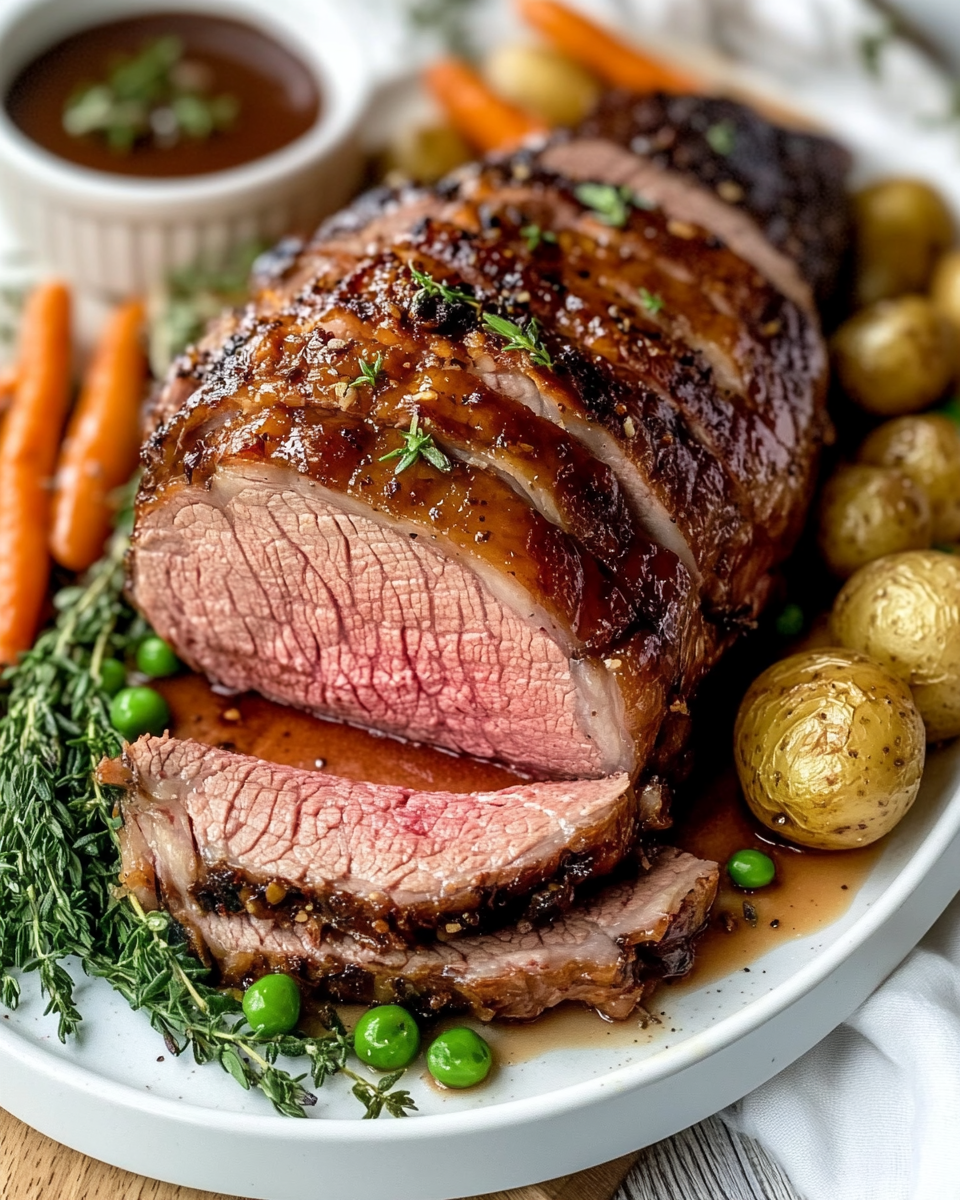
- Using a sharp carving knife and carving fork, slice the lamb against the grain into 1/2-inch thick slices. Work slowly and deliberately to maintain the beautiful presentation. Arrange slices on a warm serving platter, overlapping slightly. Drizzle with the warm pan sauce and garnish with fresh mint if desired. Serve immediately with your chosen side dishes. Pro tip: Carving against the grain shortens the muscle fibers, making each slice more tender. Look at the grain direction and slice perpendicular to it.
Notes
- Bring lamb to room temperature 90 minutes before cooking for even, consistent results throughout the meat
- Use an instant-read meat thermometer to guarantee perfect doneness—aim for 130-135°F for medium-rare or 140-145°F for medium
- Frequent basting with the glaze mixture every 20-25 minutes builds layers of caramelized flavor and keeps the meat incredibly moist