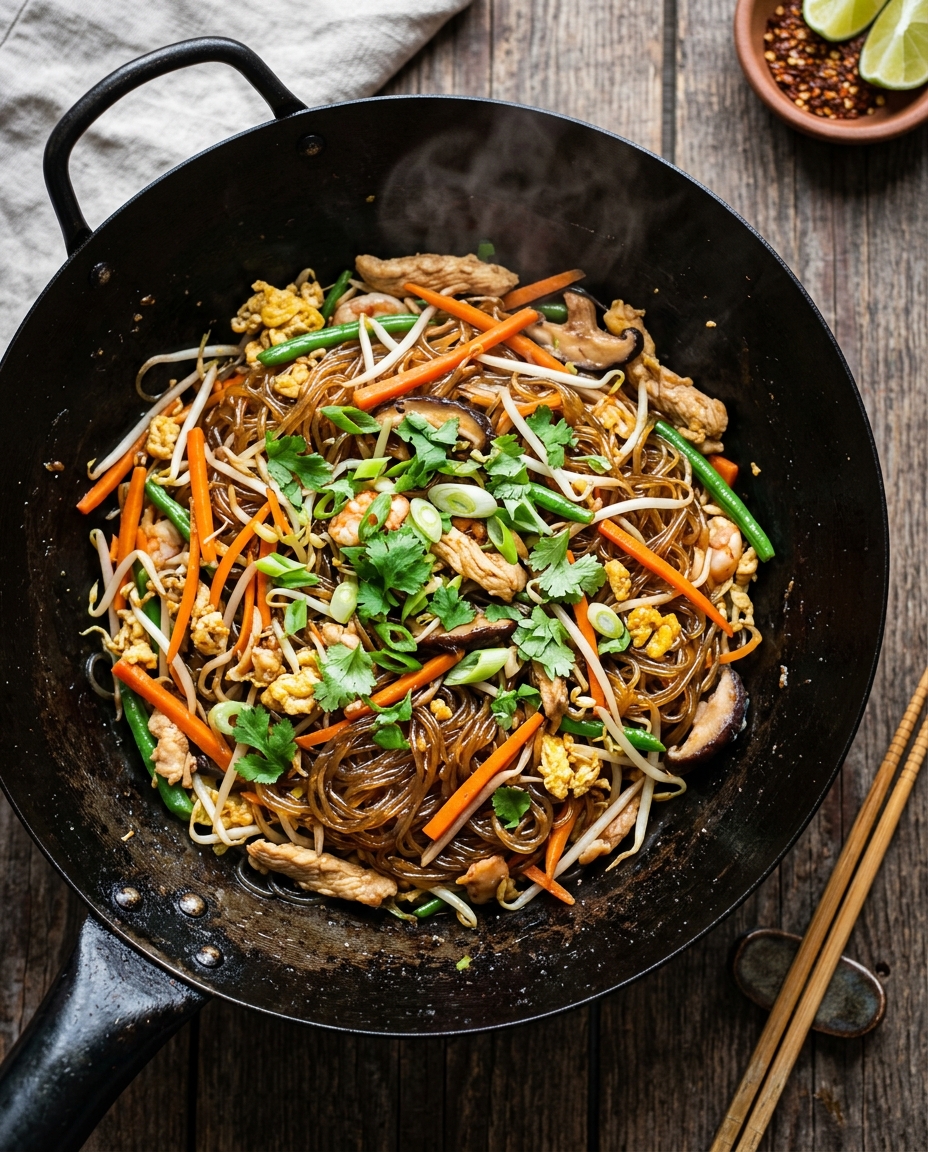
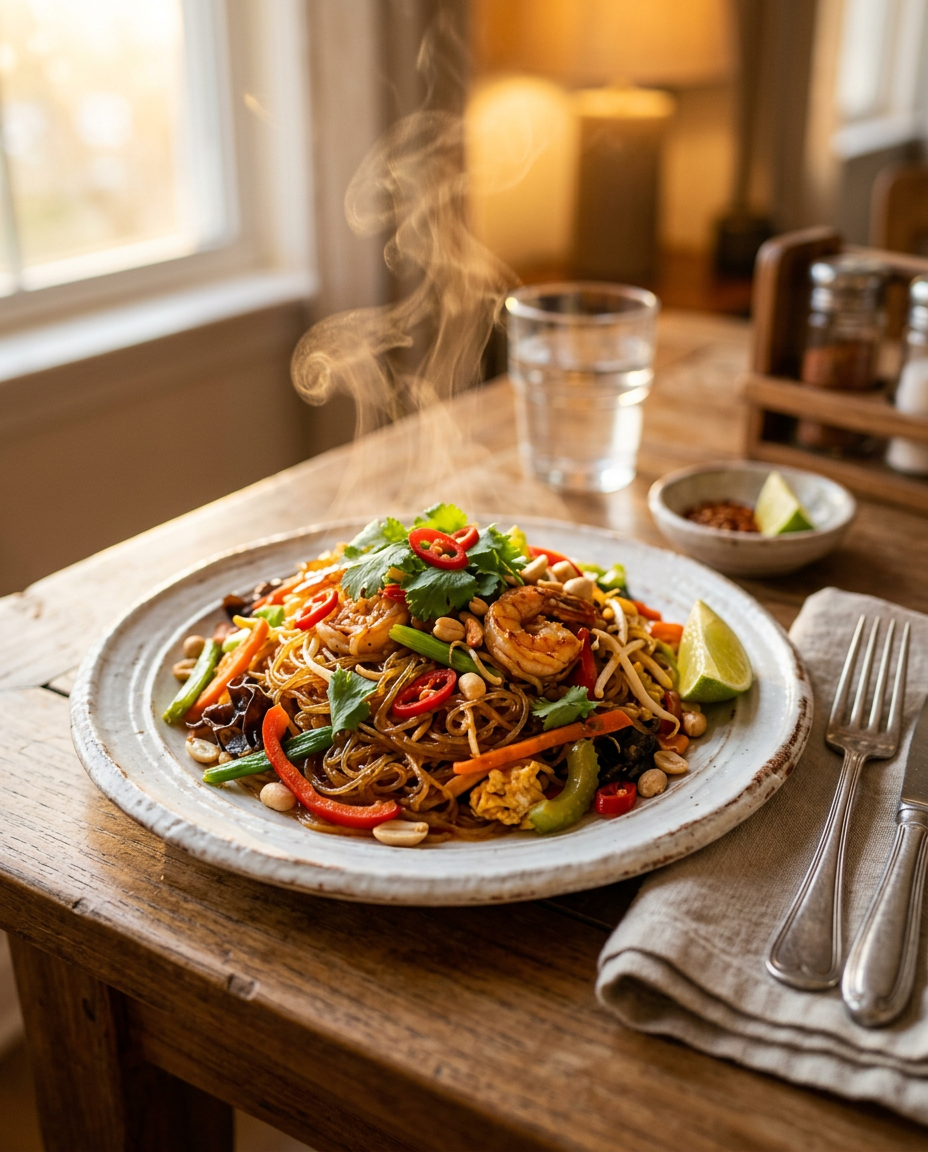
There’s something magical about authentic Thai glass noodles that transforms any ordinary weeknight into a culinary adventure. These translucent, silky strands made from mung bean starch create the most satisfying texture that absorbs every drop of savory sauce while maintaining their delightfully chewy bite.
I first discovered this incredible dish during a cooking class in Bangkok, where the chef taught me that the secret lies in the balance of sweet, salty, and umami flavors. Unlike heavy pasta dishes, this Thai stir fry noodles recipe feels light yet incredibly satisfying, making it perfect for any season.
What I love most about this cellophane noodles recipe is how quickly it comes together – in just 20 minutes, you’ll have a restaurant-quality meal that rivals your favorite Thai takeout spot.
Why You’ll Love This Authentic Thai Glass Noodles Recipe with Fresh Vegetables and Savory Sauce
- Lightning Fast: Ready in just 20 minutes from start to finish, making it perfect for busy weeknights
- Incredibly Versatile: Works beautifully as a main dish, side dish, or even as a refreshing glass noodle salad
- Naturally Gluten-Free: Made from mung bean noodles, it’s perfect for those avoiding wheat
- Packed with Vegetables: Loaded with colorful veggies that add crunch, nutrition, and vibrant colors
- Restaurant-Quality Flavor: Complex umami-rich sauce that tastes like it came from your favorite Thai restaurant
- Budget-Friendly: Uses affordable ingredients you can find at most grocery stores
Ingredients You’ll Need
The beauty of this Asian noodle recipes lies in its simple yet flavorful ingredient list. Glass noodles, also known as cellophane noodles or vermicelli noodles Thai style, are made from mung bean starch and become beautifully translucent when cooked.
For the sauce, we’re using classic Thai pantry staples that create layers of flavor – from the deep umami of soy sauce to the subtle sweetness of palm sugar. Fresh vegetables add color, crunch, and nutrition while protein options make this a complete meal.
For the Noodles
- 8 oz glass noodles (mung bean noodles) (also called cellophane noodles)
- 6 cups boiling water (for soaking noodles)
For the Sauce
- 3 tbsp soy sauce (light or dark)
- 2 tbsp oyster sauce
- 1 tbsp palm sugar (or brown sugar)
- 1 tbsp fish sauce
- 1 tsp sesame oil
For the Stir Fry
- 3 tbsp vegetable oil (for cooking)
- 4 cloves garlic (minced)
- 8 oz protein of choice (chicken, pork, shrimp, or tofu)
- 2 large eggs (beaten)
- 1 cup napa cabbage (chopped)
- 1 cup bean sprouts (fresh)
- 2 large carrots (julienned)
- 4 whole shiitake mushrooms (sliced)
- 3 whole green onions (chopped)
- 1/4 cup fresh cilantro (for garnish)
Optional Add-ins:
- Thai chilies
- lime wedges
- crushed peanuts
- white pepper
How to Make Authentic Thai Glass Noodles Recipe with Fresh Vegetables and Savory Sauce (Step-by-Step)
1. Prepare the Noodles
Place the glass noodles in a large bowl and cover with boiling water. Let soak for 10-15 minutes until softened but still slightly firm. Drain and rinse with cold water, then set aside.
Pro tip: Don’t oversoak the noodles as they’ll continue cooking in the wok
2. Make the Sauce
In a small bowl, whisk together soy sauce, oyster sauce, palm sugar, fish sauce, and sesame oil until the sugar dissolves completely. Set aside.
Pro tip: Taste and adjust the balance of sweet, salty, and umami to your preference
3. Prep the Ingredients
Cut your protein into bite-sized pieces. Julienne the carrots, chop the cabbage, slice the mushrooms, and mince the garlic. Having everything prepped makes the stir-frying process smooth and quick.
Pro tip: Use a mandoline for perfectly uniform carrot julienne
4. Cook the Protein
Heat 1 tablespoon of oil in a large wok over medium-high heat. Add the protein and cook until nearly done, about 3-4 minutes. Remove and set aside.
Pro tip: Don’t overcrowd the wok – cook in batches if needed for better browning
5. Scramble the Eggs
Add another tablespoon of oil to the wok. Pour in beaten eggs and scramble until just set. Remove and set aside with the protein.
Pro tip: Slightly undercook the eggs as they’ll finish cooking when everything is combined
6. Stir Fry the Vegetables
Add remaining oil to the wok. Stir-fry garlic for 30 seconds until fragrant, then add carrots and mushrooms. Cook for 2 minutes.
Pro tip: Keep ingredients moving constantly to prevent burning
Add cabbage and bean sprouts, stir-frying for another 1-2 minutes until vegetables are tender-crisp.
Pro tip: Vegetables should retain some crunch for the best texture contrast
7. Combine Everything
Return the drained noodles, cooked protein, and scrambled eggs to the wok. Pour the sauce over everything and toss continuously for 2-3 minutes until noodles are evenly coated and heated through.
Pro tip: Use tongs or two spatulas to toss gently and avoid breaking the noodles
Remove from heat, add green onions and half the cilantro, tossing once more. Taste and adjust seasoning if needed.
Pro tip: The noodles should be glossy and well-coated with sauce
Authentic Thai Glass Noodles Recipe with Fresh Vegetables and Savory Sauce – Full Recipe
Authentic Thai Glass Noodles Recipe with Fresh Vegetables and Savory Sauce
Ingredients
Equipment
Method
- Place the glass noodles in a large bowl and cover with boiling water. Let soak for 10-15 minutes until softened but still slightly firm. Drain and rinse with cold water, then set aside. Pro tip: Don't oversoak the noodles as they'll continue cooking in the wok
- In a small bowl, whisk together soy sauce, oyster sauce, palm sugar, fish sauce, and sesame oil until the sugar dissolves completely. Set aside. Pro tip: Taste and adjust the balance of sweet, salty, and umami to your preference
- Cut your protein into bite-sized pieces. Julienne the carrots, chop the cabbage, slice the mushrooms, and mince the garlic. Having everything prepped makes the stir-frying process smooth and quick. Pro tip: Use a mandoline for perfectly uniform carrot julienne
- Heat 1 tablespoon of oil in a large wok over medium-high heat. Add the protein and cook until nearly done, about 3-4 minutes. Remove and set aside. Pro tip: Don't overcrowd the wok - cook in batches if needed for better browning
- Add another tablespoon of oil to the wok. Pour in beaten eggs and scramble until just set. Remove and set aside with the protein. Pro tip: Slightly undercook the eggs as they'll finish cooking when everything is combined
- Add remaining oil to the wok. Stir-fry garlic for 30 seconds until fragrant, then add carrots and mushrooms. Cook for 2 minutes. Pro tip: Keep ingredients moving constantly to prevent burning
- Add cabbage and bean sprouts, stir-frying for another 1-2 minutes until vegetables are tender-crisp. Pro tip: Vegetables should retain some crunch for the best texture contrast
- Return the drained noodles, cooked protein, and scrambled eggs to the wok. Pour the sauce over everything and toss continuously for 2-3 minutes until noodles are evenly coated and heated through. Pro tip: Use tongs or two spatulas to toss gently and avoid breaking the noodles
- Remove from heat, add green onions and half the cilantro, tossing once more. Taste and adjust seasoning if needed. Pro tip: The noodles should be glossy and well-coated with sauce
Notes
- Don't oversoak the glass noodles - they should be tender but still have a slight bite
- Keep the wok very hot throughout cooking for authentic wok hei flavor
- Have all ingredients prepped before starting as this dish cooks very quickly
Tips for the Best Authentic Thai Glass Noodles Recipe with Fresh Vegetables and Savory Sauce
- Soak, Don’t Boil: Always soak glass noodles in hot water rather than boiling them to maintain their perfect texture
- High Heat is Key: Use high heat for authentic wok hei (breath of the wok) flavor that makes restaurant-style dishes
- Prep Everything First: Have all ingredients cut and ready before you start cooking since this dish moves very quickly
- Don’t Overcook Vegetables: Keep vegetables slightly crispy for the best texture contrast with the soft noodles
- Taste and Adjust: Start with less sauce and add more as needed – you can always add more but can’t take it away
- Serve Immediately: This dish is best enjoyed hot and fresh from the wok while the textures are at their peak
Variations to Try
- Vegetarian Version: Skip the fish sauce and use mushroom sauce instead, add extra vegetables and tofu for protein
- Spicy Thai Glass Noodles: Add sliced Thai chilies or chili garlic sauce for a fiery kick
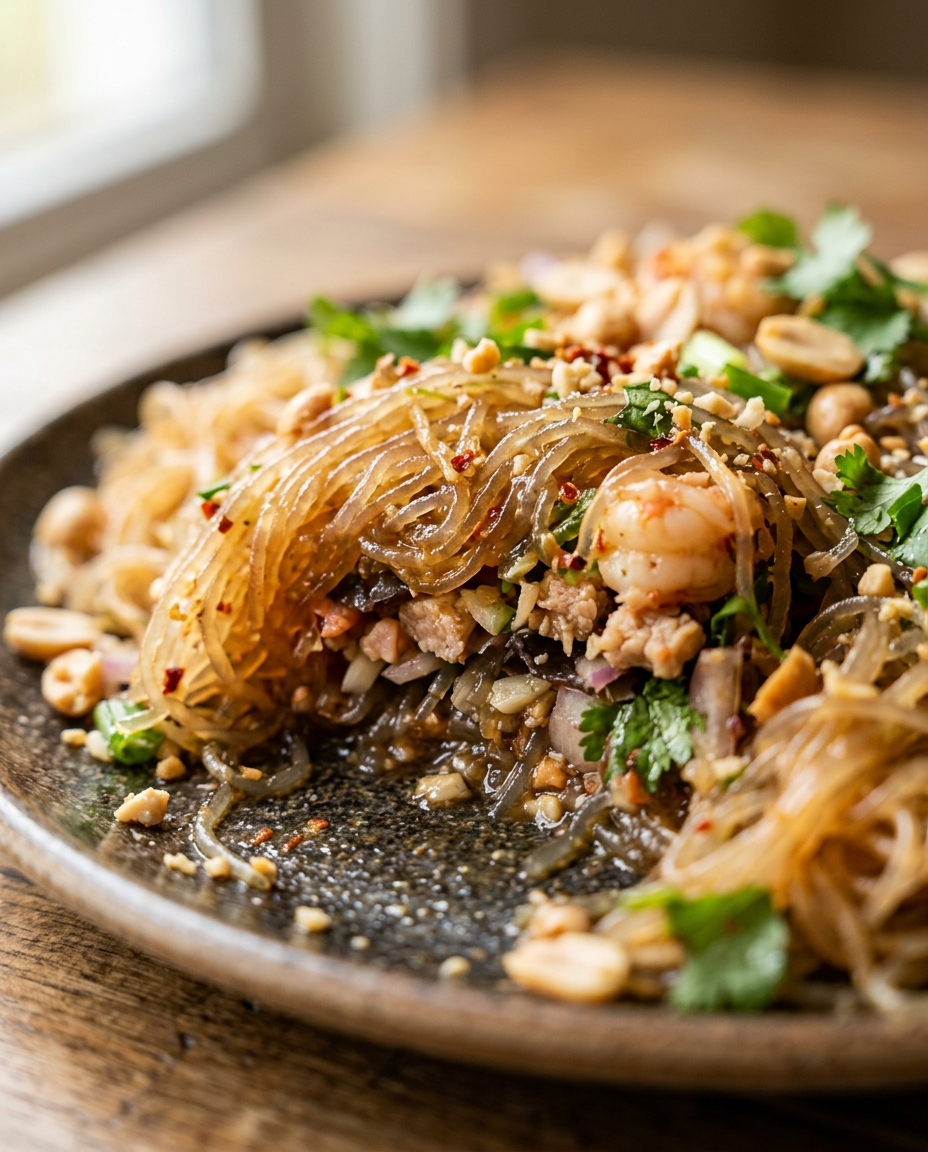
- Glass Noodle Salad Style: Serve at room temperature with lime juice, fish sauce, and fresh herbs for a refreshing meal
- Seafood Version: Use shrimp, scallops, or mixed seafood instead of chicken or pork
- Pad See Ew Woon Sen Style: Use dark soy sauce and add Chinese broccoli for a twist on the classic dish
Storage and Meal Prep Tips
- Refrigerator: Store leftovers in an airtight container for up to 3 days in the refrigerator
- Freezing: While possible, freezing isn’t recommended as the texture of the noodles changes significantly
- Reheating: Reheat in a wok or large skillet over medium heat, adding a splash of water or broth to prevent sticking
- Meal Prep: Cook components separately and combine when ready to serve for best results
Nutritional Benefits
This Thai glass noodles dish offers a wonderful balance of nutrients while being naturally gluten-free and relatively low in calories. Mung bean noodles provide complex carbohydrates and are easier to digest than wheat-based noodles.
- High in protein from eggs and your choice of meat or tofu
- Rich in vitamins A and C from colorful vegetables
- Good source of fiber from bean sprouts and vegetables
- Contains healthy fats from sesame oil
- Lower in calories compared to traditional pasta dishes
- Naturally gluten-free and suitable for various dietary needs
What to Serve With Authentic Thai Glass Noodles Recipe with Fresh Vegetables and Savory Sauce
- Fresh Thai spring rolls with peanut dipping sauce
- Thai cucumber salad (som tam) for a refreshing contrast
- Coconut rice or jasmine rice for a more filling meal
- Thai-style grilled vegetables or satay skewers
- Fresh fruit like mango or pineapple for a tropical finish
Frequently Asked Questions
What are glass noodles made of and where can I buy them?
Glass noodles are made from mung bean starch, which gives them their characteristic translucent appearance when cooked. You can find them in the Asian section of most grocery stores, at Asian markets, or online. They’re also called cellophane noodles, bean thread noodles, or vermicelli noodles.
How do I prevent glass noodles from sticking together?
To prevent sticking, don’t oversoak the noodles and rinse them with cold water after soaking. When stir-frying, use enough oil and keep the noodles moving constantly. If they start to stick, add a splash of water or broth to the wok.
Can I make Thai glass noodles ahead of time?
While best served fresh, you can prep ingredients ahead of time and store them separately. Cook the complete dish just before serving for optimal texture. If you must make it ahead, store in the refrigerator for up to 2 days and reheat gently with a splash of water.
What’s the difference between glass noodles and rice noodles?
Glass noodles are made from mung bean starch and become translucent when cooked, while rice noodles are made from rice flour and remain white. Glass noodles have a more chewy, slippery texture and absorb flavors better, while rice noodles are softer and more delicate.
How can I make this recipe vegetarian or vegan?
For vegetarian, replace fish sauce with mushroom sauce or extra soy sauce. For vegan, also omit the eggs and use tofu or extra vegetables for protein. The dish will still be delicious and authentic-tasting with these simple substitutions.
Final Thoughts
This authentic Thai glass noodles recipe brings the vibrant flavors of Thailand right to your kitchen with minimal effort and maximum reward. The combination of chewy noodles, crisp vegetables, and that perfectly balanced sauce creates a dish that’s both comforting and exciting with every bite.
What makes this recipe truly special is its versatility – whether you’re looking for a quick weeknight dinner, meal prep option, or something to impress dinner guests, these Thai glass noodles deliver on all fronts. The technique may seem simple, but the results are absolutely restaurant-quality.
Ready to Try It?
Ready to bring the authentic tastes of Thailand to your dinner table? Gather your ingredients, heat up that wok, and get ready to create something truly delicious. Don’t forget to share your creation with us – we’d love to see how your Thai glass noodles turn out! Tag us on social media and let us know what variations you tried.