Ingredients
Equipment
Method
Prepare Your Workspace
- Preheat your oven to 400°F (200°C). Remove puff pastry from the freezer and allow it to thaw at room temperature for 30-40 minutes until pliable but still cold. Line your baking sheet with parchment paper to prevent sticking. Pro tip: Cold puff pastry is easier to work with and creates better layers. Remove it just before assembly, not hours ahead.
- While the pastry thaws, prepare your asparagus by rinsing under cold water and trimming the woody ends. Hold each spear horizontally and bend gently—it will naturally snap at the tender breaking point, typically 1-2 inches from the bottom. Pro tip: Save those woody ends for vegetable stock! Tender asparagus from local farms requires minimal trimming, while supermarket spears may need 2-3 inches removed.
Create the Creamy Base
- In a mixing bowl, whisk together the crème fraîche and Dijon mustard until smooth and fully combined. The mixture should be spreadable, like a thick paste. Season with salt, pepper, and lemon zest if using. Pro tip: This mustard-crème fraîche layer is what separates this spring asparagus tart from ordinary vegetable tarts. The tanginess cuts through the richness beautifully.
Assemble the Tart Base
- Unfold your thawed puff pastry onto the parchment-lined baking sheet. If it has a seam, press it gently to seal. Using a fork, prick the pastry all over in a grid pattern, but do not prick all the way through to the bottom—this prevents excessive puffing in the center while the edges still rise. Pro tip: Pricking is the secret to this puff pastry asparagus tart having an even, not-too-puffy surface that's perfect for toppings.
- Brush the edges of the pastry with beaten egg to create a golden border. Don't apply egg wash to the entire surface—just a 1/2-inch border around all four edges. This creates a frame effect that's both beautiful and helps define where the tart ends. Pro tip: This egg wash border is key to achieving that bakery-style appearance.
- Spread the mustard-crème fraîche mixture evenly over the pastry surface, leaving about 1/2 inch of space around the edges (where you applied the egg wash). The layer should be thin—about 2-3 millimeters thick. Pro tip: Don't over-spread; this layer should enhance, not overwhelm, the delicate asparagus flavor.
- Sprinkle the shredded Gruyère cheese evenly over the crème fraîche layer, distributing it all the way to the edges of the spread area. You should see a light coating of cheese across the entire surface. Pro tip: This gruyere asparagus tart relies on the cheese melting into the creamy base, creating a cohesive layer that holds everything together.
Arrange the Asparagus
- Pat the trimmed asparagus spears dry with a clean kitchen towel to remove excess moisture (wet asparagus can make the pastry soggy). Toss them gently in a bowl with olive oil, salt, and pepper until evenly coated. Pro tip: Drying the asparagus is crucial for achieving a crispy pastry base rather than a soggy bottom.
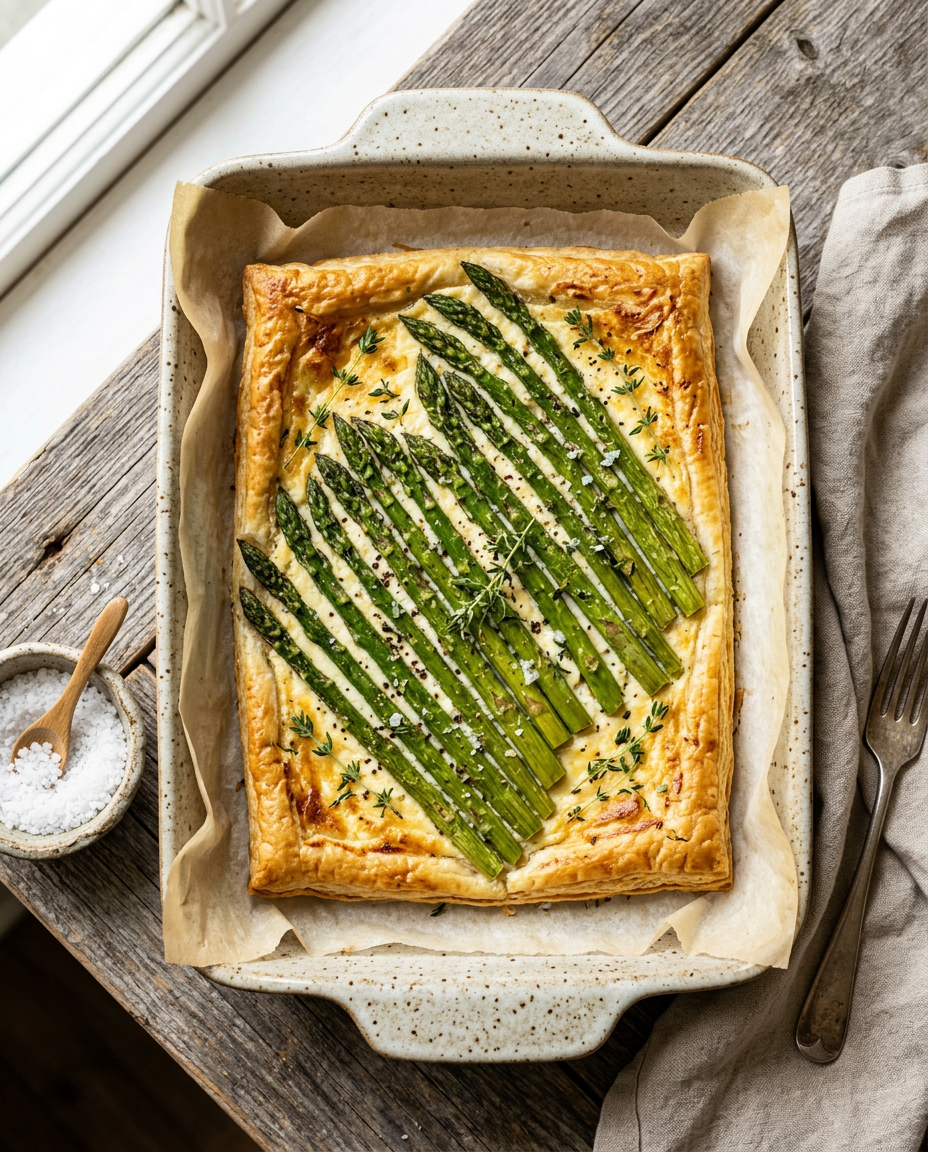
- Arrange the asparagus spears in parallel lines across the tart, all pointing the same direction. Nestle them into the cheese layer with the tips pointing toward one end of the tart. Space them about 1/2 inch apart—close enough to look intentional, with enough space to see the cheese between each spear. Pro tip: This parallel arrangement is what makes this asparagus tarte recipe look so elegant and intentional. Take time with this step—it's the visual anchor of the dish.
Final Prep Before Baking
- Brush the asparagus spears lightly with additional olive oil and season them with a small pinch of sea salt and freshly cracked pepper. If using fresh herbs like thyme, sprinkle them between the spears now. Pro tip: This seasoning step ensures the asparagus develops its own golden-brown spots as it roasts, adding flavor and visual appeal.
- If desired, sprinkle the toasted almonds or pine nuts between the asparagus spears for added texture. Place the tart in your preheated 400°F oven immediately. Pro tip: Don't let the assembled tart sit for more than 10 minutes before baking, as the pastry can absorb moisture and become less crispy.
Bake and Finish
- Bake for 20-25 minutes, until the pastry edges are golden brown and puffed, and the asparagus tips are lightly charred and tender. The cheese layer should be melted and bubbling slightly at the edges. If the edges brown too quickly, tent loosely with foil for the last 5 minutes. Pro tip: Watch around the 15-minute mark—oven temperatures vary. You want the bottom pastry crisp (check by lifting the tart with a spatula) and the asparagus just tender, not mushy.
- Remove from the oven and let cool for 2-3 minutes before serving. Transfer the entire tart to a cutting board or serving platter. Garnish with fresh herbs, a drizzle of excellent olive oil, and fleur de sel if desired. Pro tip: This easy asparagus tart is best served warm or at room temperature, not piping hot. A few minutes of rest helps the pastry set slightly while remaining flaky.
Notes
- Assemble up to 4 hours ahead and refrigerate—bake when ready to serve for maximum freshness and crispness
- Pat asparagus completely dry with a kitchen towel before arranging to prevent soggy pastry bottoms
- Use all-butter puff pastry and grate Gruyère cheese fresh from a block for superior texture and flavor