Ingredients
Equipment
Method
Prepare Your Ingredients
- Remove ricotta cheese and eggs from the refrigerator 15 minutes before cooking to bring them to room temperature. This ensures smooth, lump-free batter that mixes easily. Pro tip: Room temperature ingredients blend together more smoothly and create a more uniform batter with better lift when cooked.
- Wash and dry your lemons thoroughly, then zest them using a microplane or fine grater. Measure out your lemon juice and set both aside separately. Pro tip: Zest the lemons before cutting them in half for juice—it's much easier and you'll get more flavor from the intact fruit.
Mix the Ricotta Base
- In a large mixing bowl, combine the room temperature ricotta cheese with egg yolks, lemon zest, lemon juice, melted butter, and vanilla extract. Stir vigorously until well combined and relatively smooth. A few small ricotta curds are okay. Pro tip: The ricotta should be broken down enough to create a creamy base, but don't overmix or you'll develop gluten and lose that tender crumb we're after.
Combine Dry Ingredients
- In a separate medium bowl, whisk together the all-purpose flour, sugar, baking powder, and sea salt. Make sure to break up any lumps in the baking powder so your pancakes rise evenly. Pro tip: Sifting the dry ingredients is optional but highly recommended for the lightest, most delicate crumb texture in your fluffy ricotta pancakes.
Whip and Fold
- Using an electric mixer or whisk by hand, beat the egg whites until stiff peaks form. The whites should be glossy and thick enough to stand straight up when you lift the beaters. Pro tip: Don't under-beat the whites—proper stiff peaks are what give your lemon ricotta pancakes their signature fluffy texture and airy interior.
- Gently fold the dry ingredients into the ricotta mixture using a rubber spatula until just combined. The batter should have some visible flour streaks remaining. Pro tip: Fold gently and don't overmix—overmixing develops gluten and will make your pancakes dense and tough instead of light and fluffy.
- Fold the whipped egg whites into the batter in two additions, being very gentle. The batter should be thick but pourable, with some white streaks of egg white still visible. Pro tip: These streaks will disappear during cooking and they're a sign you haven't overworked the batter. Stop folding as soon as you see no dry flour.
Cook the Pancakes
- Heat a non-stick griddle or cast iron skillet over medium heat. Once hot, lightly butter or oil the surface. Pour batter in 1/4-cup portions and let cook undisturbed for 2-3 minutes until the bottom is set and lightly golden. Pro tip: Medium heat is crucial—too high and the outsides will burn before the insides cook through; too low and they'll lose their lift.
- Using a thin spatula, gently flip each pancake and cook the second side for about 1-2 minutes until set and lightly golden. Don't press down on the pancakes—let them puff up naturally. Pro tip: These pancakes are delicate and benefit from a gentle touch. Resist the urge to flip multiple times or press with your spatula.
Keep Warm and Serve
- Transfer cooked pancakes to a warm plate or wire rack. If you're making a large batch, loosely tent with foil to keep them warm while you cook the remaining batter. Pro tip: Keeping them on a wire rack instead of a plate prevents the bottoms from getting soggy as they cool slightly, maintaining that gorgeous crispy-edged texture.
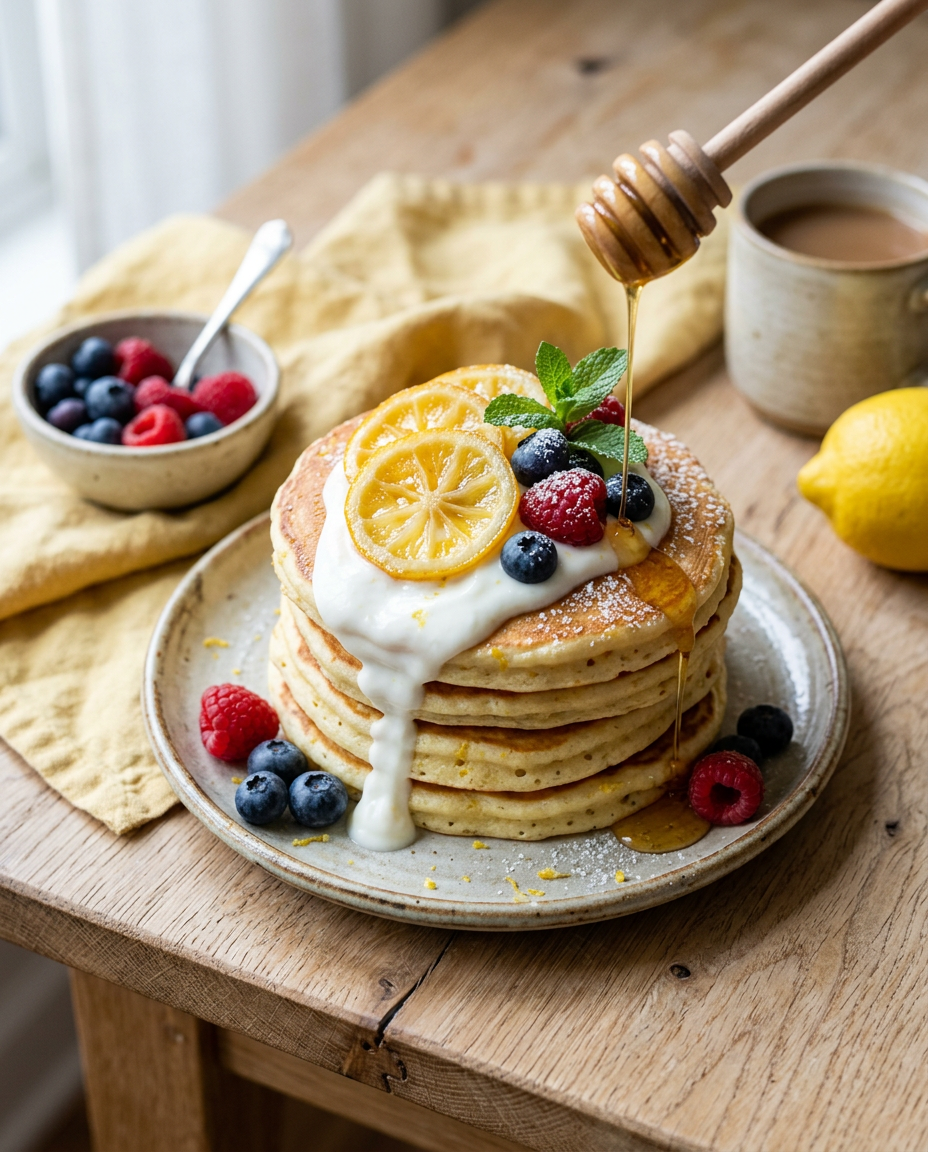
- Serve immediately topped with a dollop of Greek yogurt or mascarpone, a drizzle of honey or maple syrup, fresh berries, a sprinkle of lemon zest, and a light dusting of powdered sugar. Pro tip: The warm pancakes paired with cool yogurt creates a beautiful contrast in temperature and texture that makes every bite special.
Notes
- Room temperature ricotta and eggs mix more smoothly and create a better batter texture
- Don't skip whipping the egg whites to stiff peaks—they're essential for achieving truly fluffy pancakes
- Stop folding batter as soon as you don't see dry flour; overmixing develops gluten and makes them dense