Ingredients
Equipment
Method
Prepare Your Ingredients
- Remove your butter from the refrigerator 30 minutes before starting—it should be softened but not greasy. Cut it into small cubes and set aside. This ensures smooth creaming and even baking. Pro tip: Room temperature butter is crucial for proper creaming, which incorporates air into the dough and creates that tender texture.
- Line two sheet pans with parchment paper. This prevents sticking and ensures even browning on the bottom of your galettes bretonnes. Pro tip: I always use parchment paper rather than greasing—it makes cleanup easier and the cookies release perfectly.
Cream Butter and Sugar
- In a large mixing bowl, combine your softened butter and granulated sugar. Using a stand mixer fitted with the paddle attachment (or a hand mixer), cream together for 3-4 minutes until the mixture is pale, fluffy, and resembles soft sand. This is where the magic starts for your homemade galettes bretonnes. Pro tip: This creaming step is essential—it aerates the dough and creates that light, tender crumb texture that defines these French butter cookies.
Incorporate the Egg Yolk
- Add your room-temperature egg yolk to the creamed butter mixture and beat on medium speed for about 1 minute until fully incorporated. The dough should look smooth and slightly glossy. Pro tip: If your egg yolk was cold, the butter mixture might seize temporarily—just continue mixing and it will come together smoothly.
Fold in the Flour
- Switch to a wooden spoon or dough hook. Gently fold the flour into the butter mixture in two or three additions, stirring just until combined. Don't overmix—this creates tough cookies rather than the tender galettes bretonnes you're aiming for. Pro tip: Mix until you see no dry streaks of flour, but stop immediately. Overworking the dough develops gluten, which is the enemy of tender, sandy-textured French shortbread cookies.
Shape and Cut Your Galettes
- Turn the dough out onto a lightly floured surface. Gently gather it into a disk, being careful not to overwork it. If the dough seems too soft, refrigerate for 15 minutes until it's firm enough to roll. Pro tip: A chilled dough is much easier to work with and produces crispier cookies.
- Roll out the dough to about 1/4-inch thickness (about 6mm). Using a 3-inch round cookie cutter, cut out circles and place them on your prepared sheet pans, spacing them about 2 inches apart. Pro tip: If your dough gets too warm while cutting, refrigerate the scraps and continue with the next batch. You can re-roll scraps, though they won't be quite as tender.
Create the Signature Pattern
- This step is what makes your galettes bretonnes instantly recognizable! Take a fork and gently press it horizontally across each cookie, creating 3-4 parallel ridges. Then rotate the pan and make diagonal cross-hatches to create that iconic diamond or lattice pattern. Pro tip: Press gently but firmly enough to create visible indentations. These ridges aren't just decorative—they help the cookies bake more evenly and add textural interest.
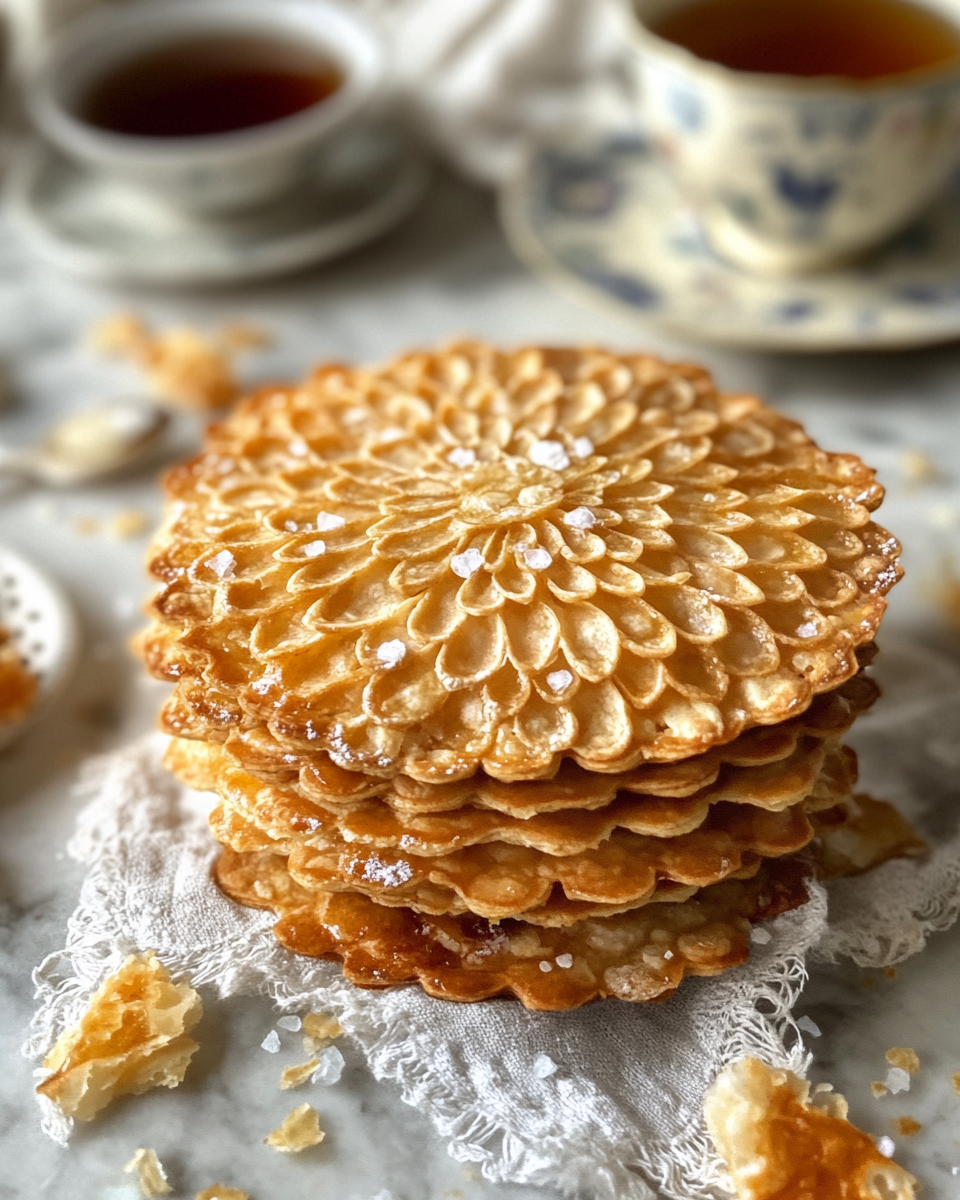
- Brush the top of each cookie lightly with a bit of egg wash (just a tiny bit of egg white mixed with water if you have it), then sprinkle a few crystals of fleur de sel on top of each galette. Pro tip: The salt is not optional—it's what transforms these cookies into authentic Breton galettes and creates that signature sweet-salty contrast.
Bake Until Golden
- Preheat your oven to 350°F (175°C). Bake your galettes bretonnes for 12-15 minutes, until the edges are light golden brown and the tops are set but still pale. The bottoms should be a deeper golden color. Pro tip: Don't overbake! These French butter cookies can go from perfect to dry in minutes. They'll continue cooking slightly as they cool, so pull them out when they look just barely done.
- Let the cookies cool on the baking sheet for 5 minutes, then transfer to a wire rack to cool completely. They'll crisp up as they cool, so don't worry if they seem slightly soft straight from the oven. Pro tip: This resting period on the pan allows the structure to set, which is key to achieving that perfect crispy galette texture.
Notes
- Fleur de sel is essential to authentic galettes bretonnes—the salt crystals on top create the signature sweet-salty flavor
- Room temperature butter and proper creaming ensures light, tender cookies rather than dense, greasy ones
- These cookies taste even better on day two as the flavors develop, making them perfect for advance preparation