Ingredients
Equipment
Method
Prepare Your Vegetables
- Wash all vegetables thoroughly under cool running water and pat them dry with a clean kitchen towel. This ensures the salad won't be watery and flavors will adhere properly. Pro tip: Drying vegetables is crucial—excess moisture dilutes the dressing and makes the salad soggy.
- Cut the tomatoes into chunks or wedges about 1 to 1.5 inches in size. Remove excess seeds if your tomatoes are very juicy, as this prevents the salad from becoming watery. Pro tip: For the most authentic Greek salad, cut tomatoes into larger pieces rather than dicing them into small bits.
- Dice the cucumber into quarter-inch pieces, leaving the skin on for nutritional benefits and visual appeal. Slice the red onion thinly and chop the bell pepper into bite-sized pieces. Pro tip: Cut vegetables to roughly the same size for consistent texture and even distribution of flavors.
Assemble Your Easy Greek Salad
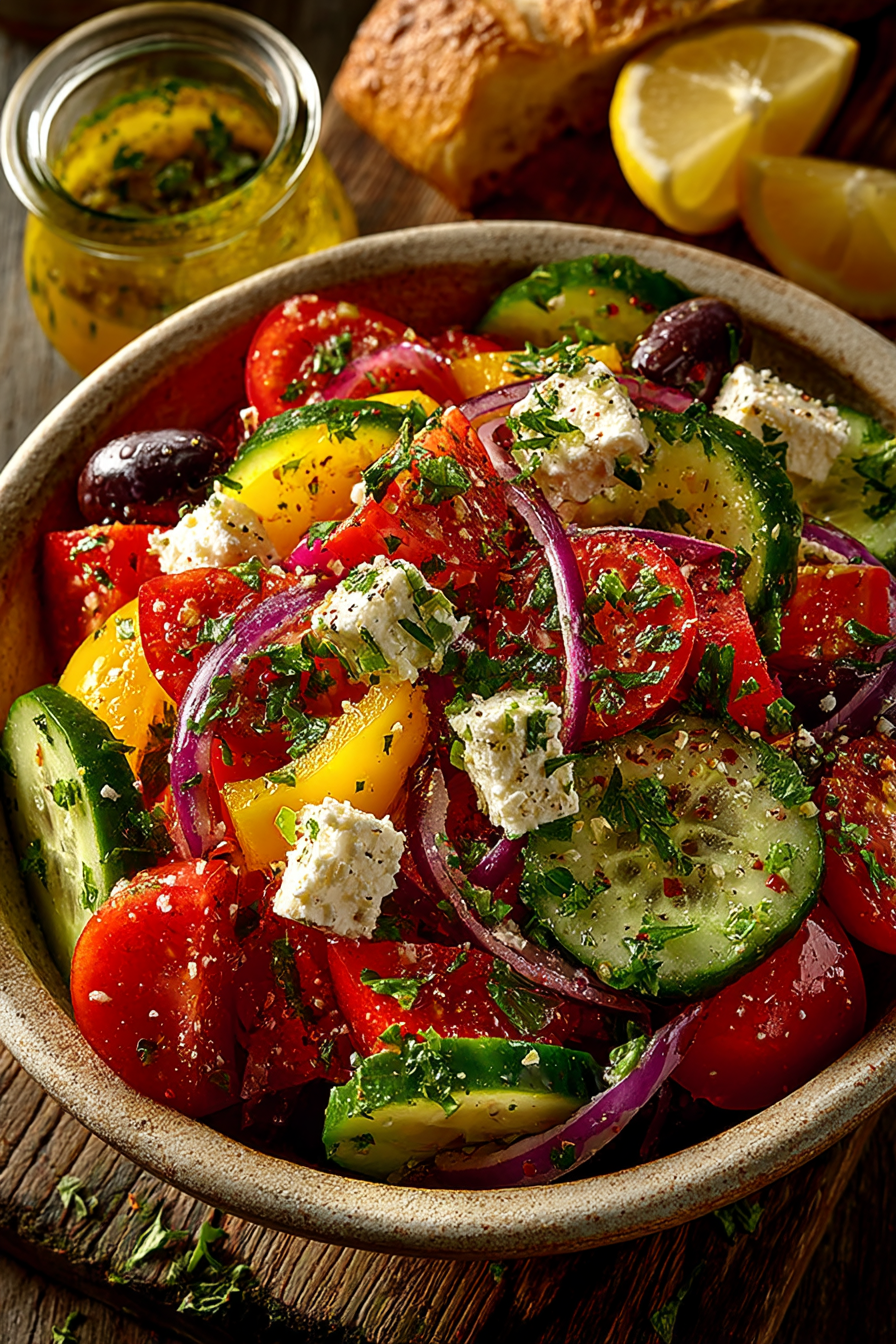
- Place all prepared vegetables in a large mixing bowl: tomatoes, cucumber, red onion, bell pepper, and Kalamata olives. Add the crumbled feta cheese and fresh parsley. Pro tip: Reserve some feta to sprinkle on top for a professional presentation.
- Sprinkle the dried oregano over the vegetables. If using fresh oregano, add it just before serving to maintain its vibrant flavor. Pro tip: Oregano is the signature herb in Greek cuisine—don't skip it or substitute with other herbs.
Make Your Authentic Greek Salad Dressing
- In a small jar with a tight-fitting lid, combine the extra-virgin olive oil, fresh lemon juice, red wine vinegar, minced garlic, sea salt, and black pepper. Pro tip: Using fresh lemon juice rather than bottled makes a significant difference in the final taste.
- Screw the lid on tightly and shake vigorously for about 30 seconds until the dressing is well emulsified. The ingredients should be thoroughly combined and slightly thickened. Pro tip: Shaking creates a temporary emulsion that distributes the flavors evenly and improves the texture.
- Taste the dressing and adjust seasoning as needed. Add more salt, lemon juice, or garlic according to your preference. Pro tip: The dressing should be bold and tangy—it needs to stand up to the vegetables and cheese.
Combine and Toss
- Pour the Greek salad dressing recipe mixture over the vegetables and cheese. Using salad servers or two large spoons, gently toss everything together until well coated. Pro tip: Toss gently to avoid breaking up the feta cheese or crushing the vegetables.
- Let the salad sit for 2-3 minutes to allow flavors to meld, then taste and adjust seasoning if needed. Pro tip: A quick rest allows the vegetables to absorb some of the dressing flavors while remaining crisp.
Serve and Present
- Transfer your homemade Greek salad to a serving platter or individual bowls. Drizzle any remaining dressing from the bottom of the bowl over the top. Pro tip: Serve immediately while vegetables are at peak crispness for the best texture and flavor.
- Garnish with additional fresh parsley and a few extra olives or feta crumbles if desired. A light drizzle of olive oil adds a finishing touch. Pro tip: Beautiful presentation makes this Mediterranean Greek salad an impressive dish worthy of any table.
Notes
- For optimal freshness, assemble the salad just before serving to maintain vegetable crispness. If preparing ahead, keep dressing separate.
- Quality matters with Greek salad—invest in authentic Greek feta cheese, cold-pressed olive oil, and fresh lemon juice for the best results.
- This recipe serves 4 as a side salad or 2 as a main course. Easily double for larger gatherings or meal prep multiple servings.