Ingredients
Equipment
Method
Prepare Your Workspace
- Fill your large pot with 6 quarts of cold, salted water—it should taste like the sea. Place it over high heat and bring to a rolling boil. This is the foundation for perfectly cooked ditalini. Pro tip: Pro tip: Start heating your water before doing anything else. Boiling water waits for no one, and properly hydrated pasta is everything.
Cook the Ditalini Pasta
- Once water reaches a rolling boil, add your ditalini pasta and stir immediately to prevent sticking. Cook according to package directions, but aim for al dente—roughly 1 minute before the package suggests. Since this quick Alfredo ditalini cooks in the sauce briefly, slightly underdone pasta is perfect. Pro tip: Save 2 cups of pasta water before draining. This starchy liquid is liquid gold for creating a silky, emulsified creamy Alfredo ditalini.
Build Your Alfredo Base
- While pasta cooks, melt butter in your large skillet over medium heat. Once foaming, add your finely minced fresh garlic and cook gently for exactly 60 seconds—no longer. You want fragrant, softened garlic, not golden or crispy. Pro tip: This is the most critical moment. Burnt garlic will ruin your homemade Alfredo sauce instantly. Keep the heat at medium and watch constantly.
- Pour in your room-temperature heavy cream slowly, stirring constantly with a wooden spoon. Continue stirring for 2-3 minutes until the cream mixture is just beginning to simmer gently around the edges. You should see small bubbles forming, not a vigorous boil. Pro tip: Room-temperature cream emulsifies more readily than cold cream straight from the refrigerator. This is a subtle but important detail for smooth, creamy Alfredo ditalini.
Create the Sauce Magic
- Remove your skillet from heat—this is crucial. Begin adding your freshly grated Parmigiano-Reggiano in three additions, stirring vigorously after each addition until completely melted and integrated. The residual heat is perfect for melting cheese without causing it to clump or become grainy. Pro tip: Never add all the cheese at once. This gradual technique is the secret to authentic, silky parmesan cream pasta. Patience here pays dividends.
- Now here's where the magic truly happens. Begin adding your reserved pasta water, one ladle at a time, stirring constantly. Add about 4-5 ladles initially, which should create a sauce that coats the back of a spoon but still flows freely. This starchy liquid emulsifies the sauce, giving it that restaurant-quality gloss. Pro tip: This is the difference between heavy, cloying Alfredo and restaurant-quality creamy Alfredo ditalini. The pasta water is your secret weapon.
Combine Pasta and Sauce
- When your ditalini is perfectly al dente, add it directly to your sauce (the skillet should still be off heat). Using a wooden spoon, gently toss the pasta in the sauce for 1-2 minutes, allowing it to absorb the flavors and achieve that creamy coating. Pro tip: The pasta will continue cooking slightly in the residual heat and sauce. This carryover cooking is why we pulled the ditalini slightly early—it ensures perfectly tender results.
Season and Finish
- Taste your creamy pasta dinner recipe and adjust salt and black pepper accordingly. Remember that the pasta water and cheese already contained sodium, so taste before aggressively seasoning. If you're using the optional nutmeg, add just a whisper—a single pinch grated fresh is all you need. Pro tip: Quality seasoning is the final touch that distinguishes good Alfredo from unforgettable Alfredo. Taste constantly and adjust gradually.
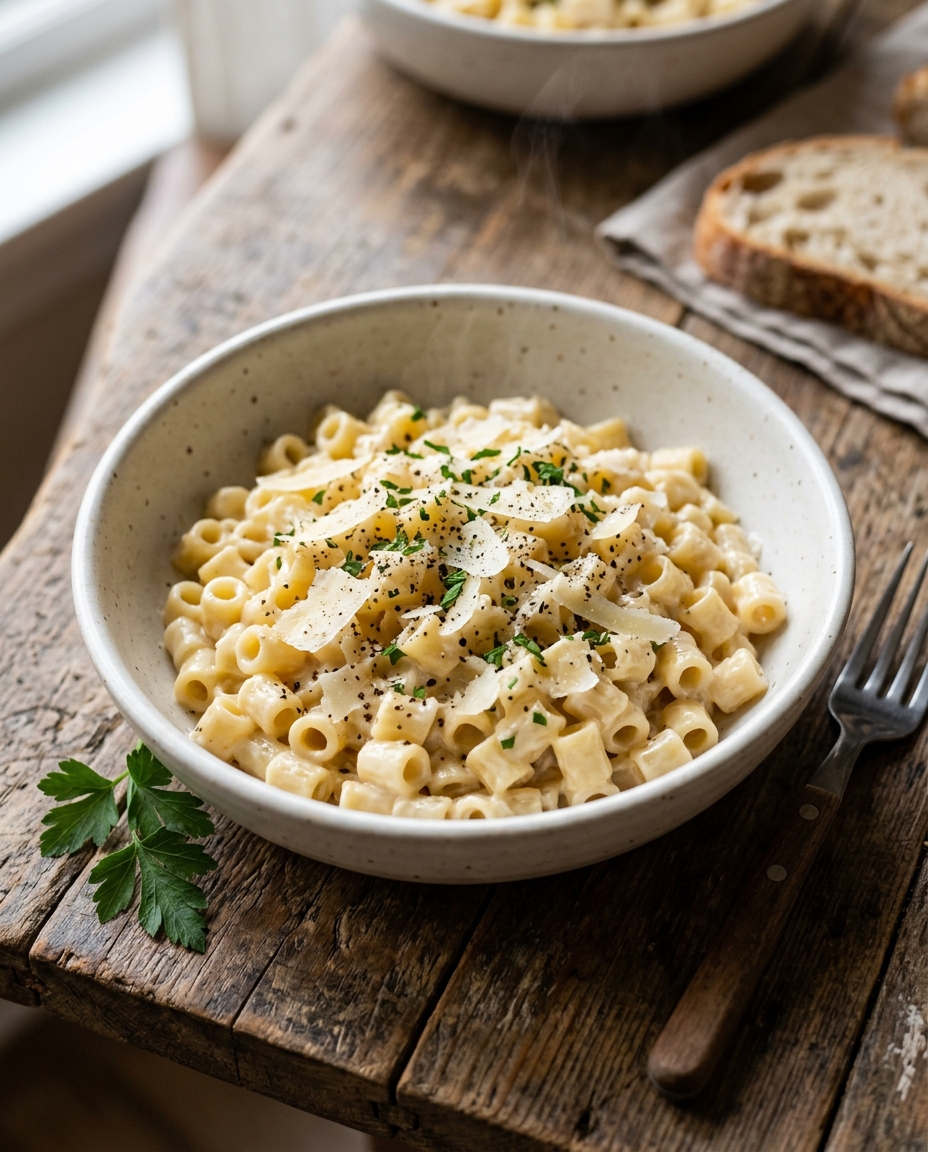
- Divide into warm bowls immediately and top with additional freshly cracked black pepper, fresh parsley if desired, and perhaps the thinnest shaving of additional Parmigiano-Reggiano. Serve with crusty bread and perhaps a simple green salad. Pro tip: This easy Alfredo pasta recipe is best enjoyed immediately while the sauce maintains its silky warmth and the pasta is at peak tenderness.
Notes
- Always reserve pasta water before draining—the starchy liquid is essential for creating silky, emulsified sauce
- Freshly grate Parmigiano-Reggiano from a whole block; pre-grated varieties contain anti-caking agents that prevent smooth sauce
- Remove sauce from heat before adding cheese to prevent the Parmesan from becoming grainy or separating