Ingredients
Equipment
Method
Prep Your Ingredients
- Dice your red onion, bell pepper, and zucchini into roughly equal-sized pieces so they cook evenly. Mince your garlic and ginger together, and zest your limes before juicing them. Pro tip: Prepping all ingredients before you start cooking ensures the skillet cooking process stays smooth and quick—this is called mise en place and it's a game-changer for stress-free cooking.
- Drain and rinse your canned chickpeas thoroughly under cold water. This removes excess sodium and the starchy liquid that can make them mushy. Pro tip: If you prefer a thicker sauce, skip the rinsing step, but I personally love the lighter texture you get from rinsing.
Sauté the Aromatics
- Heat coconut oil in your skillet over medium heat. Once it's shimmering, add diced red onion and sauté for about 2-3 minutes until it begins to soften and turn translucent. Pro tip: Don't skip this step—building flavor through sautéing creates a much richer base than just dumping everything in raw.
- Add your minced garlic and ginger, stirring constantly for about 30 seconds until fragrant. Be careful not to burn them, as burnt garlic tastes bitter. Pro tip: The 30-second rule is key here—just enough time to release the aromatic oils without cooking them to a crisp.
Add the Remaining Vegetables
- Stir in your diced bell pepper and zucchini. Cook for 4-5 minutes, stirring occasionally, until the vegetables are beginning to soften but still have some bite. Pro tip: I like my vegetables to have a little texture, but if you prefer them softer, you can add them earlier in the process or cook a bit longer.
Build Your Coconut Lime Sauce
- Pour in both cans of coconut milk, then add the rinsed chickpeas. Stir well to combine all ingredients. Pro tip: Shake your cans of coconut milk before opening if you're using the kind that separates—you want that creamy, thick part distributed throughout.
- Add curry powder, red pepper flakes, salt, and pepper. Squeeze in the fresh lime juice and give everything a thorough stir. Bring the mixture to a gentle simmer. Pro tip: This is where your coconut lime chickpea skillet really comes together! The lime juice is absolutely crucial—don't skip it or substitute it with bottled, as fresh lime makes all the difference.
Simmer to Perfection
- Reduce heat to medium-low and let the skillet simmer uncovered for 8-10 minutes. This allows the flavors to meld together beautifully and the sauce to thicken slightly. Pro tip: Stir occasionally to prevent sticking on the bottom. If the sauce becomes too thick, thin it with vegetable broth or coconut milk. If too thin, simmer a bit longer.
- Taste and adjust seasonings. You might want to add a touch more lime juice for brightness, extra salt for depth, or more red pepper flakes for heat. Pro tip: Seasoning at the end is your chance to make this quick weeknight chickpea recipe taste absolutely perfect for your palate—don't be shy!
Garnish and Serve
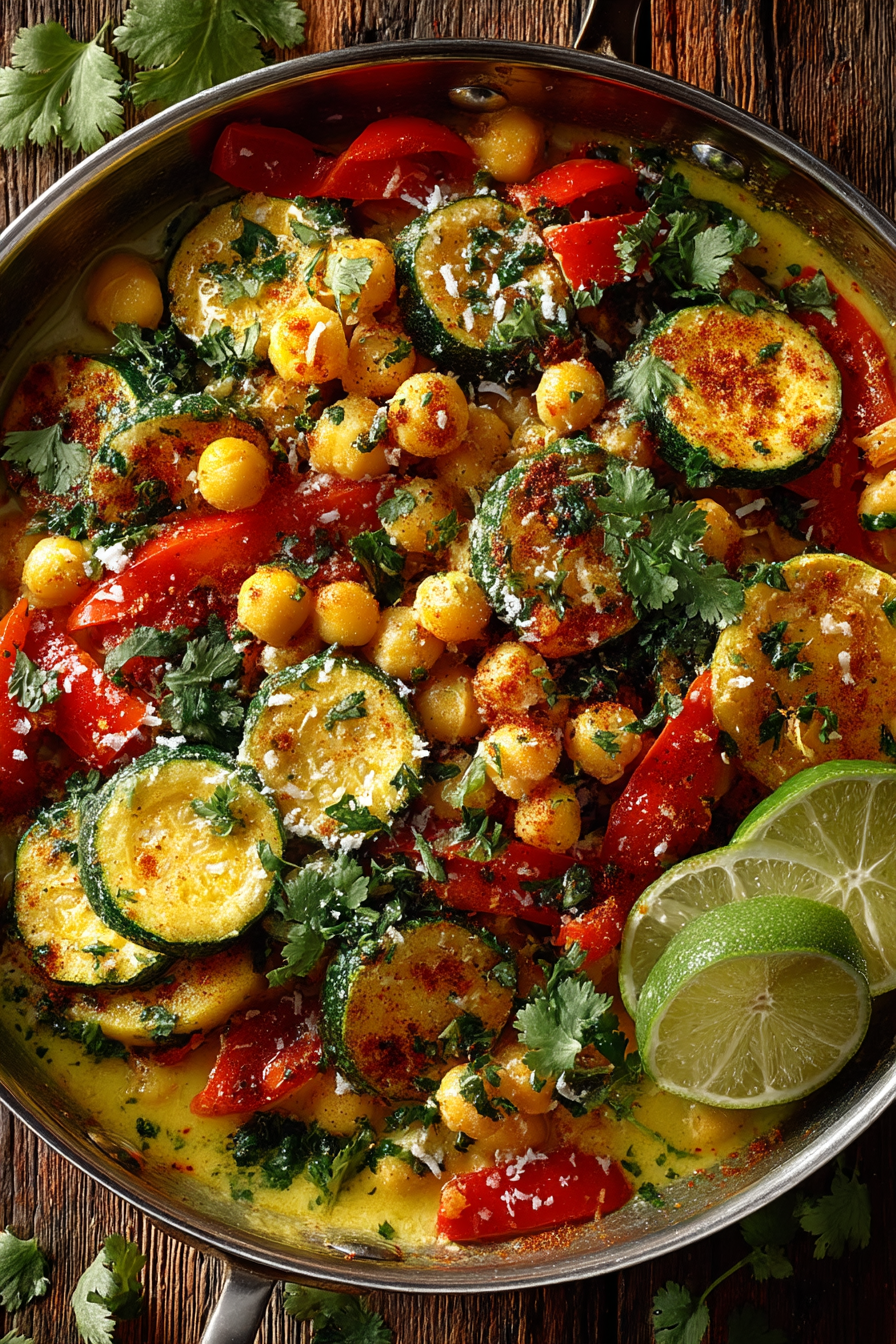
- Remove your skillet from heat and garnish generously with fresh cilantro, lime zest, sliced green onions, and toasted coconut flakes. Pro tip: These finishing touches add brightness, freshness, and visual appeal—they're what make this healthy chickpea skillet feel restaurant-quality.
- Serve your coconut lime chickpea skillet warm, directly from the skillet if you're going casual, or transfer to bowls for a more elegant presentation. Pro tip: This tropical chickpea bowl is delicious on its own, but I love serving it over rice, quinoa, or with warm naan bread for a complete meal.
Notes
- Use full-fat coconut milk for the creamiest texture and most authentic flavor—light coconut milk will make the dish less rich
- Fresh lime juice is essential; bottled lime juice lacks the brightness that makes this dish special
- This recipe reheats beautifully and tastes even better the next day as flavors deepen, making it ideal for meal prepping