
There’s nothing quite like a vibrant spring vegetable pasta to celebrate the season’s bounty. This easy spring vegetable pasta combines tender asparagus, sweet peas, and fresh herbs in a light, flavorful sauce that lets each ingredient shine. It’s the perfect way to welcome warmer weather to your dinner table.
What I love most about this recipe is how it transforms simple seasonal ingredients into something truly special. In just 25 minutes, you’ll have a restaurant-quality dish that’s both satisfying and surprisingly light. Plus, it’s completely customizable based on whatever fresh spring vegetables you have on hand.
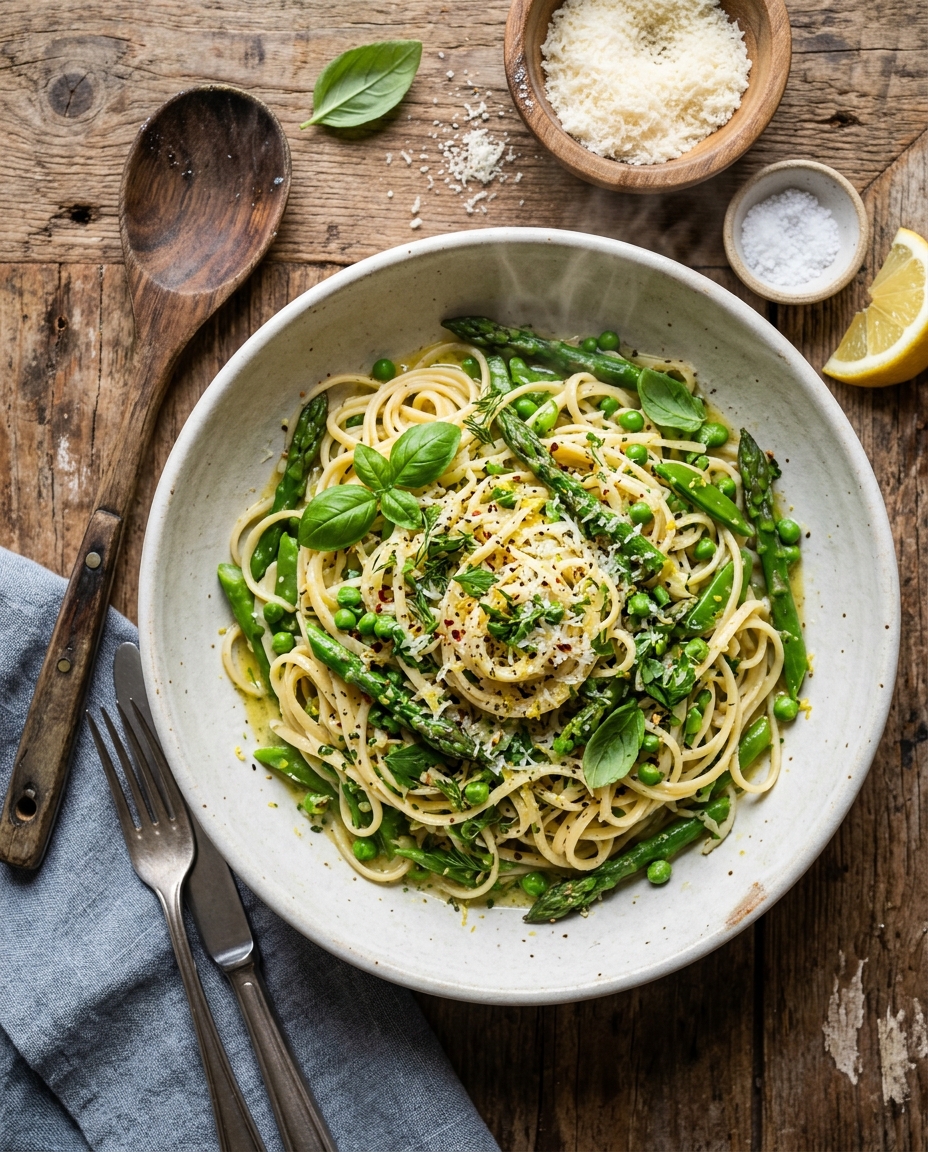
Why You’ll Love This Easy Spring Vegetable Pasta with Asparagus and Peas
- Seasonal Perfection: Showcases the best fresh spring vegetables at their peak flavor
- Quick & Easy: Ready in just 25 minutes with minimal prep work
- Light Yet Satisfying: Perfect balance of vegetables, pasta, and creamy sauce without being heavy
- Incredibly Versatile: Easy to customize with your favorite spring vegetables or whatever’s in your fridge
- One-Pan Wonder: Most of the cooking happens in one large skillet for easy cleanup
- Budget-Friendly: Uses affordable seasonal vegetables and pantry staples
Ingredients You’ll Need
The beauty of this spring vegetable pasta lies in its simple, high-quality ingredients. Fresh asparagus and peas are the stars here, providing that quintessential spring flavor and beautiful green color. I prefer using thin asparagus spears as they cook quickly and have a more tender texture.
The light cream sauce is made with just a touch of heavy cream and plenty of fresh lemon juice to keep things bright and seasonal. Fresh herbs like basil and parsley add an extra layer of freshness, while good-quality Parmesan cheese brings everything together with its nutty, salty finish.
For the Pasta
- 12 oz linguine or penne pasta
- 1 lb fresh asparagus (trimmed and cut into 1-inch pieces)
- 1 cup fresh or frozen peas
- 3 cloves garlic (minced)
- 1 medium shallot (finely diced)
For the Sauce
- 1/3 cup heavy cream
- 1/4 cup fresh lemon juice (about 2 lemons)
- 1 tsp lemon zest
- 1/2 cup freshly grated Parmesan cheese (plus extra for serving)
- 3 tbsp olive oil (extra virgin)
- 1/4 cup fresh basil (chopped)
- 2 tbsp fresh parsley (chopped)
Optional Add-ins:
- red pepper flakes
- cherry tomatoes
- pine nuts
How to Make Easy Spring Vegetable Pasta with Asparagus and Peas (Step-by-Step)
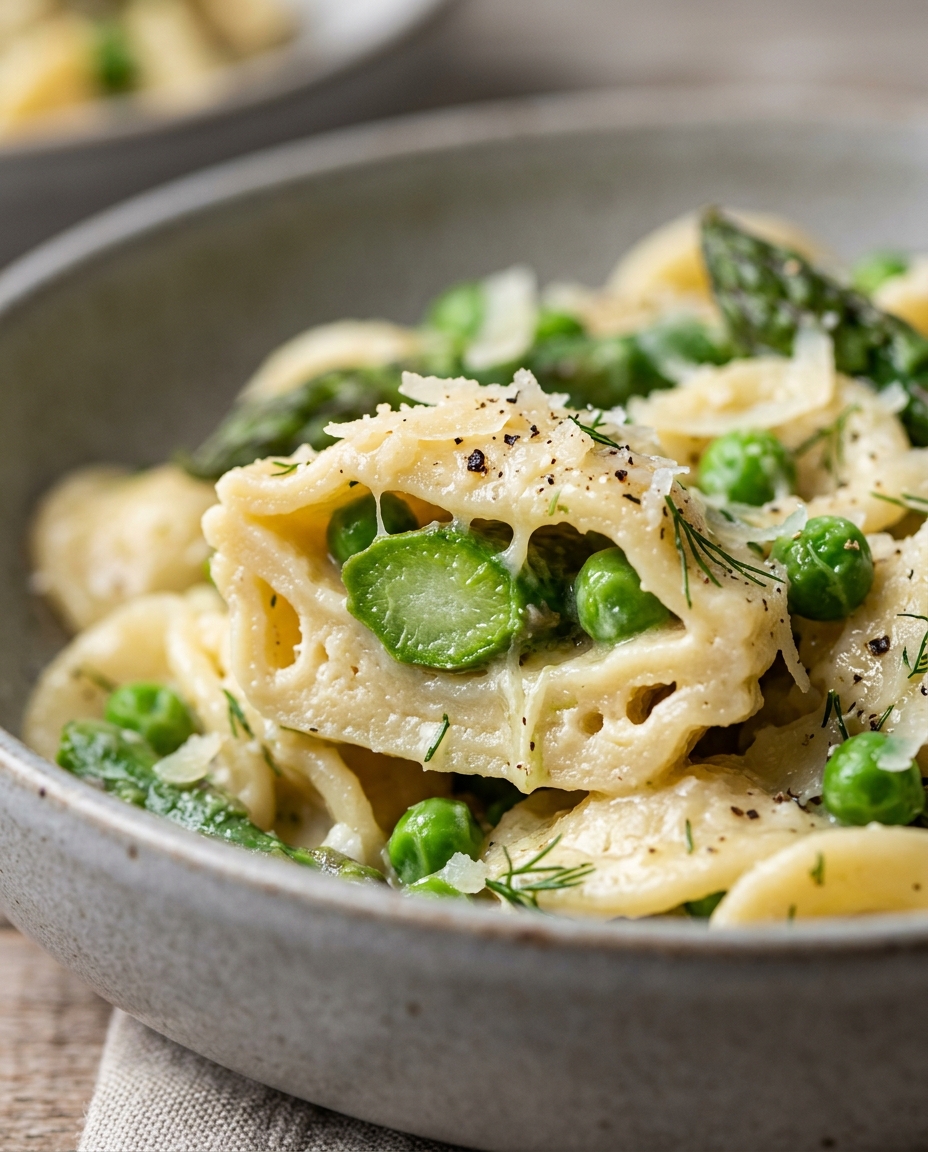
1. Prepare the Pasta Water
Bring a large pot of salted water to boil. Use about 1 tablespoon of salt for every 4 cups of water – the water should taste like seawater.
Pro tip: Salt your pasta water generously – this is your only chance to season the pasta itself.
2. Cook the Pasta
Add the pasta to the boiling water and cook according to package directions until al dente, usually 8-10 minutes.
Reserve 1 cup of pasta cooking water before draining. The starchy water will help bind the sauce to the pasta.
Pro tip: Set a measuring cup by the stove so you don’t forget to reserve the pasta water.
3. Sauté the Vegetables
While pasta cooks, heat olive oil in a large skillet over medium-high heat. Add diced shallot and cook for 2-3 minutes until softened and fragrant.
Add minced garlic and cook for another 30 seconds, stirring constantly to prevent burning.
Pro tip: Garlic burns quickly, so keep it moving in the pan.
Add asparagus pieces and cook for 3-4 minutes until bright green and tender-crisp. Add peas in the last minute of cooking.
Pro tip: Don’t overcook the vegetables – they should retain their vibrant color and slight bite.
4. Create the Sauce
Reduce heat to medium-low and add heavy cream, lemon juice, and lemon zest to the skillet. Stir gently and let simmer for 1-2 minutes.
Season with salt and freshly ground black pepper to taste. The sauce should be light and slightly tangy.
Pro tip: Taste as you go – the lemon should brighten the dish without overwhelming it.
5. Combine and Finish
Add the drained pasta to the skillet with vegetables and sauce. Toss everything together using tongs, adding pasta water gradually until the sauce coats the pasta beautifully.
Pro tip: Start with just 1/4 cup of pasta water and add more as needed for the perfect consistency.
Remove from heat and stir in Parmesan cheese, fresh basil, and parsley. Toss until the cheese melts and everything is well combined.
Pro tip: Adding cheese off the heat prevents it from clumping or becoming stringy.
Serve immediately with extra Parmesan cheese, a drizzle of good olive oil, and additional fresh herbs if desired.
Easy Spring Vegetable Pasta with Asparagus and Peas – Full Recipe
Easy Spring Vegetable Pasta with Asparagus and Peas
Ingredients
Equipment
Method
- Bring a large pot of salted water to boil. Use about 1 tablespoon of salt for every 4 cups of water - the water should taste like seawater. Pro tip: Salt your pasta water generously - this is your only chance to season the pasta itself.
- Add the pasta to the boiling water and cook according to package directions until al dente, usually 8-10 minutes.
- Reserve 1 cup of pasta cooking water before draining. The starchy water will help bind the sauce to the pasta. Pro tip: Set a measuring cup by the stove so you don't forget to reserve the pasta water.
- While pasta cooks, heat olive oil in a large skillet over medium-high heat. Add diced shallot and cook for 2-3 minutes until softened and fragrant.
- Add minced garlic and cook for another 30 seconds, stirring constantly to prevent burning. Pro tip: Garlic burns quickly, so keep it moving in the pan.
- Add asparagus pieces and cook for 3-4 minutes until bright green and tender-crisp. Add peas in the last minute of cooking. Pro tip: Don't overcook the vegetables - they should retain their vibrant color and slight bite.
- Reduce heat to medium-low and add heavy cream, lemon juice, and lemon zest to the skillet. Stir gently and let simmer for 1-2 minutes.
- Season with salt and freshly ground black pepper to taste. The sauce should be light and slightly tangy. Pro tip: Taste as you go - the lemon should brighten the dish without overwhelming it.
- Add the drained pasta to the skillet with vegetables and sauce. Toss everything together using tongs, adding pasta water gradually until the sauce coats the pasta beautifully. Pro tip: Start with just 1/4 cup of pasta water and add more as needed for the perfect consistency.
- Remove from heat and stir in Parmesan cheese, fresh basil, and parsley. Toss until the cheese melts and everything is well combined. Pro tip: Adding cheese off the heat prevents it from clumping or becoming stringy.
- Serve immediately with extra Parmesan cheese, a drizzle of good olive oil, and additional fresh herbs if desired.
Notes
- Reserve pasta cooking water before draining - it's essential for the perfect sauce consistency
- Don't overcook the vegetables; they should remain bright green and slightly crisp
- This dish is best served immediately while the sauce is silky and vegetables are at their peak
Tips for the Best Easy Spring Vegetable Pasta with Asparagus and Peas
- Don’t Skip the Pasta Water: The starchy cooking liquid is essential for creating a silky sauce that clings to every strand of pasta.
- Timing is Everything: Start your vegetables when the pasta has about 5 minutes left to cook – everything should finish around the same time.
- Choose Thin Asparagus: Thinner spears cook more quickly and evenly, and they’re more tender than thick ones.
- Fresh vs. Frozen Peas: Both work great, but if using frozen peas, don’t thaw them first – just add them directly to the hot pan.
- Taste and Adjust: Every lemon is different, so taste your sauce and adjust the lemon juice and seasoning accordingly.
- Serve Immediately: This pasta is best enjoyed right away while the vegetables are still bright and the sauce is silky.
Variations to Try
- Protein Addition: Add grilled chicken, shrimp, or cannellini beans for extra protein
- Spring Greens Version: Include fresh spinach, arugula, or pea shoots for more leafy greens
- Herb Switch-Up: Try fresh mint, dill, or chives instead of basil for different flavor profiles
- Creamy Ricotta Style: Replace heavy cream with ricotta cheese mixed with pasta water for a lighter sauce
- Lemon Garlic Version: Skip the cream entirely and use extra lemon juice, olive oil, and garlic for a lighter preparation
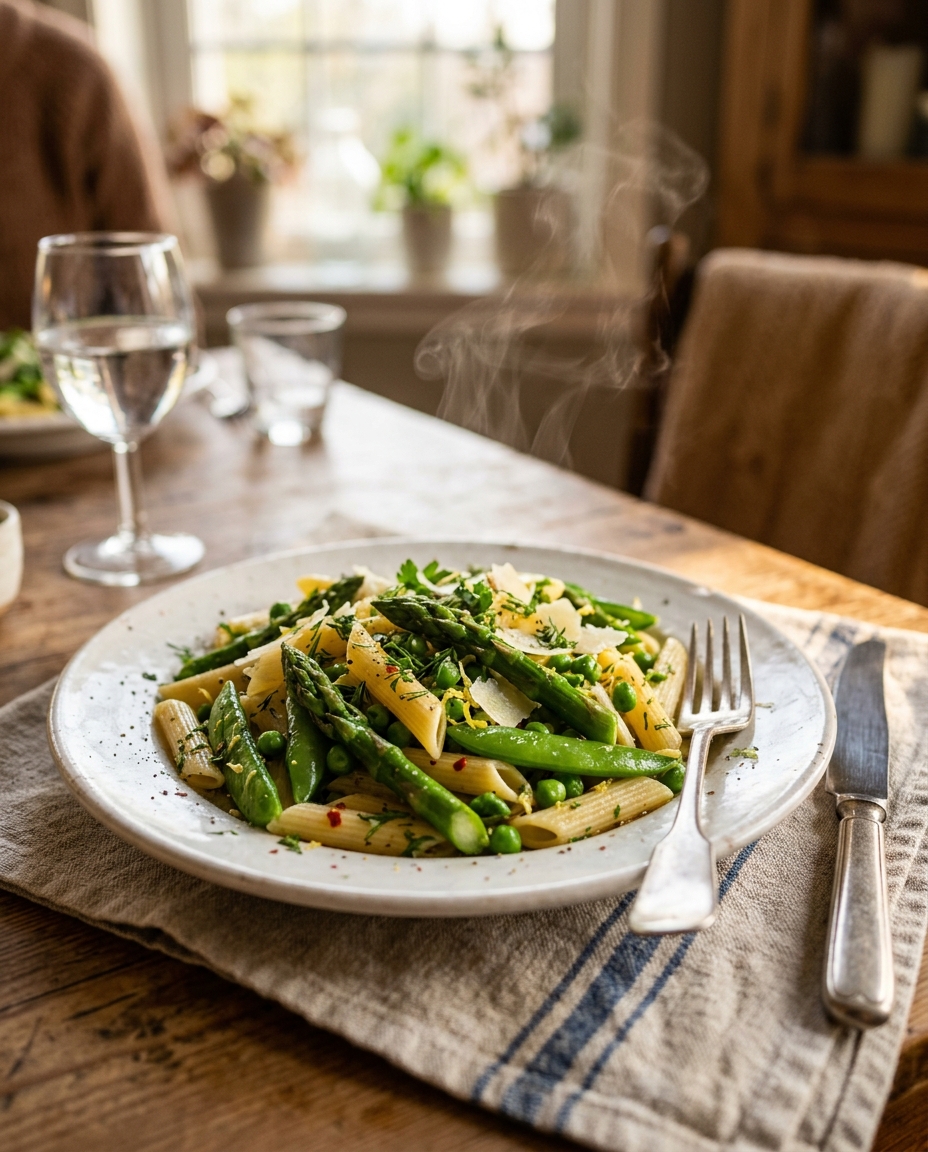
Storage and Meal Prep Tips
- Refrigerator Storage: Store leftovers in the refrigerator for up to 3 days in an airtight container
- Freezing: Not recommended for freezing as the cream sauce and vegetables don’t freeze well
- Reheating: Reheat gently in a skillet over low heat, adding a splash of cream or pasta water to restore the sauce
- Meal Prep: Cook vegetables and sauce ahead of time, then toss with freshly cooked pasta when ready to serve
Nutritional Benefits
This healthy pasta recipe is packed with nutrients from fresh spring vegetables. Asparagus provides folate, vitamin K, and antioxidants, while peas contribute protein, fiber, and vitamin C.
- High in fiber from vegetables and pasta
- Good source of plant-based protein from peas
- Rich in vitamin C and folate
- Contains heart-healthy monounsaturated fats from olive oil
- Provides calcium from Parmesan cheese
- Lower in calories than heavy cream-based pasta dishes
What to Serve With Easy Spring Vegetable Pasta with Asparagus and Peas
- Simple arugula salad with lemon vinaigrette
- Garlic bread or crusty Italian bread
- Grilled or roasted chicken breast
- Light white wine like Pinot Grigio or Sauvignon Blanc
- Fresh fruit salad with mint for dessert
Frequently Asked Questions
Can I make spring vegetable pasta ahead of time?
While this pasta is best served immediately, you can prepare the vegetables and sauce ahead of time and store them in the refrigerator. When ready to serve, cook fresh pasta and toss with the reheated vegetable mixture, adding pasta water as needed to restore the sauce consistency.
What vegetables can I substitute for asparagus and peas?
You can substitute with other spring vegetables like snap peas, sugar snap peas, baby zucchini, spring onions, or baby carrots. Frozen vegetables work too – just add them directly to the hot pan without thawing first.
How do I prevent the cream sauce from curdling?
Keep the heat at medium-low when adding the cream, and don’t let the sauce boil vigorously. If you’re concerned about curdling, you can temper the cream by adding a spoonful of the hot pasta water to it before adding it to the pan.
Can I make this spring vegetable pasta dairy-free?
Yes! Replace the heavy cream with cashew cream or full-fat coconut milk, and use nutritional yeast instead of Parmesan cheese. You can also simply omit the cream and use extra olive oil and pasta water for a lighter, dairy-free version.
What’s the best pasta shape for spring vegetable pasta?
Long pasta shapes like linguine, spaghetti, or angel hair work beautifully because they allow the vegetables to nestle between the strands. Short shapes like penne, rigatoni, or farfalle are also excellent choices as they hold the sauce and vegetables well.
Final Thoughts
This spring vegetable pasta recipe is everything I love about seasonal cooking – simple, fresh, and absolutely delicious. It’s one of those dishes that feels both elegant and comforting, making it perfect for everything from weeknight dinners to entertaining guests. The combination of tender vegetables, bright lemon, and creamy sauce creates a harmony of flavors that truly celebrates spring.
What makes this recipe special is its versatility and the way it adapts to whatever spring vegetables you have available. Don’t be afraid to experiment with different combinations – that’s half the fun of seasonal cooking. Each time you make it, you might discover a new favorite variation that becomes part of your regular rotation.
Ready to Try It?
Ready to bring the fresh flavors of spring to your dinner table? This easy spring vegetable pasta is calling your name! Gather your favorite seasonal vegetables, put on some music, and enjoy the therapeutic process of creating something beautiful and delicious. I’d love to hear about your own variations and which spring vegetables you love to include – share your creations with me in the comments below!