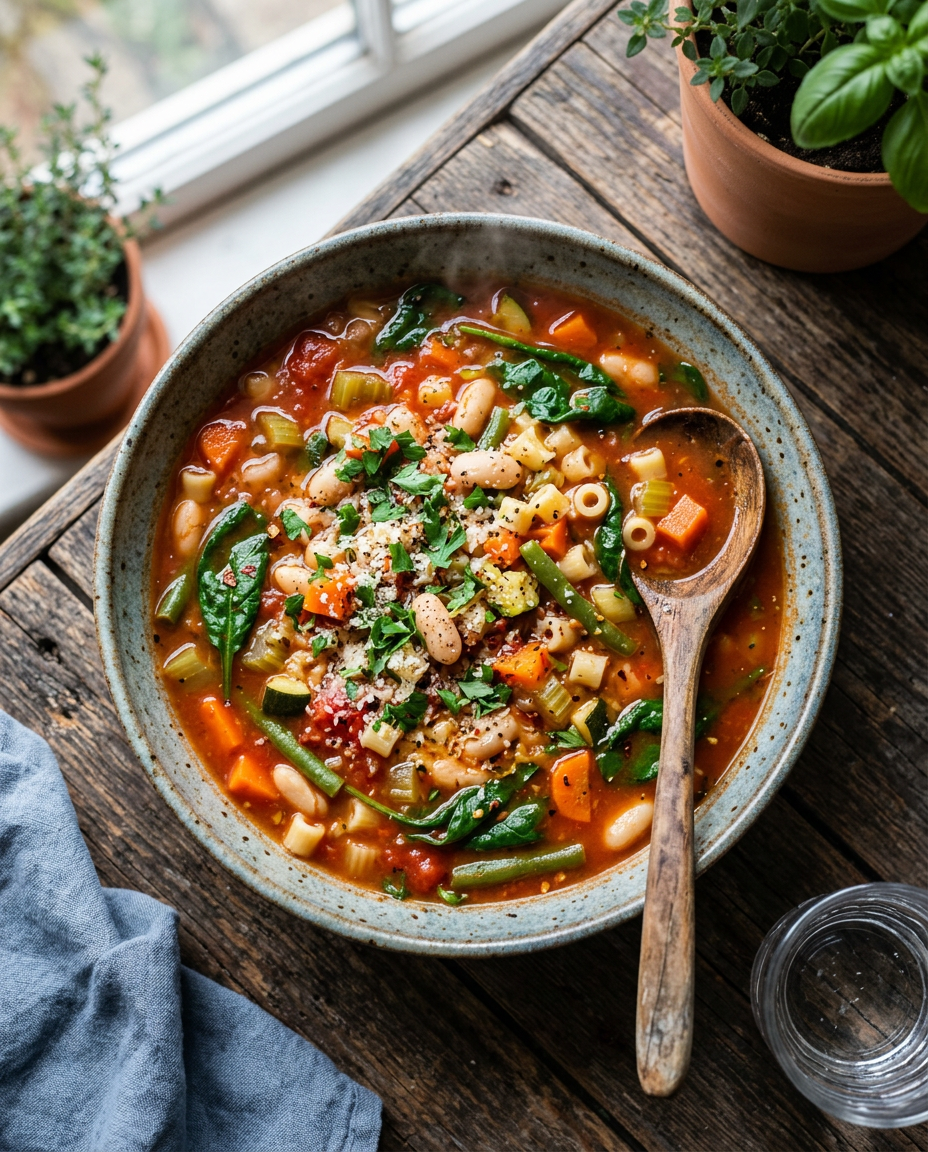
There’s nothing quite like a bowl of homemade minestrone soup recipe to warm your soul and transport you straight to the Italian countryside. This classic Italian vegetable soup has been passed down through generations, and for good reason – it’s the perfect combination of hearty vegetables, tender beans, and aromatic herbs simmered in a rich tomato broth.
What I love most about this authentic Italian soup is how it transforms simple, everyday ingredients into something truly magical. Each spoonful delivers layers of flavor and nutrition, making it both satisfying and wholesome. Whether you’re looking for a comforting weeknight dinner or meal prep inspiration, this hearty minestrone will quickly become a staple in your kitchen.
Why You’ll Love This Classic Minestrone Soup Recipe – Hearty Italian Vegetable Soup
- Incredibly Nutritious: Packed with vegetables, beans, and herbs that provide essential vitamins, minerals, and fiber for optimal health.
- Budget-Friendly: Uses affordable pantry staples and seasonal vegetables, making it perfect for feeding a family without breaking the bank.
- Endlessly Customizable: Adapt the recipe based on what’s in your fridge or garden – this soup welcomes any vegetables you have on hand.
- Meal Prep Champion: Makes a large batch that tastes even better the next day, perfect for busy weeks ahead.
- Comfort in a Bowl: The rich, aromatic broth and tender vegetables create the ultimate cozy meal for any season.
- Authentic Italian Tradition: Based on traditional recipes from Italian nonnas who knew how to create maximum flavor from simple ingredients.
Ingredients You’ll Need
The beauty of an authentic minestrone soup lies in its simplicity and flexibility. Traditional Italian cooks use whatever vegetables are fresh and in season, which means your soup will taste slightly different each time you make it – and that’s exactly how it should be!
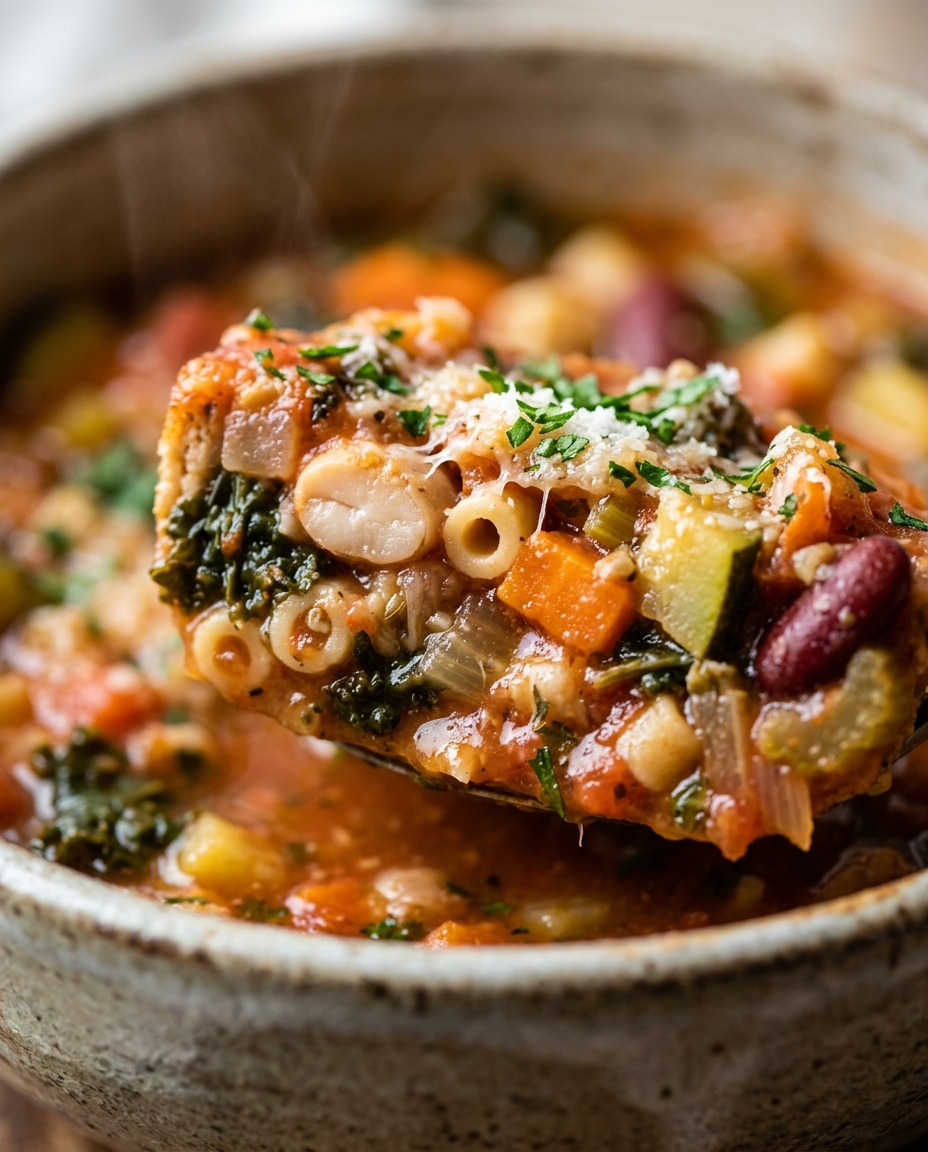
For this classic version, we’ll use a combination of aromatic vegetables like onions, carrots, and celery as our base, along with hearty additions like potatoes, green beans, and zucchini. The cannellini beans provide protein and creaminess, while good-quality canned tomatoes and vegetable broth create the soul-warming foundation that makes this healthy vegetable soup so satisfying.
For the Soup Base
- 3 tablespoons olive oil (extra virgin)
- 1 large onion (diced)
- 3 carrots (diced)
- 3 celery stalks (diced)
- 4 cloves garlic (minced)
- 2 tablespoons tomato paste
- 1 can (14.5 oz) diced tomatoes (with juice)
- 8 cups vegetable broth (low sodium)
For the Vegetables and Beans
- 2 medium potatoes (diced)
- 1 cup green beans (trimmed and cut into 1-inch pieces)
- 1 medium zucchini (diced)
- 2 cans (15 oz each) cannellini beans (drained and rinsed)
- 3 cups fresh spinach (roughly chopped)
- 1/2 cup small pasta (ditalini or elbow macaroni)
For Seasoning
- 2 teaspoons dried oregano
- 1 teaspoon dried basil
- 1 bay leaf
- 1 teaspoon salt (or to taste)
- 1/2 teaspoon black pepper (freshly ground)
- 1/4 cup fresh parsley (chopped)
Optional Add-ins:
- Parmesan cheese rind
- red pepper flakes
- fresh basil leaves
- grated Parmesan cheese
How to Make Classic Minestrone Soup Recipe – Hearty Italian Vegetable Soup (Step-by-Step)
1. Prepare the Aromatic Base
Heat olive oil in a large Dutch oven over medium heat. Add diced onion, carrots, and celery. Cook for 8-10 minutes, stirring occasionally, until vegetables are softened and onion is translucent.
Pro tip: This trio of vegetables is called ‘soffritto’ in Italian cooking and forms the flavor foundation of many Italian soups.
Add minced garlic and cook for another minute until fragrant. Stir in tomato paste and cook for 2 minutes, allowing it to caramelize slightly and deepen in color.
Pro tip: Cooking the tomato paste removes its raw taste and concentrates the flavor.
2. Build the Soup Base
Add diced tomatoes with their juice, breaking them up with your spoon. Pour in the vegetable broth and add bay leaf, oregano, and basil. Bring to a boil, then reduce heat and simmer for 10 minutes.
Pro tip: If using a Parmesan rind, add it now for extra umami flavor.
3. Add the Heartier Vegetables
Add diced potatoes and green beans to the pot. Simmer for 15 minutes, or until potatoes are fork-tender but still hold their shape.
Pro tip: Cut potatoes into uniform pieces to ensure even cooking.
Stir in the zucchini and cannellini beans. Continue cooking for 8-10 minutes until zucchini is tender but not mushy.
Pro tip: Add zucchini later in the cooking process to prevent it from becoming overcooked and losing its texture.
4. Finish with Pasta and Greens
Add pasta to the soup and cook according to package directions until al dente, usually 8-10 minutes. Stir occasionally to prevent sticking.
Pro tip: If you plan to store leftovers, consider cooking pasta separately and adding it to individual bowls to prevent it from getting mushy.
Remove bay leaf and stir in chopped spinach. Cook for 2-3 minutes until spinach is wilted. Season with salt and pepper to taste.
Pro tip: Taste and adjust seasoning at the end – you may need more salt depending on the sodium content of your broth.
5. Serve and Garnish
Remove from heat and stir in fresh chopped parsley. Ladle into bowls and garnish with additional fresh herbs or grated Parmesan cheese if desired. Serve immediately while hot.
Pro tip: Let the soup rest for 5 minutes before serving to allow flavors to meld together.
Classic Minestrone Soup Recipe – Hearty Italian Vegetable Soup – Full Recipe
Classic Minestrone Soup Recipe - Hearty Italian Vegetable Soup
Ingredients
Equipment
Method
- Heat olive oil in a large Dutch oven over medium heat. Add diced onion, carrots, and celery. Cook for 8-10 minutes, stirring occasionally, until vegetables are softened and onion is translucent. Pro tip: This trio of vegetables is called 'soffritto' in Italian cooking and forms the flavor foundation of many Italian soups.
- Add minced garlic and cook for another minute until fragrant. Stir in tomato paste and cook for 2 minutes, allowing it to caramelize slightly and deepen in color. Pro tip: Cooking the tomato paste removes its raw taste and concentrates the flavor.
- Add diced tomatoes with their juice, breaking them up with your spoon. Pour in the vegetable broth and add bay leaf, oregano, and basil. Bring to a boil, then reduce heat and simmer for 10 minutes. Pro tip: If using a Parmesan rind, add it now for extra umami flavor.
- Add diced potatoes and green beans to the pot. Simmer for 15 minutes, or until potatoes are fork-tender but still hold their shape. Pro tip: Cut potatoes into uniform pieces to ensure even cooking.
- Stir in the zucchini and cannellini beans. Continue cooking for 8-10 minutes until zucchini is tender but not mushy. Pro tip: Add zucchini later in the cooking process to prevent it from becoming overcooked and losing its texture.
- Add pasta to the soup and cook according to package directions until al dente, usually 8-10 minutes. Stir occasionally to prevent sticking. Pro tip: If you plan to store leftovers, consider cooking pasta separately and adding it to individual bowls to prevent it from getting mushy.
- Remove bay leaf and stir in chopped spinach. Cook for 2-3 minutes until spinach is wilted. Season with salt and pepper to taste. Pro tip: Taste and adjust seasoning at the end – you may need more salt depending on the sodium content of your broth.
- Remove from heat and stir in fresh chopped parsley. Ladle into bowls and garnish with additional fresh herbs or grated Parmesan cheese if desired. Serve immediately while hot. Pro tip: Let the soup rest for 5 minutes before serving to allow flavors to meld together.
Notes
- Pasta can be cooked separately and added to individual bowls to prevent mushiness in leftovers
- Add a Parmesan rind while simmering for extra depth of flavor
- Vegetables can be substituted based on seasonal availability and personal preference
Tips for the Best Classic Minestrone Soup Recipe – Hearty Italian Vegetable Soup
- Use Quality Ingredients: Since this soup relies on simple ingredients, using good-quality olive oil, canned tomatoes, and fresh vegetables will make a noticeable difference in flavor.
- Layer Your Seasonings: Add herbs and spices at different stages of cooking to build complex layers of flavor throughout the soup.
- Don’t Overcook the Vegetables: Each vegetable should retain some texture – they shouldn’t be mushy. Add them in order of cooking time needed.
- Adjust Consistency: If your soup is too thick, add more broth. If it’s too thin, simmer uncovered to reduce and concentrate flavors.
- Make it Your Own: Feel free to substitute vegetables based on what you have available – cabbage, bell peppers, or leeks all work wonderfully.
- Storage Tip: If making ahead, slightly undercook the vegetables as they’ll continue cooking when reheated.
Variations to Try
- Protein-Packed Minestrone: Add cooked Italian sausage, ground turkey, or leftover shredded chicken for extra protein and heartiness.
- Grain-Based Version: Replace pasta with cooked farro, barley, or quinoa for different textures and nutritional profiles.
- Seasonal Vegetable Medley: Adapt vegetables based on season – use butternut squash and kale in fall, or fresh peas and asparagus in spring.
- Bean Variety Mix: Experiment with different beans like kidney beans, chickpeas, or white navy beans for varied flavors and textures.
- Spicy Italian Style: Add Italian sausage, red pepper flakes, and a splash of red wine for a more robust, spicy version.
Storage and Meal Prep Tips
- Refrigerator Storage: Store leftover soup in airtight containers for up to 4-5 days in the refrigerator. The flavors actually improve overnight.
- Freezer Storage: Freeze for up to 3 months, but note that pasta may become slightly soft when thawed. Consider freezing without pasta and adding it fresh when reheating.
- Reheating Instructions: Reheat gently on the stovetop over medium-low heat, stirring occasionally. Add extra broth if needed to thin consistency.
- Meal Prep Tips: Divide into individual portions and freeze in freezer-safe containers for quick weekday meals. Thaw overnight in refrigerator before reheating.
Nutritional Benefits
This hearty minestrone soup is a nutritional powerhouse that delivers an impressive array of vitamins, minerals, and plant-based nutrients in every bowl. The combination of colorful vegetables provides antioxidants that support immune health, while the fiber-rich beans and vegetables promote digestive wellness and help maintain stable blood sugar levels.
- High in fiber from beans and vegetables, supporting digestive health and satiety
- Rich in vitamin A from carrots and spinach for eye health and immune function
- Excellent source of vitamin C from tomatoes and vegetables for collagen production
- Provides plant-based protein from beans and pasta for muscle maintenance
- Low in saturated fat while being naturally heart-healthy
- Contains potassium from vegetables and beans for healthy blood pressure
- Loaded with folate from leafy greens, important for cell division and DNA synthesis
What to Serve With Classic Minestrone Soup Recipe – Hearty Italian Vegetable Soup
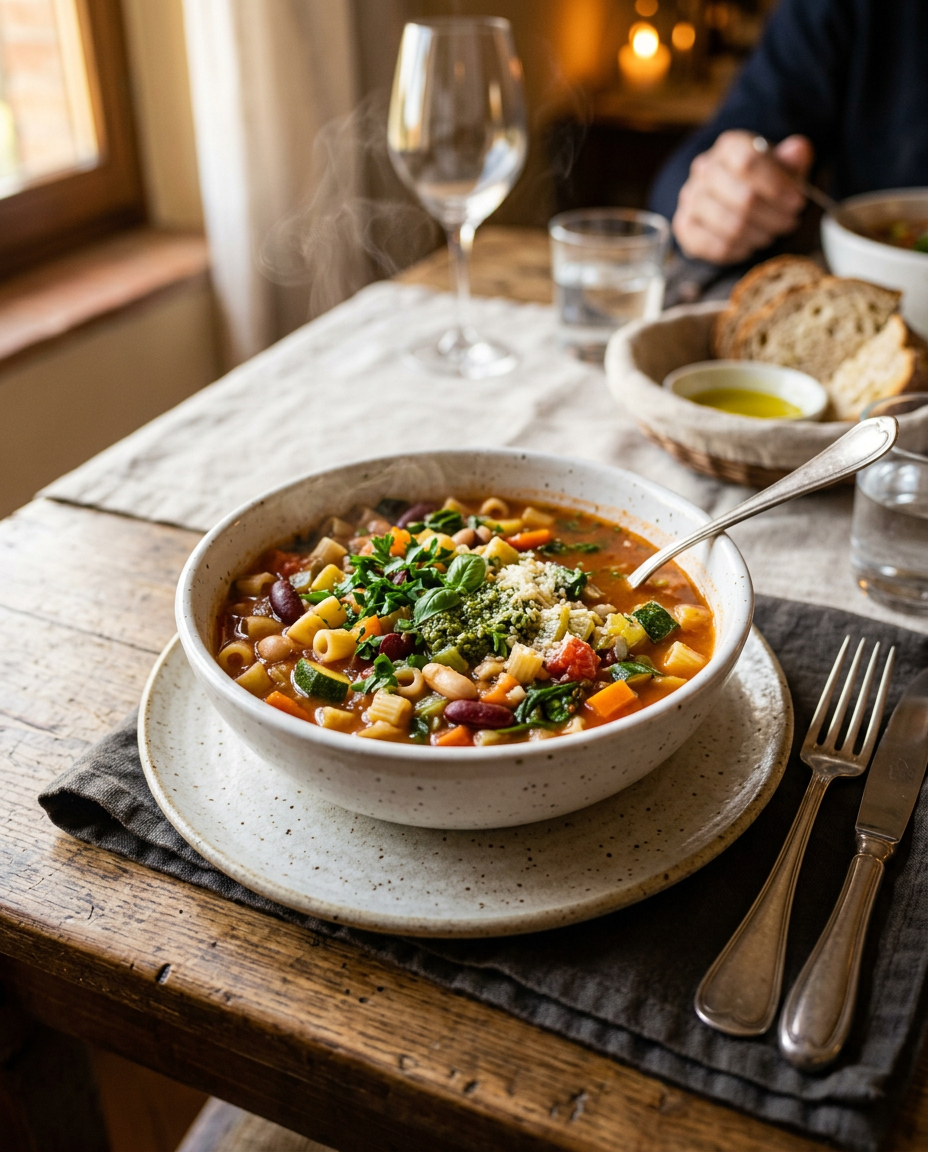
- Crusty Italian bread or focaccia for dipping into the flavorful broth
- Simple green salad with lemon vinaigrette to balance the hearty soup
- Grilled cheese sandwich made with good-quality cheese for the ultimate comfort meal
- Garlic bread or bruschetta topped with fresh tomatoes and basil
- A glass of Chianti or Pinot Grigio to complement the Italian flavors
Frequently Asked Questions
Can I make minestrone soup ahead of time?
Yes, minestrone soup actually tastes better the next day as the flavors have more time to meld together. You can make it up to 3 days ahead and store it in the refrigerator. If you’re meal prepping, consider cooking the pasta separately and adding it when serving to prevent it from getting mushy.
What vegetables can I substitute in minestrone soup?
Minestrone is very flexible! You can substitute or add vegetables like cabbage, bell peppers, leeks, fennel, butternut squash, or kale. The key is to add harder vegetables that take longer to cook first, and delicate greens at the end. Use whatever seasonal vegetables you have available.
How do I prevent the pasta from getting mushy in minestrone?
To prevent mushy pasta, cook it just until al dente and serve immediately. For leftovers, cook pasta separately and add it to individual bowls when serving, or slightly undercook the pasta if you plan to reheat the soup later. You can also substitute pasta with heartier grains like farro or barley.
Can I freeze minestrone soup with pasta in it?
While you can freeze minestrone with pasta, the pasta texture may become soft and mushy when thawed. For best results, freeze the soup without pasta and add freshly cooked pasta when reheating. The soup can be frozen for up to 3 months in freezer-safe containers.
How can I make my minestrone soup thicker or thinner?
To thhin the soup, simply add more vegetable broth or water. To thicken it, you can simmer uncovered to reduce the liquid, mash some of the beans against the side of the pot, or add a Parmesan rind while cooking for extra body. You can also blend 1-2 cups of the soup and stir it back in for a creamier consistency.
Final Thoughts
This classic minestrone soup recipe represents everything I love about Italian cooking – simple ingredients transformed into something extraordinary through patience and care. The beauty of this easy minestrone recipe lies not just in its incredible flavor, but in its ability to bring comfort and nourishment to your table any day of the week.
Remember that the best minestrone soup is the one made with love and adapted to your family’s tastes. Don’t be afraid to experiment with different vegetables, beans, or seasonings. Each pot of soup you make will be uniquely yours, carrying on the Italian tradition of cooking with heart and making the most of what you have on hand.
Ready to Try It?
Ready to fill your kitchen with the amazing aromas of authentic Italian cooking? Grab your largest pot and start chopping those vegetables – your family is going to absolutely love this homemade minestrone soup! Don’t forget to share your soup-making adventures in the comments below, and let me know what vegetables you added to make this recipe your own.