Ingredients
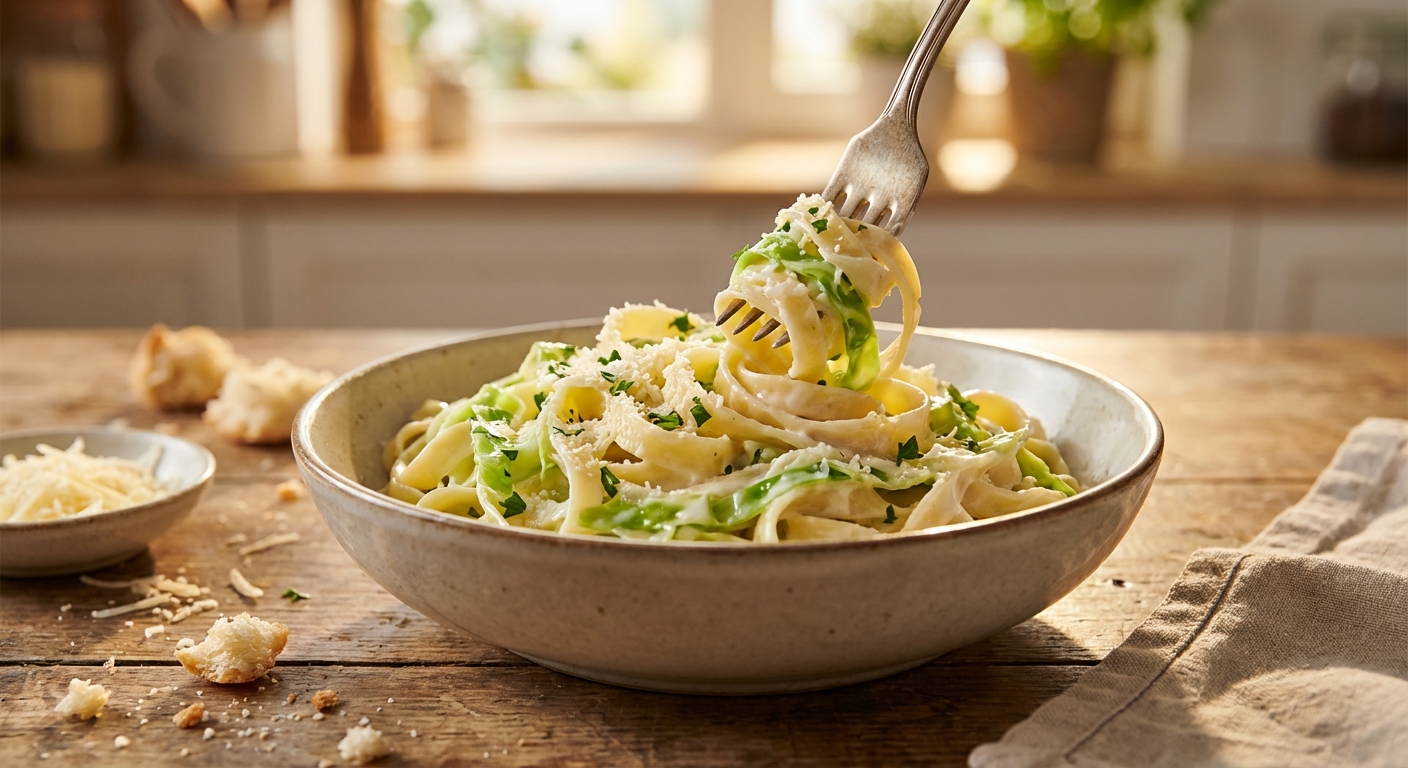
This creamy cabbage alfredo pasta combines humble cabbage with restaurant-quality alfredo sauce to create something truly special. The key is using fresh ingredients and not overcooking the cabbage – you want it tender but still with a slight bite.
For the Pasta and Cabbage
- 12 oz (340g) fettuccine or linguine
- 3 cups green cabbage, thinly sliced into ribbons
- 2 tablespoons olive oil
- 4 cloves garlic, minced
- 1/2 teaspoon salt
- 1/4 teaspoon black pepper
For the Alfredo Sauce
- 3 tablespoons butter
- 1 1/2 cups heavy cream
- 1 cup freshly grated Parmesan cheese
- 1/4 teaspoon nutmeg (optional)
- Salt and pepper to taste
For Garnish
- Fresh parsley, chopped
- Extra Parmesan cheese
- Red pepper flakes (optional)
Smart Substitutions
Dairy-Free: Use coconut cream and nutritional yeast. Gluten-Free: Swap for gluten-free pasta. Lower Calories: Use half-and-half instead of heavy cream.
Timing
- Prep: 10 minutes
- Cook: 15 minutes
- Total: 25 minutes
- Serves: 4
Instructions
Step 1: Cook the Pasta
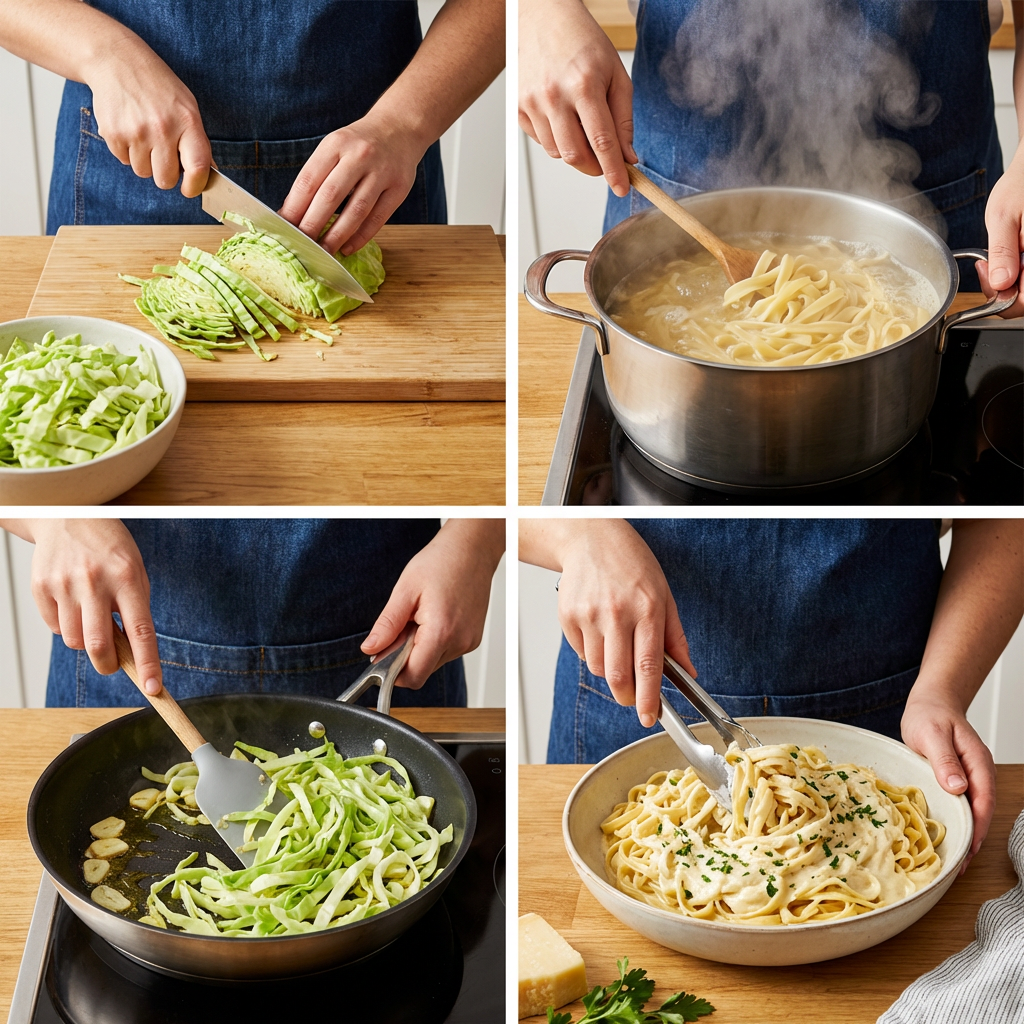
Bring a large pot of salted water to a rolling boil. Add the fettuccine and cook according to package directions until al dente, usually 8-10 minutes. The key here is to not overcook – you want the pasta firm enough to hold up to the rich sauce. Before draining, reserve 1 cup of the starchy pasta water. This liquid gold will help create a silky sauce that clings perfectly to every strand. Drain the pasta but don’t rinse it – those surface starches are your friend when it comes to sauce adhesion.
Step 2: Sauté the Cabbage
While the pasta cooks, heat olive oil in a large skillet over medium-high heat. Add the sliced cabbage and sauté for 4-5 minutes, stirring occasionally, until it begins to soften and caramelize at the edges. The cabbage should be tender but still have a slight crunch – this textural contrast is what makes this dish special. Add the minced garlic during the last minute of cooking, stirring constantly to prevent burning. The aroma of garlic and caramelized cabbage will fill your kitchen with an irresistible scent. Season with salt and pepper, then transfer the cabbage mixture to a bowl and set aside.
Step 3: Make the Alfredo Sauce
In the same skillet (no need to wash it – those browned bits add flavor), melt the butter over medium heat. Once melted and bubbling, pour in the heavy cream. Bring to a gentle simmer, stirring frequently to prevent scorching on the bottom. Let it simmer for 2-3 minutes until it thickens slightly. The cream should coat the back of a spoon when ready. Now comes the magical moment – remove the pan from heat and add the grated Parmesan cheese in three batches, stirring vigorously after each addition. The residual heat will melt the cheese into a smooth, velvety sauce. Add a pinch of nutmeg if using – it adds a subtle warmth that elevates the entire dish. Season with salt and pepper to taste, remembering that Parmesan is already salty.
Step 4: Combine Everything
Return the pan to low heat and add the cooked pasta and sautéed cabbage to the alfredo sauce. Toss everything together gently but thoroughly, ensuring every strand of pasta and ribbon of cabbage is coated in that creamy goodness. If the sauce seems too thick, add reserved pasta water a tablespoon at a time until you reach your desired consistency. The starch in the pasta water will help the sauce cling beautifully while adding body without diluting flavor. Toss for 1-2 minutes, allowing the pasta to absorb some of the sauce. Taste and adjust seasoning if needed. Serve immediately while hot, garnished with fresh parsley, extra Parmesan, and a pinch of red pepper flakes for those who like a little heat.
Nutrition Per Serving
- Calories: 520
- Protein: 18g
- Carbs: 48g
- Fat: 28g
- Fiber: 4g
- Sugar: 5g
This dish provides a good balance of carbohydrates for energy, protein from the Parmesan, and healthy fats from the cream and olive oil. The cabbage adds fiber and vitamins K and C, making this indulgent meal surprisingly nutritious.
Pro Tips for Success
- Fresh Parmesan: Always grate Parmesan fresh from a block. Pre-grated cheese contains anti-caking agents that prevent smooth melting and can make your sauce grainy.
- Temperature Control: Make the alfredo sauce off heat after simmering the cream. Too much heat when adding cheese causes it to break and become greasy.
- Pasta Water Magic: That reserved pasta water is liquid gold. Use it to adjust sauce consistency and help it cling to the pasta through the starch content.
- Don’t Overcook Cabbage: Aim for tender-crisp cabbage, not mushy. It should still have some texture to contrast with the soft pasta.
- Timing is Everything: Have all your ingredients prepped before you start cooking. This dish comes together quickly, and you don’t want overcooked pasta while you’re still chopping cabbage.
- Quality Matters: Use the best heavy cream and Parmesan you can afford. Since there are so few ingredients, quality really shines through.
Delicious Variations
- Protein Boost: Add grilled chicken, shrimp, or pan-seared salmon for a heartier meal. Cook the protein separately and add it during the final toss.
- Veggie Power: Throw in some spinach, kale, or roasted broccoli along with the cabbage for extra nutrients and color.
- Spicy Kick: Add 1/2 teaspoon red pepper flakes to the garlic when sautéing the cabbage, or drizzle with chili oil before serving.
- Lemon Brightness: Finish with a squeeze of fresh lemon juice and lemon zest for a bright, citrusy note that cuts through the richness.
- Bacon Heaven: Cook 4 strips of bacon until crispy, crumble, and sprinkle on top. Use the bacon fat in place of some of the olive oil for extra flavor.
- Mushroom Umami: Sauté sliced mushrooms (cremini or shiitake) along with the cabbage for an earthy, savory depth.
Common Mistakes to Avoid
Overcooked Cabbage: Cooking cabbage too long turns it mushy and releases sulfur compounds that smell unpleasant. Solution: Sauté just until tender-crisp, about 4-5 minutes maximum.
Broken Sauce: Adding cheese to sauce that’s too hot causes it to separate and become greasy. Solution: Remove pan from heat before adding cheese, and add it gradually while stirring constantly.
Watery Sauce: Not reducing the cream enough or adding too much pasta water dilutes the sauce. Solution: Let cream simmer until it coats a spoon before adding cheese, and add pasta water sparingly.
Gummy Pasta: Rinsing pasta after cooking removes the starch that helps sauce adhere. Solution: Drain but never rinse, and toss immediately with sauce while both are hot.
Bland Flavor: Underseasoning is common when cooking with cream. Solution: Taste and adjust salt and pepper at the end. Don’t forget that Parmesan adds saltiness, so season accordingly.
Storage and Make-Ahead
Refrigeration: Store leftovers in an airtight container in the refrigerator for up to 3 days. The sauce will thicken as it cools, which is normal.
Freezing: Not recommended. Cream-based sauces tend to separate and become grainy when frozen and reheated. If you must freeze, freeze just the sautéed cabbage separately.
Reheating: Reheat gently in a skillet over low heat, adding a splash of milk or cream to restore the sauce’s consistency. Microwave reheating works but can dry out the pasta – cover and heat in 30-second intervals, stirring between each.
Make-Ahead: You can prep the cabbage up to 1 day ahead and store it refrigerated. Cook the pasta and make the sauce fresh for best results, as alfredo doesn’t hold well once made.
Serving Suggestions
Classic Pairing: Serve with a simple arugula salad dressed with lemon vinaigrette to cut through the richness of the alfredo.
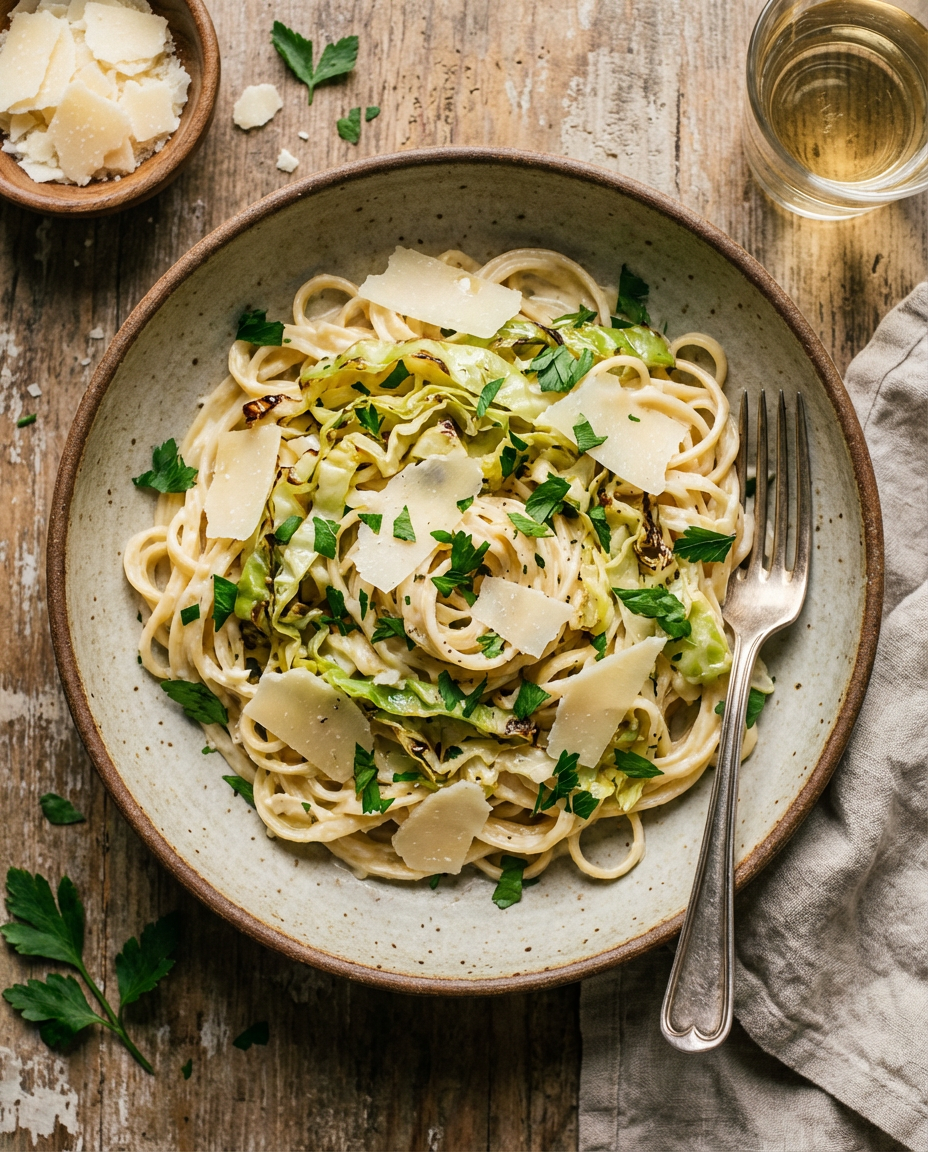
Elegant Touch: Present in wide, shallow bowls, twirl the pasta into a nest, and garnish with a generous sprinkle of fresh parsley and shaved Parmesan.
Side Dishes: Pair with garlic bread for soaking up extra sauce, or serve alongside roasted cauliflower soup for a cozy dinner.
Beverage Pairing: A crisp white wine like Pinot Grigio or Sauvignon Blanc complements the creamy sauce beautifully. For non-alcoholic options, try sparkling water with lemon.
Why This Recipe Works
The genius of this dish lies in the unexpected marriage of humble cabbage with luxurious alfredo sauce. Cabbage, when properly sautéed, develops a subtle sweetness and maintains a satisfying texture that contrasts beautifully with the silky pasta. The caramelization that occurs during sautéing creates complex flavors that elevate this beyond a simple cream sauce. Using freshly grated Parmesan and real heavy cream ensures a sauce that’s smooth and clings to every strand without being gloppy. The starchy pasta water acts as an emulsifier, helping the fat and water components of the sauce stay combined while adding body. This recipe proves that with proper technique, simple ingredients can create restaurant-quality results.
The Story Behind Cabbage Alfredo
While traditional alfredo pasta originated in Rome in the early 1900s, this modern twist with cabbage emerged from the 2026 Pinterest food trends. As home cooks searched for ways to incorporate more vegetables into comfort food classics, cabbage – often overlooked in favor of trendy vegetables like kale and cauliflower – experienced a renaissance. Food bloggers and home chefs discovered that when properly prepared, cabbage adds a delightful texture and subtle sweetness that complements rich, creamy sauces beautifully. The caramelization that occurs when sautéing cabbage transforms it from a humble ingredient into something truly special, making this dish a perfect example of how simple ingredients can create extraordinary results.
Understanding Your Ingredients
Cabbage Selection: Green cabbage is ideal for this dish due to its mild flavor and tender texture when cooked. Look for heads that feel heavy for their size with tight, crisp leaves. Avoid any with brown spots or wilted outer leaves. The freshness of your cabbage directly impacts the final dish – fresh cabbage caramelizes beautifully while older cabbage can turn mushy and develop an unpleasant sulfur smell when cooked.
Parmesan Quality: Authentic Parmigiano-Reggiano makes a world of difference in alfredo sauce. The cheese should be aged at least 24 months for optimal flavor and melting properties. Fresh-grated Parmesan not only tastes better but melts smoothly without the grainy texture that pre-grated cheese can impart. The investment in quality cheese is worth it – you’ll taste the difference in every bite.
Cream Matters: Heavy cream with at least 36% fat content is essential for a sauce that’s both rich and stable. Lower-fat alternatives may seem appealing, but they won’t create the same luxurious texture or hold up well to the heat required for proper sauce preparation.
The Science of Perfect Pasta Sauce
Creating the perfect alfredo sauce is as much science as it is art. When you heat cream, the proteins and fats interact in specific ways that determine your sauce’s final texture. The key is maintaining a temperature sweet spot – hot enough to thicken the cream but not so hot that proteins separate from the fat. This is why we remove the pan from heat before adding Parmesan. When cheese is exposed to high heat, the proteins tighten and squeeze out fat, resulting in a greasy, separated sauce. By adding cheese off heat, the residual warmth melts it gently, creating a smooth, emulsified sauce.
The starch in pasta water acts as an emulsifier, helping oil and water molecules stay together. This is why reserved pasta water is so crucial – it helps bind the sauce to the pasta while adding body without diluting flavor. Professional chefs know this secret, and now you do too.
Seasonal Variations
Spring Version: Add fresh peas, asparagus tips, and a handful of fresh mint along with the cabbage. The bright, fresh flavors complement the rich sauce while adding seasonal flair.
Summer Twist: Incorporate sun-dried tomatoes and fresh basil for a Mediterranean-inspired variation. The acidity of tomatoes cuts through the cream beautifully.
Fall Comfort: Add sautéed mushrooms and a splash of white wine to the sauce. Top with crispy fried sage leaves for an elegant autumn presentation.
Winter Warmth: Stir in cooked, crumbled Italian sausage and red pepper flakes for a heartier, spicier version perfect for cold evenings.
Conclusion
This cabbage alfredo pasta proves that trending recipes deserve the hype. In just 25 minutes, you’ve created a dish that’s both comforting and impressive, perfect for busy weeknights or when you want to serve something special without spending hours in the kitchen. The combination of tender pasta, caramelized cabbage, and velvety alfredo sauce creates a symphony of textures and flavors that will have everyone asking for seconds. Don’t be surprised if this becomes your new go-to pasta recipe. Give it a try, and share your results – we’d love to hear how you make this cabbage alfredo pasta your own.
Cabbage Alfredo Pasta
Ingredients
Equipment
Method
- Boil pasta until al dente. Reserve 1 cup pasta water.
- Sauté cabbage in olive oil 4-5 min. Add garlic last minute.
- Melt butter, add cream, simmer 2-3 min. Remove from heat, add Parmesan.
- Toss pasta and cabbage with sauce. Add pasta water to thin if needed. Serve hot.
FAQs
Can I use red cabbage instead of green?
Yes, but red cabbage has a slightly earthier flavor and will turn the dish a purple-ish color. Green cabbage is milder and maintains the classic look of the dish.
What if I don’t have heavy cream?
You can use half-and-half, but the sauce won’t be as rich and may not thicken as much. Add an extra tablespoon of butter and a teaspoon of flour to help it thicken.
Can I make this ahead for meal prep?
The sautéed cabbage can be made ahead, but alfredo sauce is best made fresh. If you must prep ahead, undercook the pasta slightly and store everything separately, then combine and heat gently when ready to serve.
Why is my sauce grainy?
This usually happens when cheese is added to sauce that’s too hot, or if you’re using pre-shredded cheese with anti-caking additives. Always remove from heat before adding cheese and grate fresh Parmesan from a block.
How do I prevent the pasta from sticking together?
Stir the pasta occasionally while cooking, and toss it with the sauce immediately after draining. Don’t let drained pasta sit – it will stick as it cools.
Can I double this recipe?
Yes, but you may need to sauté the cabbage in batches to avoid overcrowding the pan, which would cause it to steam rather than caramelize.
What’s the best pasta shape for this dish?
Fettuccine or linguine work best as their flat surfaces hold the sauce well. Penne or rigatoni also work if you prefer shorter pasta.
How can I make this lower in calories?
Use half-and-half instead of heavy cream, reduce the butter, and bulk up the dish with more cabbage and less pasta. You can also use part-skim mozzarella mixed with Parmesan for the cheese.
Is this dish keto-friendly?
Not as written due to the pasta. For a keto version, substitute the pasta with zucchini noodles or shirataki noodles and enjoy the cabbage and alfredo sauce as is.